How to Grow an Indian Rubber Tree? Detailed Guide to the Correct Cultivation Method
The Indian rubber tree is a plant with relatively high ornamental value and is a typical foliage plant. Like the ordinary rubber tree, it is a classic "lazy person's plant" that is easy to keep alive.
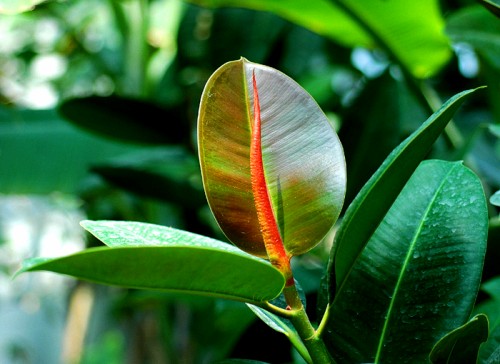
I. How to Grow an Indian Rubber Tree
Habits: The Indian rubber tree likes to grow in a warm and humid environment. It is not cold-tolerant, but it likes light and can also tolerate shade well. Its requirements for soil are that it be fertile and moist and also have a certain degree of permeability. Because it can tolerate dryness slightly, the best temperature for its growth is between 20-25 degrees.
Propagation: The Indian rubber tree is mainly propagated by cuttings, though layering can also be used. For cuttings of the Indian rubber tree, you need to take one- to two-year-old hard branches, then remove the leaves from the lower part of the branch. Tying the top two leaves together can also reduce transpiration. The cut end of the branch can also be sealed with plant ash or clay to prevent the loss of milky sap.
Water and fertilizer: During the growing season, in midsummer it needs watering every day, and the leaves should also be sprayed with water several times. In autumn and winter, watering should be reduced. In colder regions, it should be moved into a greenhouse in winter. Fertilizing should be done during the vigorous growth period, applying decomposed cake fertilizer water once every 2 weeks.
Repotting: After the Indian rubber tree becomes an established plant, it is generally best to repot and change the soil once a year in spring before new buds grow. When repotting, appropriately trim away curled roots and add new potting soil and base fertilizer. For plants that have grown too large, you can also change to a pot one size larger in September.
Pruning: To make the potted rubber tree full in shape, pinch off the growing tip when the seedling reaches 60-80 cm in height to encourage side buds to sprout. After side branches grow out, choose 3-5 of them, and afterward shorten the side branches once a year. In 3 years you can obtain a rounded, full tree body 1.5-2 m tall.
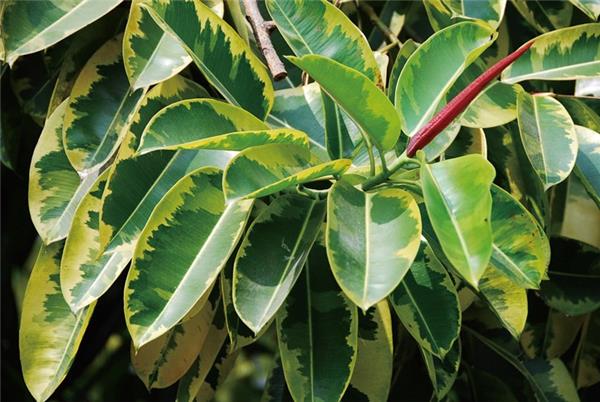
II. Common Problems in Cultivating Indian Rubber Trees
Sudden leaf drop: In tree-type varieties, it may be caused by overwatering; winter temperatures that are too low; fertilizing too much or too concentrated; sudden cold wind exposure. In hanging varieties, it may be caused by light that is too weak; or possibly by moving it from a suitable environment to another environment.
Loss of the lowest old leaves: This is usually a natural pattern. If the number is too great, it may be due to insufficient nitrogen fertilizer, and fertilizer should be supplemented in time.
Yellowing leaf edges and loss of some old leaves: This is an early sign of fertilizer deficiency. Fertilizer should be applied regularly during the growing season.
Dry, shriveled, curled leaves: This may be caused by direct sunlight in summer, or it may be that the potting soil is too dry and lacks water. Provide shade and water in time, and spray to increase humidity.
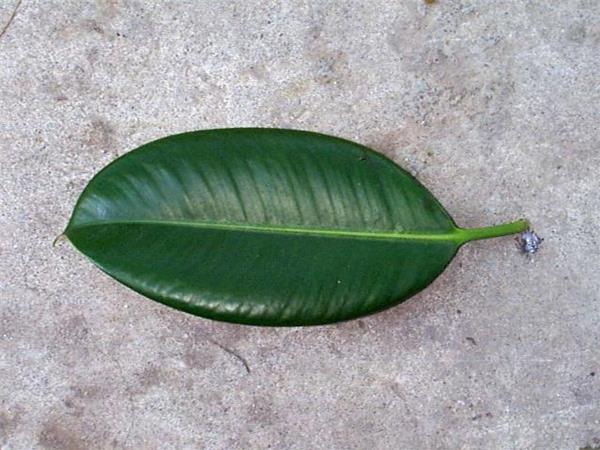
III. What Is the Value of the Rubber Tree
The value of the Indian rubber tree is mainly reflected in its ornamental aspect. It is an evergreen year-round type and also a relatively common foliage tree species. Potted Indian rubber trees can be placed in the living room or bedroom for embellishment and decoration, and they can also be used in places such as hotels to decorate and beautify the environment.
Functions
1. The Indian rubber tree is dark green, which is very helpful for relieving our eye fatigue, and it is also a good place for the eyes to rest.
2. It has very strong vitality and symbolizes a spirit of unremitting self-improvement.
3. Its form is very graceful, and it can also beautifully decorate and embellish the indoor environment.
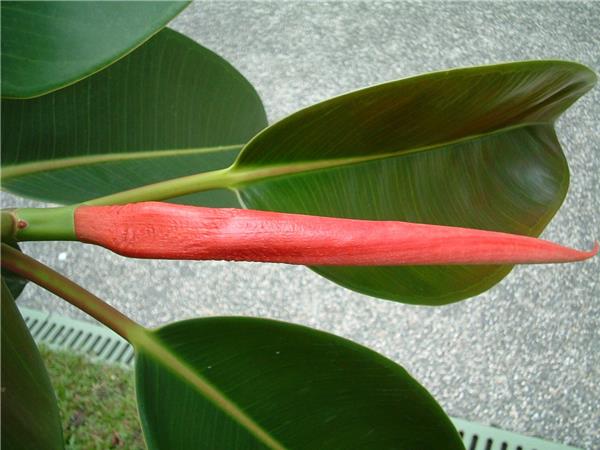
The Indian rubber tree has a beautiful and elegant plant shape and bright green leaves. Placing it at home can effectively improve the quality and feng shui of the room, so interested friends might as well try growing one.