Key Technical Points and Experience Sharing on Marigold Cultivation
Marigold, also known as stinking marigold, honeycomb chrysanthemum, and stinking chrysanthemum. It is an annual herbaceous plant of the genus Tagetes in the Asteraceae family, native to Mexico. Its flowers and leaves used as medicine have the effects of clearing heat and resolving phlegm, and nourishing blood and promoting menstruation. In industry, its flowers are mainly used as a raw material for extracting yellow pigment, which is widely used in food and beverage processing and other industries. At present, this natural pigment is mainly exported to South Korea and Japan, and demand in the international market exceeds supply, so the production prospects are very considerable. This article introduces marigold cultivation techniques for everyone.
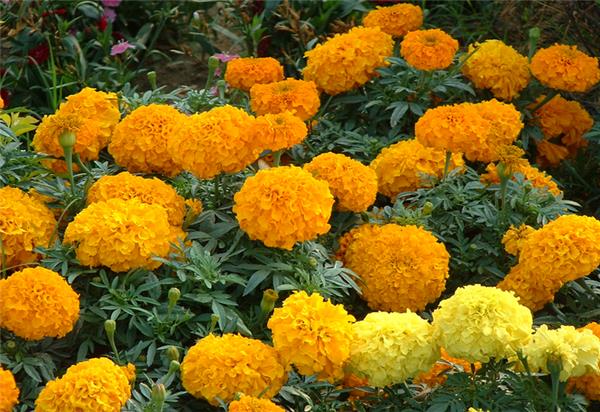
I. Marigold Cultivation
1. Bed preparation. According to the climate characteristics of Luobei County, with a long winter, late spring warming, and insufficient accumulated temperature throughout the year, autumn bed preparation should be advocated, and the seedling bed and seedling shed should be completed before the ground freezes, so that they reach a sowing-ready state.
2. Bed soil disinfection. Before covering with film, use 4 grams of 50% carbendazim or 4 grams of 70% dexon per square meter of seedling bed, diluted 100 times with water, evenly spray it on the bed surface, and immediately cover with plastic film to seal for 2-3 days, then remove the film and ventilate.
3. Seed treatment. For seeds with a germination rate of 95% and a purity of 98% or above, use 25-30 grams of seed per mu. Before sowing, soak the seeds in a 250-fold dilution of 50% carbendazim for 10-15 minutes to disinfect them, then place them in 25°C warm water and soak for 6-8 hours, remove and air-dry, then mix with 10-15 times fine sand and set aside for sowing.
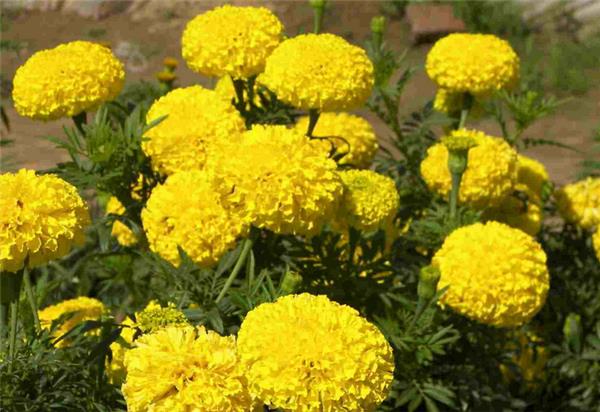
II. Precautions for Marigold Cultivation
Fertilization: The flowering period is long, so additional fertilizer is needed to supply nutrients, but fertilization should not be excessive, and the application of nitrogen fertilizer should especially be controlled; otherwise, the plants are prone to excessive vegetative growth. Although the branches and leaves are lush, flowering will be delayed and the flowers will be poor.
Pruning: During the seedling stage, pinching should be carried out 1-2 times to promote branching and control height, and to make the plant shape full. If you want the flowers to bloom large, then side buds need to be removed to promote full development of the terminal main bud. After pinching, relevant agents need to be sprayed to control plant height. After flowering, remove spent flowers in time, which is beneficial for future flowering.
Pests and diseases: There are dangers from diseases such as damping-off, stem rot, rust, leaf spot, root rot nematode disease, and pests such as green plant bug, carmine spider mite, cotton geometrid, tobacco cutworm, whitefly, and leafhopper.
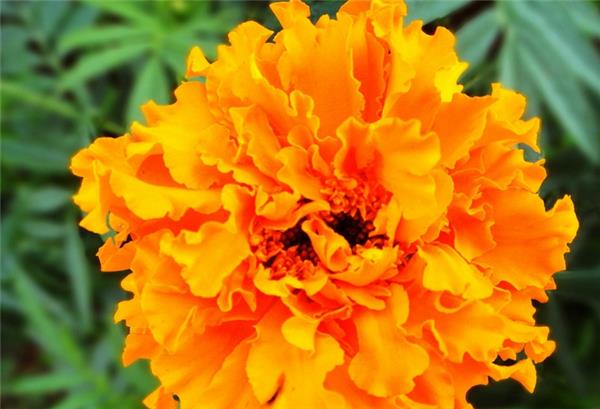
III. The Role of Marigold
1. Marigold can thoroughly beautify your home environment. Application of dwarf varieties of marigold: dwarf varieties have strong branching, many flowers and dense plants, short stature, neat growth, and spherical flowers that are fully double. They can be potted and placed as needed, or transplanted into flower beds, used to form patterns, and so on; Application of medium varieties of marigold: medium varieties have large flowers and bright colors, a long flowering period, and extensive management, and are one of the main varieties of flowers used for lawn embellishment.
2. The lutein in marigold has special effects and can accompany family members as a medicine. Marigold is rich in lutein. Lutein is a natural pigment widely found in vegetables, flowers, fruits, and certain algae organisms. It can delay vision deterioration and blindness caused by macular degeneration in the elderly, as well as cardiovascular sclerosis, coronary heart disease, and tumor diseases caused by body aging.
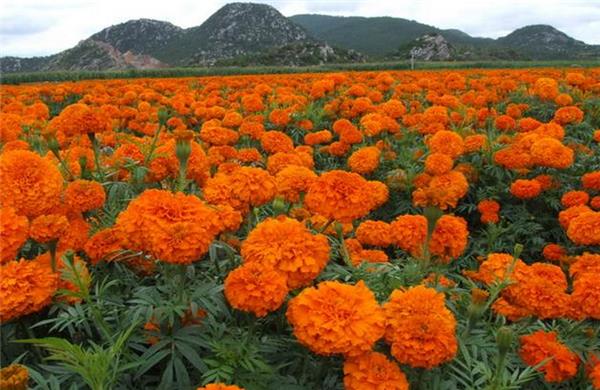
Although marigold has bright flower colors and large blooms, it emits a peculiar odor, so people who are sensitive to smells should decide whether to grow marigold according to the situation. Friends with a courtyard can place marigold in the yard to reduce the impact of its odor on the human body.