A Detailed Guide to Hydroponic Tulip Cultivation
Tulips are unique in that their bulbs take root in winter and go dormant in summer; the flowers open during the day and close at night and on cloudy or rainy days. Tulips prefer a warm, humid winter and a cool, slightly dry summer, in a sunny but slightly shaded environment. They are relatively cold-hardy and dislike intense heat. Therefore, they are excellent flowers for beautifying the environment of forest parks.
Tulips originated in the highland regions of Iran and Turkey. Because of the Mediterranean climate, tulips developed the characteristic of adapting to wet, cold winters and dry, hot summers, with summer dormancy, rooting in autumn and winter and sprouting new buds that do not emerge from the soil, requiring a period of low winter temperatures before beginning extended growth in early February of the following year (when the temperature is above 5°C) to form stems and leaves, and flowering in March-April. The optimum temperature for growth and flowering is 15-20°C. Flower bud differentiation takes place during the summer dormancy period, with an optimum differentiation temperature of 20-25°C. Tulips by nature prefer a climate with ample sunlight, warm and humid winters, and cool, dry summers. They are highly cold-hardy; in severely cold regions, if there is a thick snow cover, the bulbs can overwinter in the open field, but they fear intense heat. If summer comes early and midsummer is very hot, the bulbs find it difficult to survive the summer after dormancy. They require loose, fertile, well-drained, slightly acidic sandy soil, and avoid alkaline soil and continuous cropping.
I. Hydroponic management during the germination stage:
Fill the pot containing the bulbs with clean water so that the roots of the bulbs are immersed in the water. Place the pot in a spot indoors that receives ample sunlight, and keep the room temperature at 13°C, with temperature fluctuations not too great. In 4-7 days both roots and shoots will emerge, thus entering the vegetative growth stage.
II. Hydroponic management during the vegetative growth stage:
During this period, as the growth amount and growth rate of roots, stems and leaves increase, a large amount of water is needed. Keep the water level in the pot sufficient, check for water loss every 2 to 3 days, replenish the water promptly, and keep the roots immersed in water at all times. Replace half of the water or nutrient solution every 3 to 4 days; if the water or solution is completely renewed at once, the roots tend to grow thin and elongated rather than robust. Keep the growth temperature at 15°C-18°C; the temperature must not be too high, otherwise the plants will grow leggy, with thin, long stems, ruining their beauty. Because plants have phototropism, frequently rotate the direction of the pot so that the stems grow upright rather than leaning. After 15-20 days of growth, once the number of leaves reaches 3-4, an oval flower bud will appear at the tip of the stem. From this point the flowering stage begins.
III. Hydroponic management during the flowering stage:
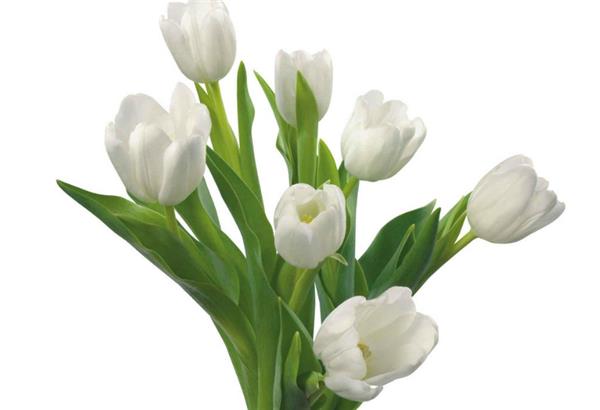
After the bud appears, the temperature can still be kept at 15°C-18°C; in 5-7 days the flower bud gradually opens, and the flower displays brilliant colors. After the flower opens, the pot can be moved to a cool, shaded spot indoors to prolong the flowering period; generally an open flower can last 15-20 days.
Experiments have shown that, as long as the temperature is well controlled, hydroponic tulip growing at home is not only simple and easy but also has great prospects for development.
IV. Tulip propagation techniques
Sexual propagation: Because the coefficient of variation from hybridization is large and the growing cycle is long, sexual propagation is used only for variety selection and breeding. In the propagation of seedlings for production, seed propagation is customarily not used; mainly asexual propagation is relied upon.
Asexual propagation: namely bulb division propagation and tissue culture techniques
Every year in September-October, the bulbs are planted in autumn, root in winter, grow stems and leaves in February of the following year, and flower in March-May. The mother bulb disappears after flowering. The new bulb is formed by the development of the fleshy leaf of the mother bulb. If the first lateral bud develops fully, the remaining lateral buds develop imperfectly and are relatively weak, and easily grow into "blind buds," though this varies with the variety.

The size of the mother bulb and the quality of the cultivation conditions are related to the number of new bulbs formed; at most 3-5 new bulbs are produced. Small bulbs that have not produced flower buds, or the terminal bud, can develop into plump new bulb primordia. As the stems and leaves grow, they gradually become larger and more fleshy, especially within 30 days after flowering, when growth is rapid. Bulbs capable of flowering are called "mature bulbs," "flower bulbs" or "renewal bulbs."
The bulbs used for planting in autumn are called "mother bulbs" or "seed bulbs." In the spring of the following year they produce new daughter bulbs; new daughter bulbs refer to all new bulbs developed from the buds of the mother bulb. The quality level of commercial varieties is related to the growth quality of the seedlings; generally it is required that the circumference reach 10 cm or more, and that the terminal bud or the second lateral bud has not differentiated flower buds, so that "mature bulbs" can be produced.
Only after small daughter bulbs are planted can they develop into "mature bulbs." This requires a geographical environment with ample sunlight, a long spring, and not-too-high summer temperatures, and soil that is rich in organic matter, loose and fertile, well-drained sandy soil, growing in a plow layer of more than 20 cm. The grading of tulip bulbs is the main standard for commercial marketing.
Growing in a plow layer of more than 20 cm. The grading of tulip bulbs is the main standard for commercial marketing.