What are the common pests and diseases of corn
The main insect pests in corn fields include soil-dwelling pests, the Asian corn borer and aphids. In recent years, abnormal climate conditions have created opportunities for different pests to break out, and the damage to corn production has worsened year by year. However, farmers often neglect control of these pests for various reasons, causing unnecessary losses. Here, based on the living habits of different pests and our practical experience, the author summarizes the following control methods for farmers' reference.
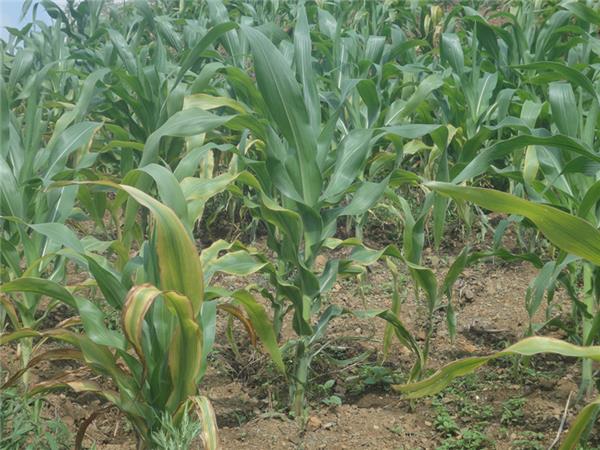
What pests and diseases affect corn
1. The main corn pests include: the Asian corn borer and aphids. The Asian corn borer can cause mottled leaves, bore into the stems, and damage the ear and tassel.
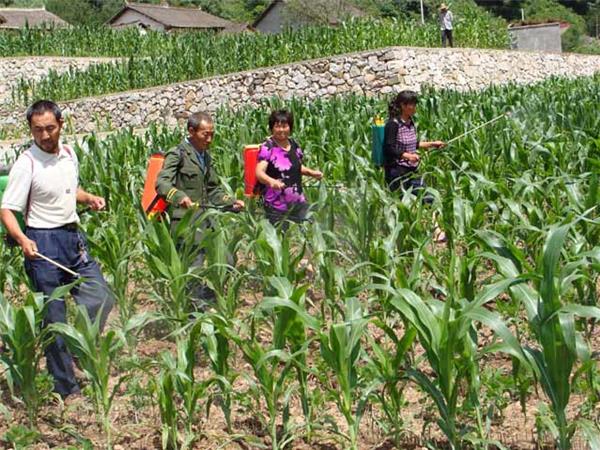
Control of the Asian corn borer should be carried out at the late whorl stage, using the "three fingers and a pinch" method, applying 1.5% phoxim granules at 1.5-2 kg per mu into the whorl, with obvious control results. You can also use pyrethroid pesticides diluted 1000 times with water or 50% phoxim emulsion diluted 1000 times, remove the sprayer nozzle, and spray the solution into the whorl. For aphids on the 12582 rural information network, detasseling and tassel pruning can reduce their damage to a certain extent, and you can also use 40% dimethoate emulsion or 10% imidacloprid diluted 1000 times for spray control.
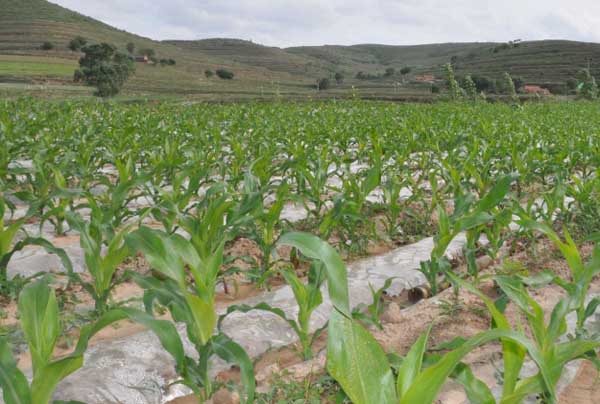
2. The main diseases include: banded leaf and sheath blight, corn smut, and northern and southern leaf blight.
Banded leaf and sheath blight mainly affects the leaf sheath and ear, followed by the stem. After the leaves are infected, light brown patches first appear, sometimes water-soaked; the disease starts from the basal leaf sheath and gradually develops upward. When the disease reaches the ear, large cloud-like lesions also form on the husk. Soon after, all the upper stems and leaves wither and die, and the entire ear then shrinks and dries. Northern corn leaf blight occurs in the late growth stage and mainly damages the leaves; the lesions are large but few, and in severe cases the whole field turns yellow and withered. Southern corn leaf blight can occur throughout the entire growth period, damaging leaves, leaf sheaths and husks. Corn smut forms galls on the affected parts, covered by a grayish-white membrane; after the membrane breaks, dark brown powder is released, and it is contagious.
Control methods: For corn smut, seed treatment with 150 g of 25% triadimefon wettable powder mixed with 50 kg of seed can be used for prevention. If plants with corn smut are found in the field, they should be pulled out promptly. In the early stage of leaf blight, promptly remove the 2-3 diseased lower leaves; you can use 70% mancozeb wettable powder diluted 400-500 times, or 70% thiophanate-methyl or 50% carbendazim wettable powder diluted 500-800 times to spray for control of banded leaf and sheath blight and leaf blight.
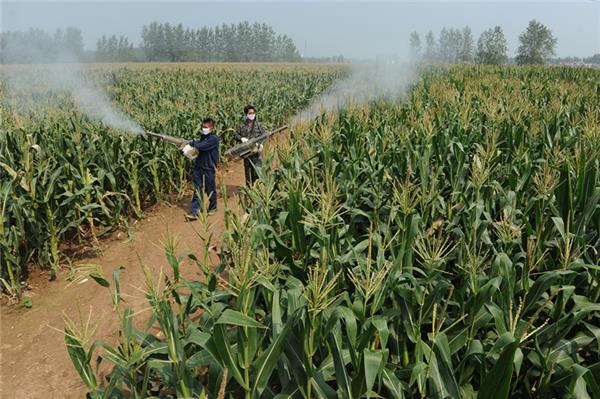
First, let's talk about the management of soil-dwelling pests. For soil-dwelling pests such as mole crickets, white grubs and cutworms, you can use phoxim or 250 g of 90% crystallized trichlorfon dissolved in 5 kg of water and sprayed onto 100 kg of chopped weeds to make a poisoned bait, then scatter it at the edge of the field in the evening to trap and kill them. You can also apply a full spray of 25% kuishaling emulsion diluted 1000 times or 52.5% nongdile emulsion diluted 1000 times at the peak of young larvae.
When controlling the Asian corn borer, inoculating Trichogramma egg cards at the large trumpet stage for biological control is the most ideal, or you can use pesticides with high efficacy and no residue to improve the food safety of the product. You can also, at the tasseling and silking stage, choose 5% fipronil suspension concentrate diluted 1000 times, or 25% kuishaling emulsion diluted 1000 times, or 100 ml of 48% chlorpyrifos to control the borer, with an overall control effect of over 90%.
Control of sweet and waxy corn dwarf mosaic virus disease is generally achieved by selecting resistant varieties; control of corn rough dwarf disease uses adjusted sowing dates to avoid the susceptible growth period, combined with pest control to prevent disease, controlling the small brown planthopper that transmits the virus to achieve disease prevention. In addition, from emergence to harvest of sweet and waxy corn, pay attention to preventing rodent damage; if typhoons and rainstorms occur, drain water and right fallen plants promptly to reduce losses.