What are the methods for controlling corn pests and diseases?
During production, corn is often harmed by various pests and diseases, causing severe yield reductions. For example, in years when northern corn leaf blight is epidemic, yields can be reduced by 15-30% due to the disease, and in severely affected fields by more than 50%; damage from the Asian corn borer usually reduces corn yields by about 10%, and by about 30% in severe years. There are many types of pests and diseases that harm corn. The main diseases include northern corn leaf blight, southern corn leaf blight, head smut, bacterial wilt, ear and kernel rot, and viral diseases; those causing severe damage in local areas include banded leaf and sheath blight, brown spot, rust, round spot, and gray leaf spot; the main insect pests include the Asian corn borer, cutworm, armyworm, and red spider mite.
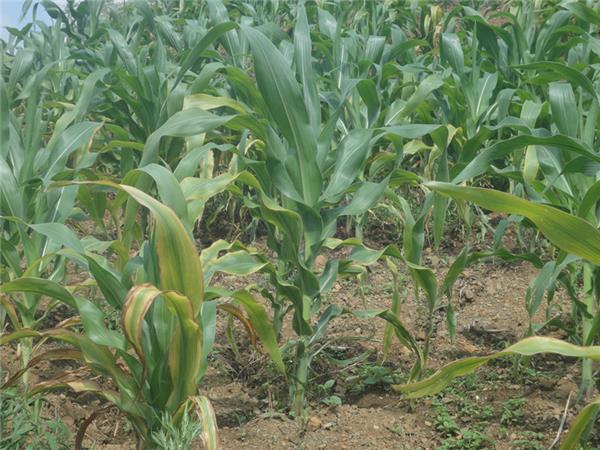
Corn pest and disease control
1. Corn smut: commonly known as gray blister. The pathogen spores overwinter in soil, manure, or on diseased plants. The following year, the chlamydospores germinate and produce sporidia, which drift with the wind onto corn plants and cause infection. It damages the tender tissues above ground, including stems, leaves, ear shoots, tassels, and axillary buds. The affected parts swell into galls, covered by a membrane that is initially white and gradually turns black; the membrane ruptures and releases black powder, namely the chlamydospores. Control methods: (1) select disease-resistant varieties; (2) remove diseased seedlings at the mid-stage; (3) cut off diseased plants; cut off the galls before they turn black and carry the diseased plants out of the field for deep burial or centralized burning.
2. Corn head smut, also known as black mildew. It mainly infects the ear shoots and tassels of corn, generally showing symptoms after tasseling. This disease should be prevented at the early stage, mainly by doing a good job of seed treatment; for fields where it occurs frequently, implement crop rotation of more than 3 years.
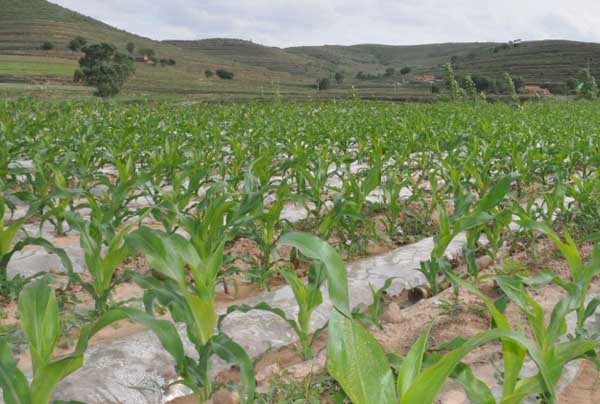
3. Corn gray leaf spot: also known as Cercospora leaf spot and corn mildew spot. It is one of the diseases that has risen rapidly and caused relatively severe damage in our county in recent years. It is generally prone to occur in rainy years from July to August, and mainly damages leaves. Initially, elliptical to oblong gray to light brown lesions without obvious margins form on the leaf surface, and later turn brown. When humidity is high, gray mold-like substances grow on the underside of the lesions. Control methods: (1) promptly remove diseased residues after harvest; (2) carry out large-scale crop rotation; (3) strengthen field management, drain water promptly after rain, and prevent moisture retention. (4) At the early stage of the disease, spray 75% chlorothalonil wettable powder 500 times dilution, or 50% carbendazim wettable powder 600 times dilution, 40% kitazin emulsifiable concentrate 800-900 times dilution, or 20% triadimefon emulsifiable concentrate 1000 times dilution.
4. Corn large and small leaf spot diseases: Corn large and small leaf spot diseases can occur from the seedling stage to maturity, with more severe occurrence after tasseling. They mainly damage leaves, and also damage leaf sheaths and husk leaves. The pathogen is a fungal disease. From July to August, corn is at the jointing and tasseling stage, and the temperature is suitable for disease occurrence and spread. If there are many rainy days and the relative humidity in the field is high, the disease occurs severely. Continuous corn cropping, insufficient fertilization, especially fertilizer deficiency after tasseling, low-lying terrain, poor drainage, and too late sowing all favor disease occurrence. Control measures: (1) select disease-resistant varieties; (2) strengthen management, control sources of inoculum, remove lower old leaves, and increase phosphate fertilizer application; (3) spray per mu with 50% carbendazim wettable powder, or 70% thiophanate-methyl wettable powder, or 65% zineb wettable powder at 500-800 times dilution, using 60 kg of solution per mu, spraying once every 7-10 days, for a total of 2-3 sprays.
5. Asian corn borer: at the large trumpet stage, use "3% phoxim" granules for control. 6. Corn aphids: during the stage of patchy occurrence, use "10% imidacloprid" for control.
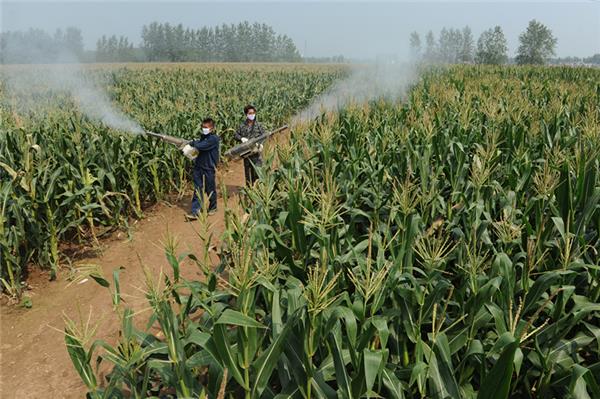
Control methods
To control northern corn leaf blight, the main approach should be selecting disease-resistant varieties, strengthening cultivation management, and supplementing with necessary chemical control.
1. Select high-yield, high-quality, disease-resistant varieties. At present, our province has bred many disease-resistant varieties. Based on local actual conditions, select disease-resistant and disease-tolerant varieties, and avoid planting susceptible varieties on a large scale, so as to prevent the occurrence and spread of the disease.
2. Strengthen cultivation management. (1) Remove diseased residues and control the primary infection source: after corn harvest, plow promptly to thoroughly eliminate diseased plant residues inside and outside the field, and collect and treat the stalks centrally, using them as fuel or as compost after high-temperature fermentation. (2) Crop rotation: because continuous cropping leads to accumulation of diseased residues and a large amount of inoculum, resulting in severe disease occurrence, implementing crop rotation can reduce disease incidence. (3) Sow early at the appropriate time to shorten the number of growth days in the rainy season and avoid the peak period of disease occurrence. (4) Plant at a reasonable density, and remove the bottom 2-3 leaves to reduce field humidity, so that plants grow robustly and disease resistance is improved. (5) Fertilize and irrigate reasonably: apply sufficient basal fertilizer, increase phosphorus and potassium fertilizer application, appropriately apply topdressing nitrogen fertilizer at the ear stage, irrigate reasonably, and pay attention to drainage and waterlogging prevention.
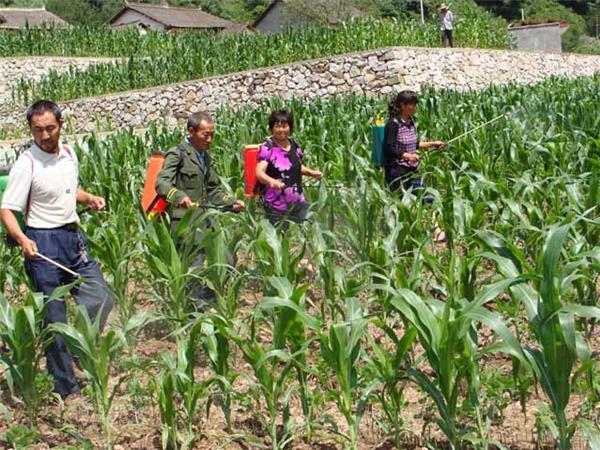
3. Chemical control. Spray promptly around the tasseling stage of corn or at the early stage of disease occurrence. Commonly used chemicals include: 50% carbendazim wettable powder 500 times dilution, or 75% chlorothalonil wettable powder 500 times dilution, or 70% thiophanate-methyl wettable powder 500 times dilution, spraying once every 7-10 days, for 2-3 consecutive times.
For the control of pests and diseases at each growth stage of corn, under the premise of distinguishing the primary from the secondary and determining the key control targets, comprehensive control measures should be adopted, and one application should control multiple pests and diseases as much as possible, so as to achieve twice the result with half the effort.
or 70% thiophanate-methyl wettable powder 500 times dilution, spraying once every 7-10 days, for 2-3 consecutive times.For the control of pests and diseases at each growth stage of corn, under the premise of distinguishing the primary from the secondary and determining the key control targets, comprehensive control measures should be adopted, and one application should control multiple pests and diseases as much as possible, so as to achieve twice the result with half the effort.