Phalaenopsis Blooming Period Management Methods and Care Key Points
Phalaenopsis is a plant suited to indoor cultivation, with flowers shaped like butterflies. Elegant and refined. Among flowers it enjoys the reputation of "Queen of Orchids." The flowers of the Phalaenopsis are its most ornamental part. Since most Phalaenopsis originate from humid Asia, this determines the growth characteristics of the Phalaenopsis; an environment with good ventilation, moderate temperatures and high humidity can be said to be very suitable for growing Phalaenopsis.
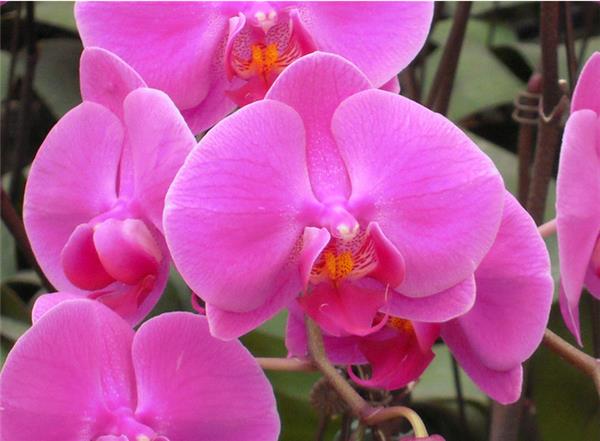
I. Management of Phalaenopsis After the Blooming Period
During the blooming period, temperature must be strictly controlled for Phalaenopsis, not too high or too low. The optimal temperature is 15°C to 18°C at night and 23°C to 25°C during the day. A sustained low temperature below 14°C can hinder flower bud growth and cause poor development, or even frost damage to the sepals, malformed flower development, and complete loss of ornamental value. While temperatures that are too high (above 20°C at night, sustained high temperatures above 27°C day and night) will accelerate its metabolism and greatly shorten the blooming period.
The water required throughout the blooming period should be less than usual. On the premise of not affecting the plant's normal growth, a drier medium helps the flowers be more brightly colored. Humidity is about right when the medium feels moist to the fingers when pinched; it should not be too dry or too wet. If the medium is too dry, the leaves will wilt, causing "permanent wilting" that makes the leaves soft, wrinkled and lusterless, seriously reducing the overall ornamental value. However, if the growing medium is excessively waterlogged, the oxygen inside the seedling bag is pushed out by the water; if this continues for a week, the plant's growth is checked and the leaves become wrinkled and wilted, which will seriously affect flower bud development, with flowers blooming small and lusterless, the petal edges scorched yellow, and the whole plant having no ornamental value.
The light intensity required by the plant during the blooming period is very different from the earlier stage. In the earlier stage, shade and shading are needed; during this period the shading material must be removed. Strong light intensity helps the flowers open fully, the internodes of the flower spike be uniform, and the flower color be vivid. At this time there is no need to increase light intensity, nor is there any need to follow a fixed, precise light intensity figure.
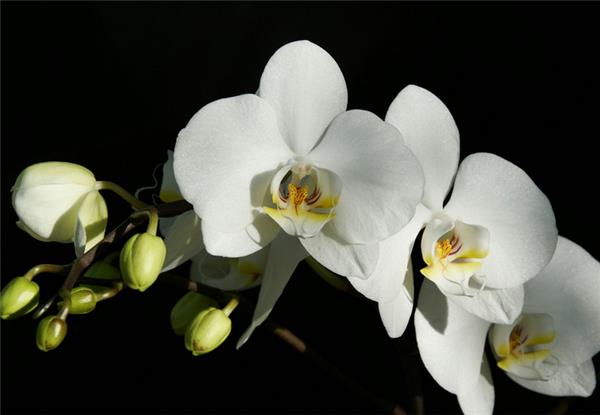
II. Growing Phalaenopsis
1. Growing Medium for Phalaenopsis
Soil is essential for plant growth. When choosing to plant Phalaenopsis, the choice of soil is very important. Phalaenopsis has high requirements for soil: it must be breathable, rot-resistant, slightly acidic and hold water. Generally we can choose materials such as pine needles, peanut shells, bark strips and clay balls as the substrate for growing Phalaenopsis. If you cannot prepare these materials yourself, it is recommended to buy special orchid soil for Phalaenopsis directly from a flower market, as this is more conducive to the growth of Phalaenopsis.
2. Choose a Suitable Temperature Environment for Phalaenopsis
Temperature is very particular for the growth of Phalaenopsis, especially for Phalaenopsis cultivated indoors. The daytime temperature is best kept at 25-28°C, and the nighttime temperature needs to be kept at 18-20°C. Phalaenopsis originates from the subtropics, so a high-temperature, high-humidity environment is very suitable for its growth (when the summer temperature is above 32°C, Phalaenopsis will directly enter a semi-dormant state, so high temperatures must be prevented; when the temperature is lower, the growth of Phalaenopsis will be checked, so a suitable temperature is also very important. If at home in the north, anyone with a radiator must be sure to place the Phalaenopsis away from the radiator! This avoids excessive high temperatures affecting the growth of the Phalaenopsis.
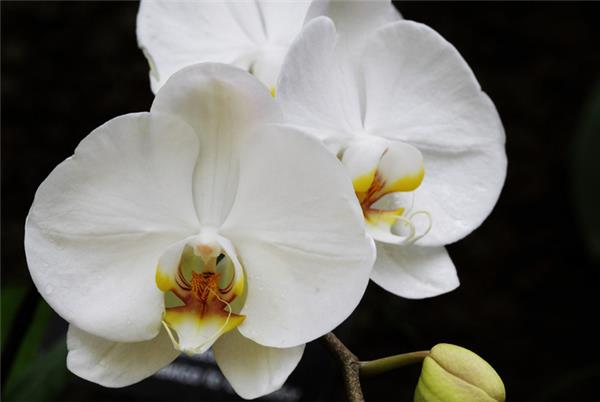
III. The Symbolic Meaning of Phalaenopsis
The scientific name of Phalaenopsis means, according to the original Greek, "an orchid like a butterfly," and it is named for this. Phalaenopsis has a unique cultural symbolism; beautiful yet delicate, elegant yet pure, people liken it to a "very beautiful princess," symbolizing a woman who is fresh and refined yet beautiful and elegant. The Phalaenopsis, with its sense of liveliness, also has the symbolic meaning of happiness flying toward you.
The white-flowered Phalaenopsis represents pure love and precious friendship. When newly married, placing a white-flowered Phalaenopsis at home foretells a happy marriage; for people who live with friends, placing a Phalaenopsis at home foretells harmonious coexistence.
The red-hearted Phalaenopsis represents great good fortune and eternal union of hearts.
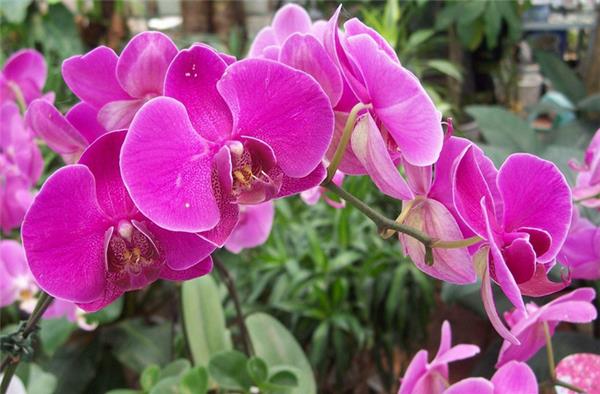
The red Phalaenopsis represents a smooth career and perfect happiness. This, it is believed, is the wish of all young couples; planting a red Phalaenopsis can add a touch of color to marriage and career.
The striped Phalaenopsis represents everything going smoothly and wishes coming true. It can be said that the striped Phalaenopsis is suitable for every family and every age group.
The yellow Phalaenopsis represents a flourishing career and booming business. The yellow Phalaenopsis is especially suitable for businesspeople and can bring them good luck.
After reading this article, have you learned a little about Phalaenopsis? The above is an introduction to the language of flowers and symbolic meanings of Phalaenopsis. We hope it can be of help to you.
After reading this article, have you learned a little about Phalaenopsis? The above is an introduction to the language of flowers and symbolic meanings of Phalaenopsis. We hope it can be of help to you.