What are the control methods for rice pests and diseases?
Rice planthoppers and rice leaf folders, and panicle neck blast occurred heavily, while the second generation of striped stem borers, sheath blight, and rice false smut occurred at moderate to severe levels. Control work should adhere to the strategy of "suppressing the early and controlling the late, treating early and treating small for early prevention and integrated control." Focus on four key battles:
First battle: early to mid-July, the main targets are the second generation of rice planthoppers and the second generation of rice leaf folders. When rice planthoppers reach 100 per 100 hills, apply pesticides such as buprofezin, thiamethoxam, and pymetrozine; for fields where the pest population exceeds 1200 per 100 hills, immediately apply fast-acting pesticides such as chlorpyrifos and isoprocarb; for rice leaf folders, apply the recommended pesticides 5-7 days after the adult moth peak appears in the field (or when the moth count exceeds 60 per mu).
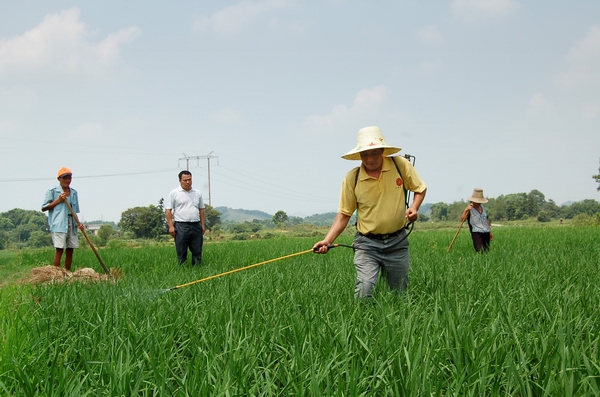
Second battle: late July to early August, the main targets are the third generation of rice planthoppers, the third generation of rice leaf folders, and the second generation of striped stem borers, with simultaneous control of sheath blight. Before July 25, all rice fields in the county should be uniformly treated once with fipronil and buprofezin-type pesticides. For fields where the second generation of striped stem borers, rice planthoppers, or rice leaf folders still exceed thresholds after application, use fast-acting pesticides for emergency control. In conjunction with pest control, fields with severe sheath blight should add validamycin during application for control.
Third battle: rice booting stage (early to mid-August), the main targets are panicle neck blast and rice false smut, with emergency control of rice planthoppers and rice leaf folders. At the rice booting stage (a simple way to judge is when one panicle per hill emerges), uniformly apply tricyclazole + validamycin + triadimefon, or apply mepronil or difenoconazole-propiconazole emulsifiable concentrate, to prevent panicle neck blast and rice false smut. If there is abundant rain, apply once more at the full heading and flowering stages with Fuji No. 1 or Fuji No. 5 + triadimefon. Panicle neck blast occurs very severely in our county year after year, causing enormous damage; spraying at the booting stage for prevention is the key measure for controlling panicle neck blast and must be given high priority. For fields where rice planthoppers or rice leaf folders exceed thresholds, use fast-acting pesticides for emergency control.
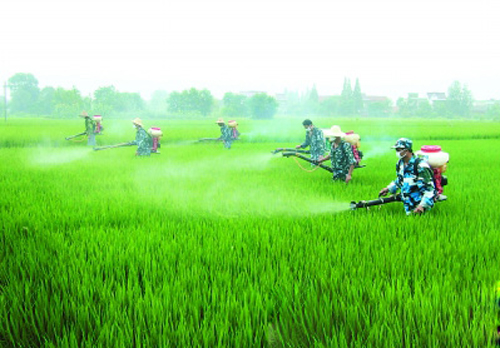
Fourth battle: late August to early September, the main target is the fourth generation of rice planthoppers, with emergency control of rice leaf folders in fields with high pest populations. For fields where rice planthoppers exceed 5000 per 100 hills, drain the field water and broadcast 400 ml of 80% dichlorvos mixed with 30 kg of fine soil, then re-flood after one day, and carry out spray control as needed.
Rice pest and disease control should prioritize prevention, using high-efficiency, low-toxicity, low-residue biological and physical control methods to ensure product quality and safety.
(1) Key techniques: one protection, one relaxation, three strict measures, namely paying attention to protecting natural enemies of pests; appropriately relaxing control thresholds, not abusing pesticides, strictly controlling pesticide types, strictly controlling application timing, and strictly controlling dosage.
(2) Chemical weeding: 5-7 days after rice transplanting, promptly select high-efficiency, low-residue herbicides for chemical weeding. Use 10 ml/bag of 24% oxyfluorfen (also known as Goal) + 25 g/bag of 20% acetochlor wettable powder per mu. Apply 7-13 days after transplanting.
(3) Targets for control:
Akagare disease (red blight): dip seedling roots with 200 g of zinc sulfate per mu, or on the basis of shallow water management, spray 200 g of zinc sulfate per mu diluted with water at the early stage of the disease.
Rice blast: at the early stage of the disease, spray 150-200 g of 40% thiophanate-methyl per mu or 20-30 g of 75% tricyclazole per mu diluted with water. Pay special attention to the prevention of rice panicle neck blast.
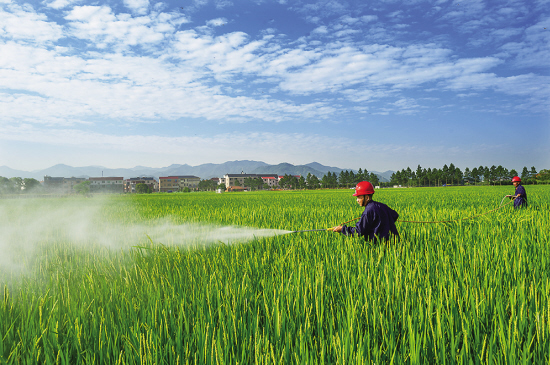
Rice false smut: use 50 g of 20% validamycin per mu, sprayed diluted with water 10-20 days before heading.
Bacterial leaf blight: at the early stage of the disease, spray 100-150 g of 25% yekuning per mu or 100 g of kuikuning per mu diluted with water.
Rice armyworms and locusts: at the 1st-2nd instar stage, spray biological pesticide BT at 400 ml per mu or 20% beta-cypermethrin-phoxim (chongyi) at 40-50 ml per mu diluted with water.
Rodent damage in rice fields: use 250 g of 0.5% bromadiolone bait per mu for control.
Rice insect pests
1. Rice planthopper
Symptoms: It damages rice, causing leaf tips to turn golden yellow and then die. Both adults and nymphs gather at the lower part of rice plants to feed and cause damage, piercing into rice plant tissues with their piercing-sucking mouthparts and sucking sap. When the pest population is large, it causes the lower part of rice plants to turn black and lodge, leading to severe yield reduction or total crop failure.
Control methods: Pesticides should also be applied to the grasses on ditch banks where planthoppers inhabit and feed. Choose any one of the following pesticides.
(1) 30% shiwenling, apply 35 g per mu diluted with 60 kg of water, spray on a sunny day.
(2) 25% puchongling, apply 30 g per mu diluted with 60 kg of water, spray on a sunny day.
(3) Daoshijing, apply 30 g per mu diluted with 60 kg of water, spray on a sunny day.
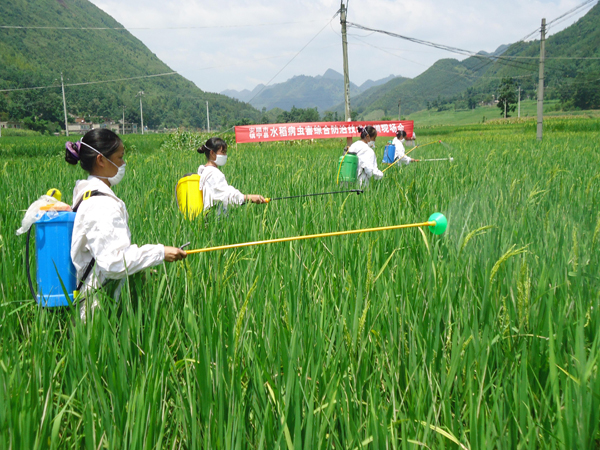
2. Stem borers
Symptoms: The larvae feed on rice tissues. At the seedling and tillering stages, they bore in from the base of the rice stem, causing dead heart seedlings; at the early booting stage, they invade and cause dead booting panicles; at the late booting stage and early heading stage, they invade and bite through the panicle neck, causing white heads.
Control methods:
(1) Determine the target fields for control, and begin investigating dead heart seedlings at the early peak of egg mass hatching.
(2) Determine the appropriate control timing by checking the hatching progress of egg masses.
(3) Pesticides: apply 100 g of 90% monosultap per mu diluted with 60 kg of water for spraying, or use 50 g of 98% cartap original powder per mu diluted with 60 kg of water for spraying.
bite through the panicle neck, causing white heads.Control methods:
(1) Determine the target fields for control, and begin investigating dead heart seedlings at the early peak of egg mass hatching.
(2) Determine the appropriate control timing by checking the hatching progress of egg masses.
(3) Pesticides: apply 100 g of 90% monosultap per mu diluted with 60 kg of water for spraying, or use 50 g of 98% cartap original powder per mu diluted with 60 kg of water for spraying.