How to grow Crown of Thorns (Euphorbia milii)? Causes of yellowing leaves and care methods
Crown of Thorns (Euphorbia milii) is a plant with beautiful flower shapes and eye-catching colors. Placing it at home can beautify the room and purify the air. Let's take a look at how to grow it so it can thrive.
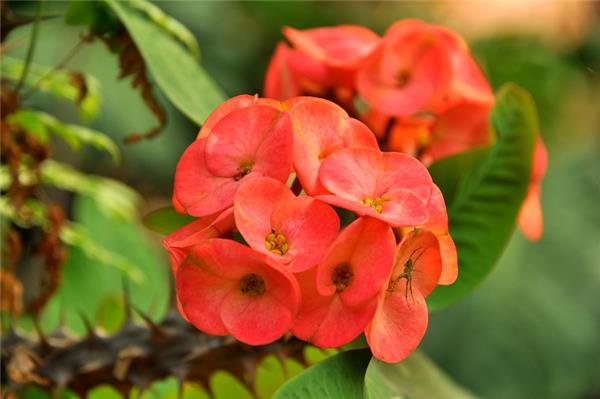
Growing methods for Crown of Thorns
1. Soil: For potted plants, sandy loam is required. It can be made by mixing leaf mold or peat soil with 1/2 sandy soil and a small amount of fertilizer.
2. Watering: Crown of Thorns is drought-tolerant. In spring and autumn, water according to the principle of watering when the soil is dry and stopping when it is moist. In summer, water once a day. In the rainy season, prevent waterlogging. In winter, do not water unless the soil is dry, and the pot should not remain moist for a long time. Water should also be controlled during the flowering period, as too much water can easily cause flower drop and root rot.
3. Sunlight: Crown of Thorns likes ample sunlight and should receive relatively sufficient light throughout all four seasons. During the flowering period, sufficient sunlight makes the bracts brightly colored and prolongs the flowering period; insufficient sunlight makes the flower color dull, and if kept in shaded conditions for a long time, it will not bloom or will bloom very little. Crown of Thorns likes warmth and is not cold-tolerant. In northern regions, it is generally moved outdoors in early May and placed in a sunny spot, then moved indoors in early October and placed in a spot indoors with sunlight.
4. Temperature: Crown of Thorns likes warmth and is not cold-tolerant. It grows best at around 22°C during the day and around 15°C at night. Kept at 15°C to 20°C in a greenhouse, it can bloom continuously all year round. If the temperature drops to 10°C, it will shed its leaves and enter a semi-dormant state.
5. Fertilizing: Crown of Thorns does not like strong fertilizer. When planting, you can choose some potting soil with horn and hoof pieces as base fertilizer. During its growing period, it is generally enough to apply once every 3-4 weeks a diluted, fully decomposed cake fertilizer solution. Too much fertilizer, especially too much nitrogen fertilizer, causes leggy branches that only grow leaves and do not bloom. Generally, fertilizing can be stopped after the Beginning of Autumn. At the same time, Crown of Thorns must not be given fertilizer containing grease. Applying 1-2 additional phosphorus and potassium fertilizers during the bud stage results in more flowers and brighter colors.
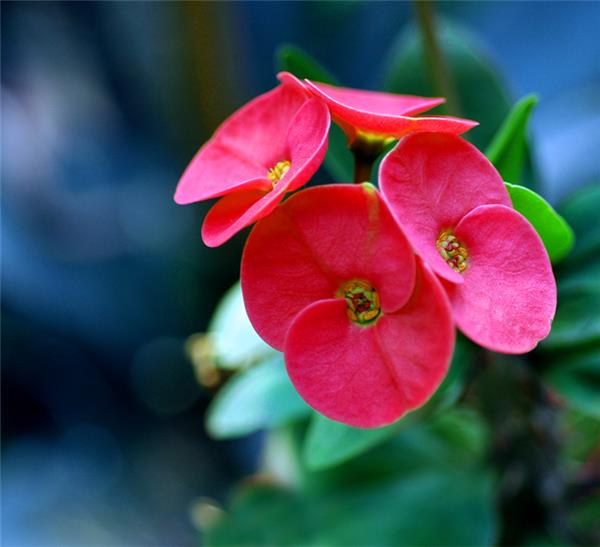
6. Pests and diseases: The main problems are stem blight and rot. Spray with 50% captan at 800 times dilution once every half month. Pests include whiteflies and scale insects. Spray with 50% fenitrothion emulsifiable concentrate at 1500 times dilution to kill them.
7. Pruning: Crown of Thorns blooms at the tips of new branches. To make Crown of Thorns bloom more, proper pruning is necessary. Because if the main branches are too long, there will be fewer flowers. Therefore, after the flowering period, the overly long and irregularly growing branches should be cut shorter. Generally, 2 new branches grow below the cut on a branch. When the new branches grow to 5-6 cm, they can bloom. Prune once a year. After a few years, the whole plant will be covered with bright small red flowers. Because the branches are slender, long and relatively soft, as the plant grows, bamboo sticks or wire can be tied into supports of different shapes, and the branches can be guided and tied onto them to form a flower column shape. When blooming, it better displays the beauty of red flowers and green leaves. If not pruned in time and allowed to grow naturally, its main branches will grow longer and longer, not only producing fewer flowers but also making the plant shape unattractive.
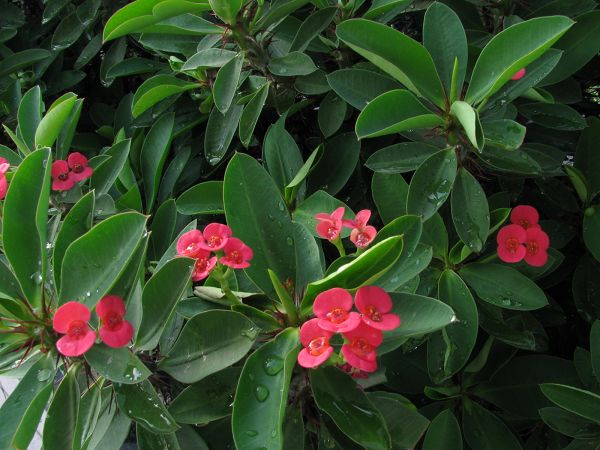
Causes of yellowing leaves in Crown of Thorns
1. Overwatering: Crown of Thorns has a certain drought tolerance and should not be overwatered, otherwise it will damage the roots and cause leaves to turn yellow and fall off. At the same time, the drainage performance of Crown of Thorns should be maintained, and drainage should be carried out promptly during the plum rain season.
2. Overfertilizing: Crown of Thorns does not like fertilizer, so appropriate fertilizing during its growth process is enough.
3. Light: Crown of Thorns likes light, so it should be placed in a sunny environment for a long time.
4. Poor ventilation: Crown of Thorns likes a ventilated environment, so ventilation can be provided during cultivation. Generally, growing it on a balcony is the best choice.
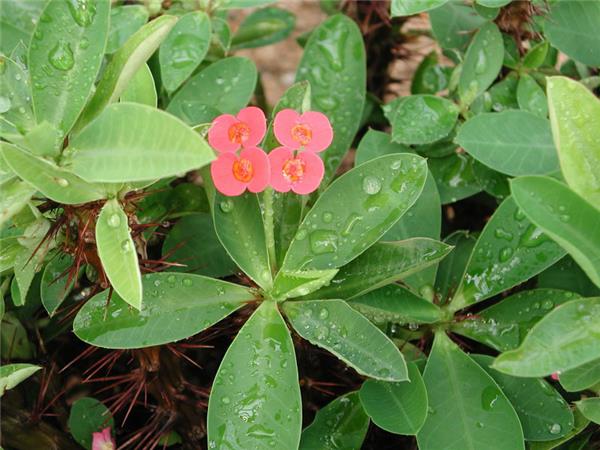
In addition to what is introduced above, pests and diseases can also cause the leaves of Crown of Thorns to turn yellow or even wither and die. Therefore, in daily care, only by taking careful care of it can we ensure that its ornamental effect is not damaged and that its beauty can serve to decorate our rooms.