How to Water and Fertilize Potted Plants Correctly
There are many common indoor potted plants, and for their care, the two most important aspects are watering and fertilizing, because no plant can survive entirely without these two practices.
I. Common Indoor Potted Plants
Pothos (Epipremnum aureum): Generally speaking, potted plants under 30 cm are called small potted plants. When it comes to beautifying the home, pothos must be mentioned. Pothos is an all-green climbing vine that is very common in home decor. Pothos can be called a master of air purification and even enjoys the reputation of a "green purifier." If your house has just been renovated, you can buy a few pots of pothos and place them at home, and with some Maya Blue, you can quickly reach the standard for moving in. Place the pothos on a flower stand and let its stems and vines hang down like a green curtain, which is uniquely charming.
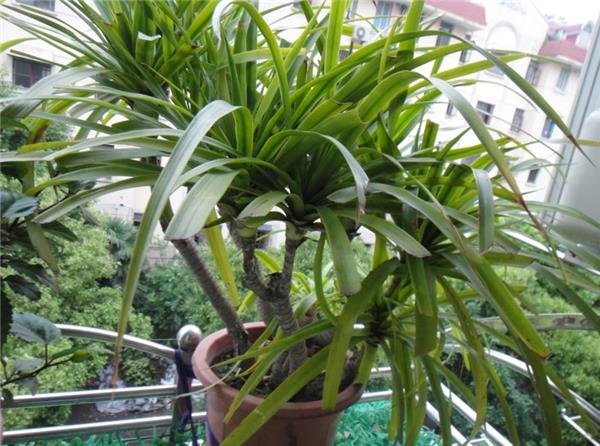
Spider plant (Chlorophytum comosum): In ancient times, orchids appeared extremely widely in landscape paintings. The spider plant is one of the very popular indoor hanging plants. The reason spider plants are favored by friends is that they not only have a slender and soft appearance, but are also the king of formaldehyde removal among plants. Spider plants can carry out photosynthesis under weak light and can absorb more than 80% of harmful gases indoors, with an extremely strong ability to absorb formaldehyde.
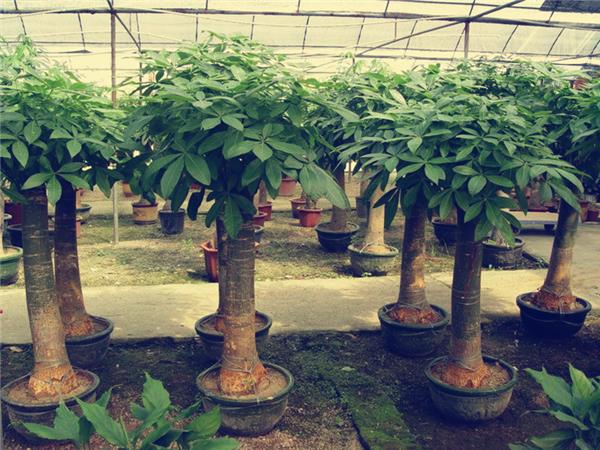
Money tree (Pachira aquatica): The money tree is not just a good symbol; its meaning also changes with the environment in which it is placed. Placing a money tree in the bedroom represents the owner's dream of striving toward a goal. Placing a money tree beside the TV represents a furniture style that loves environmental protection and health. Placing a money tree in the living room and study reflects a tranquil Chinese style.
II. How to Water Potted Plants
1. Watering is a routine task for potted plants. The principle of watering potted plants can be summed up in one sentence: "water when dry, stop when wet." As everyone knows, natural weather is always in constant change between sunny and rainy periods. Often after a soaking rain, several consecutive sunny days follow, and then another new soaking rain comes. This rhythmic change in natural weather keeps soil moisture in nature constantly alternating between dry and wet. Plants have adapted to this alternately dry and wet soil environment over their long-term phylogenetic development. Therefore, the principle of watering potted plants is precisely formulated on the basis of simulating the dynamic changes of soil moisture in nature.
2. When growing potted plants, avoid half-watering. That is, although the frequency of watering is high, the amount of water each time is not large. Especially after potted plants are potted, if the first watering does not soak through and only just wets the surface soil, then a "waist-cut water" phenomenon of wet top and dry bottom forms in the pot. This is completely opposite in nature to the scientific watering method of alternating dry and wet.
3. Potted plants are afraid of overwatering. For most people, occasionally watering a few times too little is actually not a problem. If it is difficult to determine whether the potting soil is dry or wet for the moment, it is best not to water temporarily. At the same time, the principle of "alternating dry and wet, water thoroughly when dry" also needs to be correctly understood. So-called watering thoroughly means it is best when water just begins to slowly seep out from the bottom hole of the pot. For this reason, watering potted plants also has the saying "water thoroughly, not until it leaks."
III. How to Fertilize Potted Plants
1. Fertilize according to the season. Spring and summer are the peak growth periods for flowers. During this time, plants grow rapidly and have vigorous metabolism, requiring more nutrients, so a "three-element" fertilizer mainly based on nitrogen fertilizer should be applied, so that the root system becomes developed and robust, absorption capacity is enhanced, and branch growth is promoted to facilitate flowering and fruiting.
2. Do not fertilize immediately after changing the potting soil. When potted flowers grow in a pot for a long time, the nutrients in the soil are gradually exhausted, so the potting soil needs to be replaced in time and base fertilizer added to facilitate flowering and fruiting. However, newly planted plants after repotting often have damaged root systems and weak ability to absorb fertilizer and water, so they must not be fertilized, lest the fertilizer solution irritate the wounds, cause root rot, and affect the survival rate.
3. Supplement with foliar fertilization. When the climate or potting soil conditions are unsuitable for fertilization, or when fertilization has little effect, the method of foliar topdressing can be adopted. Practice has proved that in such cases, foliar topdressing can achieve relatively good results.
4. Fertilize according to plant growth vigor. Robust plants have vigorous physiological activity, fast growth, strong absorption capacity, and high nutrient demand, so nitrogen fertilizer should be applied frequently. Diseased and weak plants grow slowly, have sluggish metabolism, poor absorption capacity, and low fertilizer demand, so they can be fertilized less or not at all.
Of course, although watering and fertilizing are essential for potted plants, we should also pay attention to other conditions such as light, soil, and temperature during cultivation. Only by providing comprehensive care can the overall health of the plants be ensured.
Of course, although watering and fertilizing are essential for potted plants, we should also pay attention to other conditions such as light, soil, and temperature during cultivation. Only by providing comprehensive care can the overall health of the plants be ensured.