How to Grow and Care for the String of Pearls Succulent (Senecio rowleyanus) and Points to Note
Although the string of pearls (Senecio rowleyanus) is a fairly easy-to-grow succulent, if it is not cared for properly, these "lover's tears" may very well wither and die in the pot before they ever fall, or become shriveled and far less lovely.
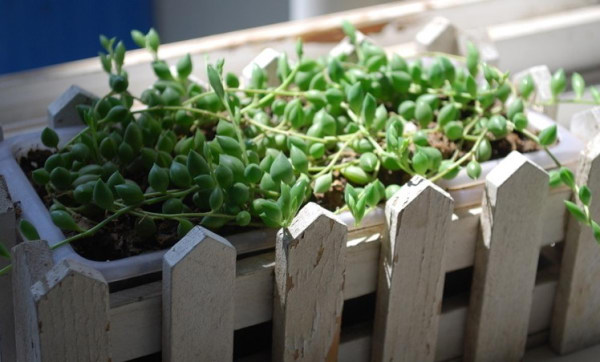
Growing Habits of the String of Pearls
The string of pearls likes soil rich in organic matter, loose and fertile. It grows best in a warm environment with relatively high air humidity and strong indirect light. It dislikes shade, high temperatures and high humidity. It prefers partial shade; direct sun exposure can scorch the beads, while too little light makes growth weak. In summer, avoid high temperatures and high humidity, otherwise the stems rot and the plant dies easily; the potted plant can be placed in a rain-sheltered, shaded spot for cultivation. After autumn arrives, the plant resumes growth, so light should be increased and a liquid fertilizer applied.
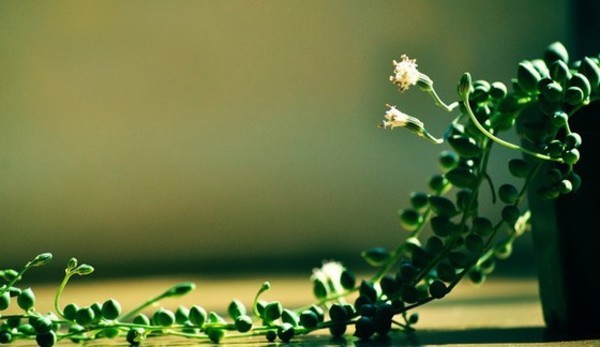
How to Grow the String of Pearls and Points to Note
1. Because the string of pearls is thick and fleshy with abundant sap, it is relatively cold-tolerant. Therefore, during cultivation it should be watered sparingly. In hot, dry seasons, you can frequently mist the leaves and trailing stems to keep the whole plant fresh and green. Since the string of pearls likes a partially shaded environment, a good growing environment should be created for it.
2. Because the string of pearls has a relatively shallow root system, it should be planted in a shallow pot. To increase air permeability and drainage in the pot, place a piece of coarse ceramic at the bottom of the pot and spread a layer of coarse sand or fine coal cinders over it. Some leaf mold and sand can also be added to the growing medium of the string of pearls to improve aeration.
3. During the two vigorous growing seasons of spring and autumn, apply thin fertilizer several times, and frequently spray the leaf surface with a 1-3‰ concentration of nitrogen fertilizer and potassium dihydrogen phosphate, which makes the beads of the string of pearls fuller and more ornamental.
4. It likes warmth and humidity, is relatively cold-tolerant (when grown in the Jianghuai region it can withstand low temperatures of 0°C), and tolerates high temperatures; the optimum temperature is around 20°C-28°C. Growth is slow at both high and low temperatures, and in high-temperature environments above 30°C it is almost dormant, so water and fertilizer should be reduced, otherwise the roots rot easily -- this is also one of the keys to successful cultivation.
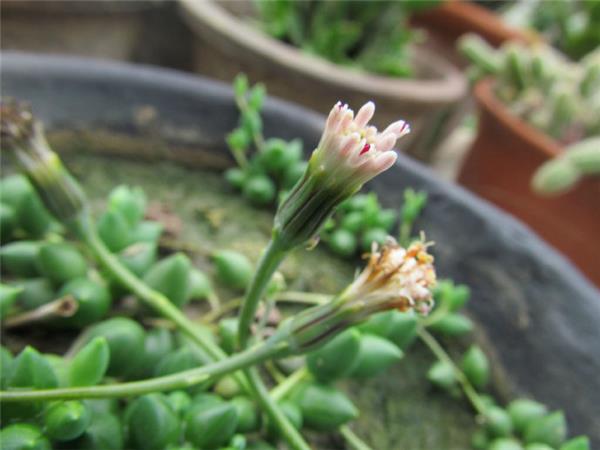
5. There are few pests and diseases. Aphids in spring are one of them; remove them promptly or spray 1500x omethoate to kill them. Mites in summer and autumn are another; use 1000x dicofol to kill them. Pay attention to ventilation and increasing leaf-surface humidity, which can reduce mite infestation.
6. The string of pearls can be propagated by cuttings. Simply cut off a stem and bury it in soil and it will root; in about two to three weeks new shoots will appear. Many people fail to grow it well, or after cutting a stem and planting it, it fails to root and slowly shrivels and dies; the main reason is still incorrect burying. After observing each propagation, gardening enthusiasts found that the best method is: cut off the stem and lay it flat on the soil surface, then spread a layer of soil on top so that the stems of the string of pearls are completely buried, and it is even fine to bury the beads as well. Then sprinkle a little water so the soil sticks to the string of pearls; there is no need to worry about aeration or sprouting.
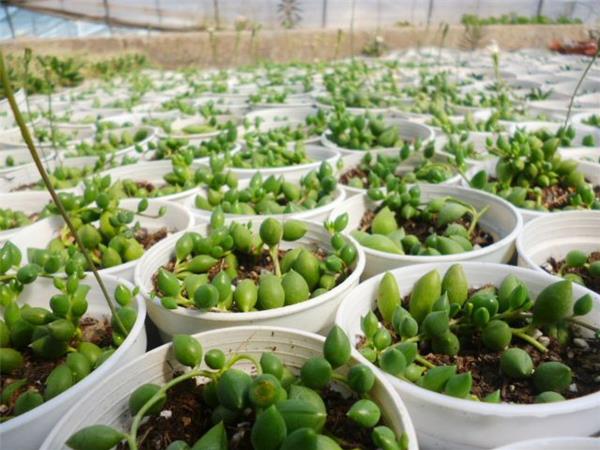
The leaves of the string of pearls are plump and small, round and lovely, and are very effective at beautifying a room. Choose a beautiful pot to plant them in, and whether placed on a balcony or hung indoors, they can delight the eye.