Detailed Explanation of Grape Cultivation Techniques: Master All Key Points of Planting and Management
When growing grapes in southern regions, due to the effects of high temperature, high humidity and plum rain climate during the growing season, pests and diseases are severe, especially infectious ☆ prohibited ☆ diseases, which are particularly serious and difficult to control. Some vineyards have suffered devastating disasters as a result. Therefore, disease is the main factor restricting grape production in the south. The southern region has the climate characteristic of early spring warming, and grapes begin to sprout and grow more than 20-60 days earlier than in the north, which is extremely favorable for developing early-maturing grapes. The same variety also matures earlier than in the north, and its products can "fill gaps and avoid peaks," staggering sales away from the market peak. This can both fill the gap in fresh fruit supply on the market and help give play to planting benefits. So what are the grape cultivation techniques?
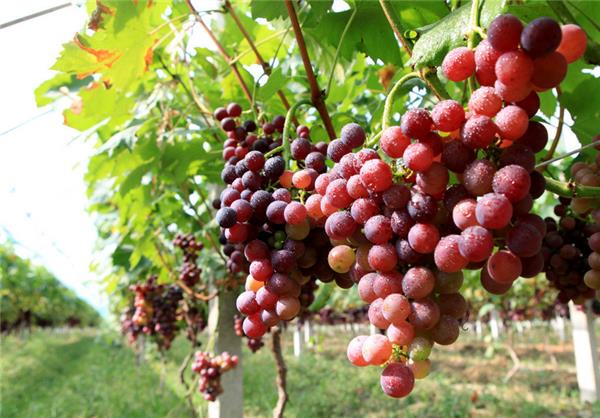
Grape Cultivation Techniques
1: This variety is early-maturing and high-quality, disease-resistant, high-yielding, and has good storage and transportation tolerance. Summer Black is a triploid variety, and its berries are relatively small when grown naturally, so gibberellin treatment is needed, and the berries can be increased by more than 1 times. For treatment concentration and timing, full trials should be carried out in each region to summarize reliable treatment concentrations and methods. Summer Black matures early and does not drop fruit easily, so it is suitable for forcing cultivation in protected facilities. Trellis selection varies from place to place. The north mostly uses hedge trellises, while the south mostly uses single-trunk V-shaped or overhead trellises. Summer Black grapes can use any trellis type. The author advocates hedge trellis cultivation with natural fan-shaped pruning, row spacing 1.7 m, plant spacing 0.8 m, and 500 plants per 667 sq m. In areas requiring soil mounding for cold protection, row spacing can be 2 m, plant spacing 0.8 m, and 420 plants per 667 sq m. In places with a lot of rain, the distance between the first wire above ground and the ground should be more than 80 cm to prevent rain-splashed mud and sand from contaminating the berry surface. This trellis type is conducive to fully utilizing land, wind and light, and is especially beneficial for early high yield. Under ordinary management standards, the yield per 667 sq m in the second year can reach more than 2000 kg.
2: Cluster trimming and berry thinning. Summer Black grape clusters are neat, mostly without shouldered clusters, with occasional double clusters. It is recommended that for any double clusters, remove 1. For excessively long clusters, pinch off 1/5-1/4 of the cluster tip 10 days before flowering. On average, each fruiting cane should retain only 1 cluster. In actual practice, follow the principle of "strong canes 2, medium canes 1, weak canes none," that is, vigorous canes at the upper end (front end) of the trellis may retain 2 clusters as appropriate, medium-vigor new shoots retain 1 cluster, and weak canes and training canes retain no clusters. About 4000 clusters should be retained per 667 sq m in total.
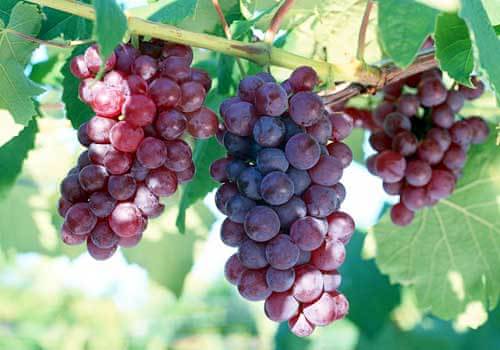
Summer Black berries are set densely, so berry thinning is recommended. Manual berry thinning takes too much time. At full bloom and fruit set, light watering may be done as appropriate, or when spraying fungicides, intentionally spray the clusters to promote moderate flower and fruit drop. Alternatively, at full bloom and fruit set, moderately shaking or striking the vine can also play a role in flower and fruit thinning.
3: Berry enlargement treatment. At present, in the domestic grape market, large berries are still favored. Fruit enlargement helps increase yield and improve commodity value. Summer Black grapes grow small berries naturally, which is a common trait of seedless grapes, so enlargement treatment is recommended. That is, 15 days after petal fall, use 45-50 mg/kg gibberellin solution to dip or spray the clusters, and repeat once after 12-15 days. Or when the berries are the size of soybean grains, use 45 mg/kg gibberellin solution, with 10 ml forchlorfenuron per 1-1.5 kg plus Gaoshou (a fruit stalk hardening inhibitor), and spray or dip the clusters once.
4: Fruit bagging. Grape bagging has many benefits: preventing disease, preventing insect pests, preventing bird damage, preventing pollution, ensuring yield, and ensuring quality. The berries produced are not only attractive in appearance but also good in taste. It is recommended that whether for field production or greenhouse cultivation, full bagging should be pursued.
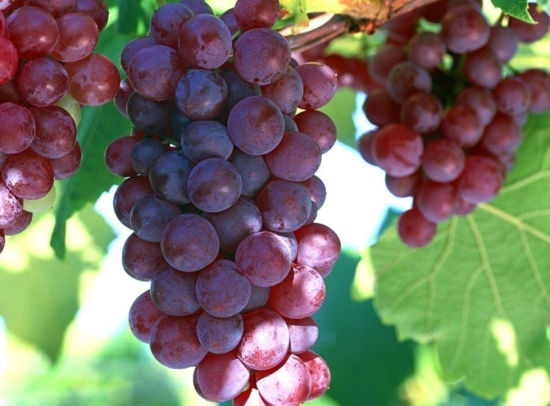
Precautions for Irrigation Water in Summer Black Grape Cultivation
Summer Black grapes are relatively drought-tolerant, but if irrigated at the right time, yield can increase significantly. Precautions for irrigation water in Summer Black grape cultivation:
From sap flow to before flowering in Summer Black grapevines, attention should be paid to keeping the soil moist. If irrigation can be combined with topdressing at this time, it will create good fertilizer and water conditions for flowering and fruit set.
However, excessive moisture during the flowering period of Summer Black grapes will cause a large amount of flower and fruit drop. Unless the soil is too dry, it is not suitable to water during the flowering period.
From fruit set to before berry coloring in Summer Black grapes, it is during high temperatures, leaf transpiration is large, and a lot of water is needed, so watering can be done every 7-10 days according to the weather.
After Summer Black grape berries color and begin to soften, generally no watering is done except in particularly dry years. Too much watering will reduce the sugar content of the fruit, make it less storable, and easily cause fruit cracking.
During the dormancy period of Summer Black grapevines, soil that is too dry is unfavorable for overwintering, while soil that is too wet easily causes bud eyes to rot. Generally, after harvest, one deep watering is given in combination with autumn fertilization. In northern production areas, one freezing water irrigation is also needed before cold protection. This is an important measure for cold protection of Summer Black grapes.
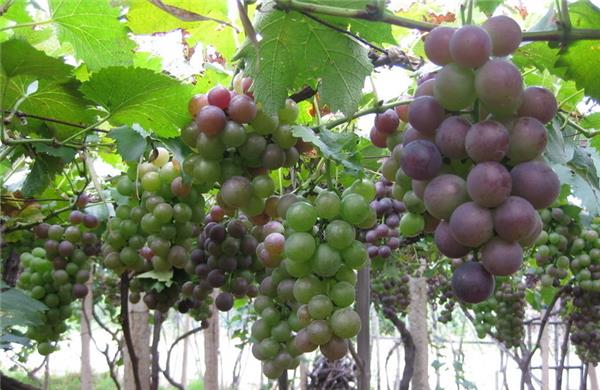
Application Methods and Precautions of Rare Earth Elements in Grape Cultivation The application methods of rare earth elements on grapes are:
Rare earth elements (re) refer to 15 heavy metal elements in the lanthanide series of the periodic table of chemical elements, such as cerium, praseodymium, neodymium and ytterbium, which have very similar chemical properties. In recent years, they have been widely used on fruit trees. The commercial rare earth micro-fertilizer is called agricultural growth promoter, abbreviated as "Nongle." Spraying rare earth elements on grapes can increase the fruit set rate, enlarge leaf area, increase chlorophyll content, improve photosynthetic capacity, and enhance dry matter accumulation, thereby effectively increasing yield, improving quality, and also effectively preventing fruit cracking and promoting early fruit ripening.
Before grape flowering, at full bloom, and during berry enlargement, spray 500-1000 mg/kg rare earth elements once each. Practice shows that after such treatment, yield can increase by 10%-31.8%, sugar content can increase by 1 percentage point, and the maturity period can be advanced by 5-7 days.
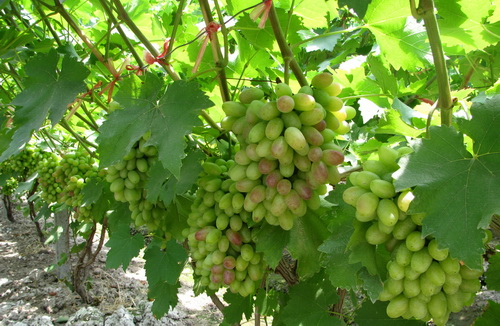
For some varieties prone to fruit cracking, such as Zana, Rizamat, Jingyou, etc., spraying 500 mg/kg rare earth elements twice consecutively during berry enlargement can promote thicker fruit skin and thereby correspondingly reduce fruit cracking.
When using rare earth micro-fertilizer, note: ① Rare earth fertilizer can only dissolve in slightly acidic solution. In hard water and alkaline solutions, it easily forms precipitates and cannot dissolve. Therefore, when preparing, first use vinegar to adjust the water to slightly acidic (p5-6), then add the rare earth micro-fertilizer, stir thoroughly, and after it is completely dissolved, prepare it to the required concentration for use. ② Rare earth micro-fertilizer should be sprayed on sunny days at 9-10 a.m. and after 16:00 in the afternoon. ③ The concentration of rare earth micro-fertilizer for foliar spraying must not exceed 1%, otherwise it easily causes phytotoxicity. ④ Rare earth micro-fertilizer has obvious effects in vineyards planted on sandy soil and calcareous soil, but has no obvious effect when applied on acidic soil.
Application Methods and Precautions of Rare Earth Elements in Grape Cultivation The application methods of rare earth elements on grapes are:
Rare earth elements (re) refer to 15 heavy metal elements in the lanthanide series of the periodic table of chemical elements, such as cerium, praseodymium, neodymium and ytterbium, which have very similar chemical properties. In recent years, they have been widely used on fruit trees. The commercial rare earth micro-fertilizer is called agricultural growth promoter, abbreviated as "Nongle." Spraying rare earth elements on grapes can increase the fruit set rate, enlarge leaf area, increase chlorophyll content, improve photosynthetic capacity, and enhance dry matter accumulation, thereby effectively increasing yield, improving quality, and also effectively preventing fruit cracking and promoting early fruit ripening.
Before grape flowering, at full bloom, and during berry enlargement, spray 500-1000 mg/kg rare earth elements once each. Practice shows that after such treatment, yield can increase by 10%-31.8%, sugar content can increase by 1 percentage point, and the maturity period can be advanced by 5-7 days.
For some varieties prone to fruit cracking, such as Zana, Rizamat, Jingyou, etc., spraying 500 mg/kg rare earth elements twice consecutively during berry enlargement can promote thicker fruit skin and thereby correspondingly reduce fruit cracking.
When using rare earth micro-fertilizer, note: ① Rare earth fertilizer can only dissolve in slightly acidic solution. In hard water and alkaline solutions, it easily forms precipitates and cannot dissolve. Therefore, when preparing, first use vinegar to adjust the water to slightly acidic (p5-6), then add the rare earth micro-fertilizer, stir thoroughly, and after it is completely dissolved, prepare it to the required concentration for use. ② Rare earth micro-fertilizer should be sprayed on sunny days at 9-10 a.m. and after 16:00 in the afternoon. ③ The concentration of rare earth micro-fertilizer for foliar spraying must not exceed 1%, otherwise it easily causes phytotoxicity. ④ Rare earth micro-fertilizer has obvious effects in vineyards planted on sandy soil and calcareous soil, but has no obvious effect when applied on acidic soil.