Detailed Guide to Cucumber Cultivation Techniques: A Step-by-Step Tutorial on Growing Cucumbers Well
Recently someone asked what time of year to plant cucumbers and how to grow them. I think this friend is probably not from a rural area, because people who farm regularly would never be unsure about when to plant cucumbers. Cucumbers are generally divided into spring cucumbers and summer-autumn cucumbers. Spring cucumbers are sown from January to March, while summer-autumn cucumbers are sown between June and August. So how exactly should cucumbers be grown? Let me explain below!
Before sowing, cucumber seeds must first be disinfected, which can prevent many pests and diseases. Generally, it is enough to scald them briefly in warm boiled water at 50 to 55 degrees, but be careful to stir constantly to prevent the seeds from being scalded. After that, soak them in warm water at 30 degrees for about 4 to 6 hours, then wash them clean, scoop them out, drain them, and wait for germination. As long as cucumber seeds are kept in a warm, moisture-retaining place, they will sprout in 20 hours.
Cucumbers planted in early spring need to be transplanted for final planting. You can use seedling cups or a seedbed to raise seedlings. For cucumber seedlings, the seedling age is generally 15 to 20 days before they are ready for final planting. At this time, it is best to do it in the evening, because the temperature at that time is least likely to cause damage to cucumber seedlings. When transplanting for final planting, be careful to protect the cucumber seedling root system. Before lifting the seedlings, water them thoroughly first. When lifting the seedlings, follow the proper order and be sure to transplant with soil to prevent root damage.
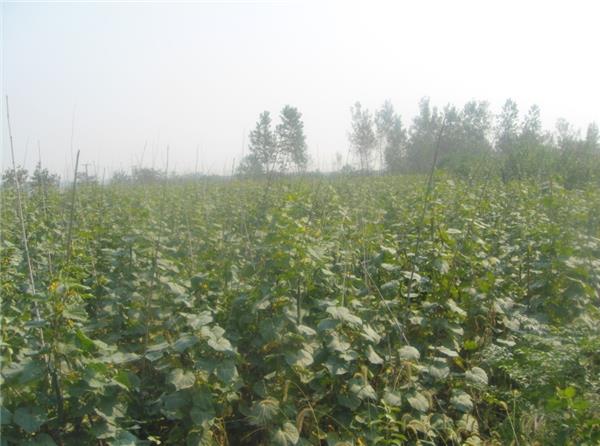
How to Grow Cucumbers with Good Taste
Fertilize in a Balanced and Appropriate Amount
First, foliar topdressing. Spray the leaves once with rare earth micro-fertilizer at the seedling stage, early flowering stage, and young fruit stage; at the full flowering stage and full fruiting stage, mix 0.5 kg of urea with 150 kg of water per mu, stir evenly, and spray on the leaves. Second, root fertilization. At the seedling stage, nitrogen fertilizer application should be controlled to avoid excessive vegetative growth. By the full flowering and fruiting stage, the ratio of nitrogen, phosphorus, and potassium absorbed by cucumbers is basically 5:2:6, and at this stage the supply of nitrogen fertilizer and potassium fertilizer should be strengthened.
Avoid Low or High Temperatures
First, when the air temperature or soil temperature is below 13°C, cell permeability decreases, and the absorption of nutrients and water is inhibited, making cucumbers prone to bitterness; second, when the greenhouse temperature is above 30°C and lasts too long, it can also cause cucumbers to become bitter. Therefore, try to enhance the warming and heat-preservation performance of the protective facility, adjust the temperature well, and avoid the temperature threshold at which bitterness forms.
Watering Should Be Reasonable and Timely
First, when the temperature is relatively high and soil moisture is relatively low, the plants undergo physiological drought and are prone to producing bitter cucumbers. At this time, water must be supplied to cucumbers in time to maintain the turgor pressure of the plant tissues and the stability of plant body temperature. Second, watering should be done in small amounts and multiple times, and the water temperature must not be too low, to prevent a deficit of water in the plant body from leading to the formation of cucumber bitterness compounds. In addition, pay special attention that after final planting, the seedling-strengthening period of controlled watering should not be excessive, otherwise the first fruit near the roots is prone to bitterness.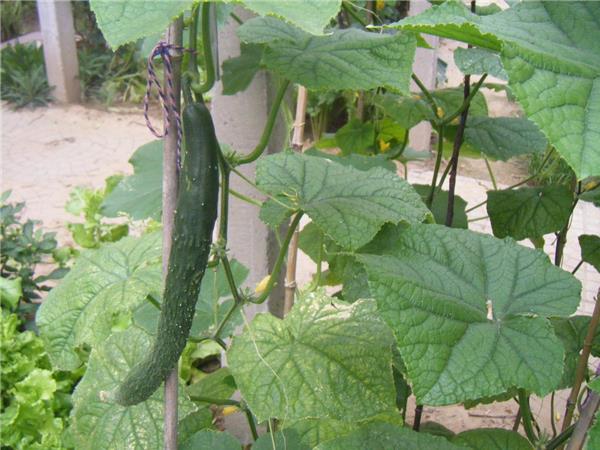
Density Should Not Be Too High
If final planting is too dense and light is poor, the bitterness of cucumbers will worsen. For cucumber cultivation in protected facilities, the method of dense planting early and sparse planting later should be used, that is, the usual plant spacing is 26~30 cm and the row spacing is 60 cm. If planted at a spacing of 15 cm, the "single plants" on the same ridge are not trained onto the trellis. When they grow to 12 true leaves, pinch off the tips, which can make them set fruit quickly. After the fruits on the main vine are harvested, pull them out. The "repeat plants" are trained onto the trellis. When the plants grow to 1.2 m tall, pinch off the tips to make them set fruit faster, and after the fruits on the main vine are harvested, pull them out as well. With this cultivation method, early yield can increase by nearly 1 times, and at the same time it also reduces the occurrence of bitter cucumbers.
Prevent Root Damage
Root damage will worsen the bitterness of cucumbers. In production, sand trays should be used for sowing, and when lifting seedlings, root damage should be minimized as much as possible. For pricking out seedlings, use plastic nutrient pots or paper bags. In cultivation, ridge culture with plastic film mulching should be used as much as possible. When hoeing the soil, it should be slightly deeper in the early stage and slightly shallower in the later stage.
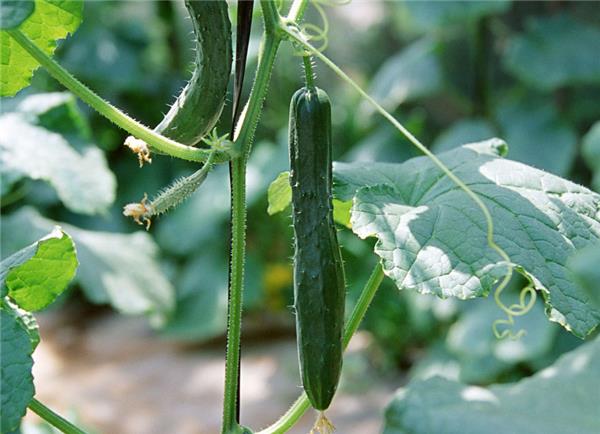
How to Grow Cucumbers for High Yield and Good Quality
Big-belly cucumber. Causes and control measures:
① Cucumber female flowers are not completely fertilized, and seeds are produced only at the tip of the fruit, causing nutrients to accumulate at the tip, which leads to the flesh tissue at the tip becoming especially enlarged and forming a big-belly cucumber tip. Create good conditions for flowering and pollination to control it.
② If the plant lacks potassium while nitrogen fertilizer is supplied in excess, big-belly cucumbers will form. Control measures: apply potassium nitrate, plant ash, etc. to the soil, or spray the plant leaves with a 0.3% potassium dihydrogen phosphate solution.
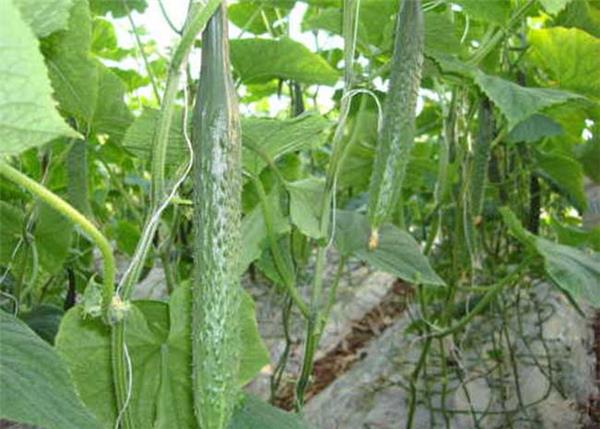
③ If cucumbers lack water in the early growth stage and are given a large amount of water in the later stage, big-belly cucumbers will form. This is because water has a very strong effect on cell elongation or enlargement growth. When water is lacking, cells grow slowly; when a large amount of water is supplied, cells develop rapidly. Control measures: supply water evenly throughout the growth period, keep the soil moist, and avoid excessive drought and water shortage or flooding irrigation.
Curved cucumber. Causes and control measures:
① Cucumber fertilization is incomplete, and only the egg cells on one side of the ovary are fertilized, resulting in unbalanced development of the entire fruit and forming a curved cucumber.
② During cucumber growth, factors such as high temperature, high humidity, and adverse climate can cause curved cucumbers. Control technique: take a toothpick and insert it into the cucumber vine at the part where the curved fruit forms, then water immediately. The next day the fruit can straighten, at which point pull out the thin toothpick, and the cucumber can still grow normally.
③ During cucumber growth, if the fruit is blocked by external objects and cannot extend normally, deformed curvature will result. Control measures: after the cucumber sets fruit, remove the external objects blocking the cucumber's growth and development, which can allow the cucumber to elongate normally.
The above are the cucumber cultivation methods. Of course, summer-autumn cucumbers do not need to be this complicated; the seeds only need to be disinfected and then they can be sown, so summer-autumn cucumbers on the market are the cheapest. Now this friend knows when to plant cucumbers, right?
will produce big-belly cucumbers. This is because water has a very strong effect on cell elongation or enlargement growth. When water is lacking, cells grow slowly; when a large amount of water is supplied, cells develop rapidly. Control measures: supply water evenly throughout the growth period, keep the soil moist, and avoid excessive drought and water shortage or flooding irrigation.Curved cucumber. Causes and control measures:
① Cucumber fertilization is incomplete, and only the egg cells on one side of the ovary are fertilized, resulting in unbalanced development of the entire fruit and forming a curved cucumber.
② During cucumber growth, factors such as high temperature, high humidity, and adverse climate can cause curved cucumbers. Control technique: take a toothpick and insert it into the cucumber vine at the part where the curved fruit forms, then water immediately. The next day the fruit can straighten, at which point pull out the thin toothpick, and the cucumber can still grow normally.
③ During cucumber growth, if the fruit is blocked by external objects and cannot extend normally, deformed curvature will result. Control measures: after the cucumber sets fruit, remove the external objects blocking the cucumber's growth and development, which can allow the cucumber to elongate normally.
The above are the cucumber cultivation methods. Of course, summer-autumn cucumbers do not need to be this complicated; the seeds only need to be disinfected and then they can be sown, so summer-autumn cucumbers on the market are the cheapest. Now this friend knows when to plant cucumbers, right?