What are the morphological characteristics of Cinnamomum macrophyllum, and how does it differ from Cinnamomum camphora?
Like most camphor trees, Cinnamomum macrophyllum has relatively strong vitality and adaptability, so it is a tree species that even gardening beginners can try to grow. Also, although Cinnamomum macrophyllum and Cinnamomum camphora look quite similar, the two still differ.
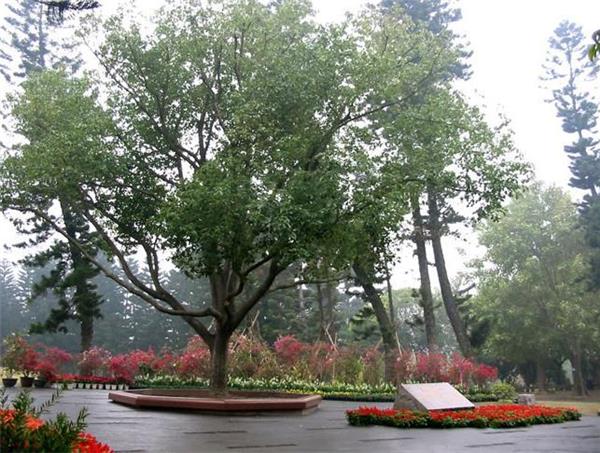
I. Morphological characteristics of Cinnamomum macrophyllum
Tree, 8-12 m tall. Branchlets whorled or nearly whorled, densely covered with rusty tomentum when young; terminal buds ovate, scales covered with rusty short pubescence on the outside. Leaves 3-5, nearly whorled; petiole 1-1.5 cm long, densely covered with rusty tomentum; leaf blade oblong-lanceolate, oblong-elliptic or lanceolate, 10-17 cm long, 3-6 cm wide, apex nearly caudate-acuminate or acute, base cuneate, leathery, both surfaces of young leaves densely covered with rusty tomentum, hairs gradually falling off later, when old only the midvein at the base of the upper surface has pubescence, and on the lower surface only the veins have pubescence, elsewhere glabrous. Several umbels clustered in leaf axils or on the sides of branches; flowers unisexual, dioecious; male flowers with 4 tepals, ovate, densely covered with rusty long pubescence on the outside and margins, with long pubescence at the base inside; 6 fertile stamens, exserted, filaments with long pubescence at the base, rudimentary pistil glabrous, style slender; female flowers with tepals linear or ovate-lanceolate, staminodes with pubescence at the base, ovary ovate, glabrous or sparsely pubescent, style pubescent, stigma peltate, 2-lobed. Fruit spherical, 8-10 mm in diameter; fruit receptacle flat and disc-shaped, 2-3 mm in diameter, with tepals often remaining on the margin, fruiting pedicel about 7 mm long, pubescent. Flowering period October-December, fruit ripening period July-August of the following year.
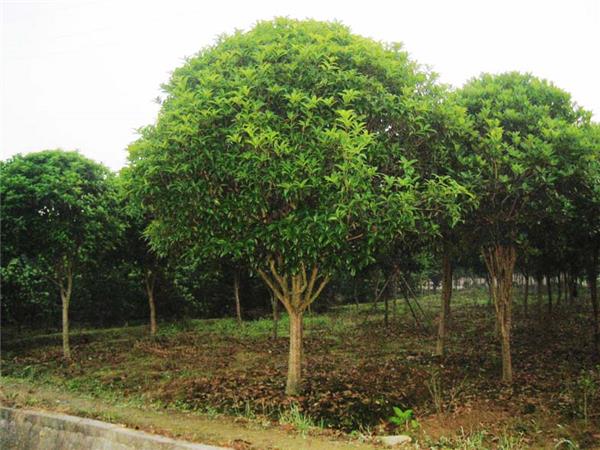
II. Differences between Cinnamomum camphora and Cinnamomum macrophyllum
1. The Cinnamomum camphora tree is an evergreen arbor belonging to the Lauraceae family. It generally can reach 50 m in height and is a very good landscaping material. When it has just grown, its bark is generally green and its surface is very smooth. But when it grows old, the bark slowly changes from green to yellowish brown, and cracks begin to appear on the surface. The bark of Cinnamomum macrophyllum is always yellowish brown or grayish brown, with irregular longitudinal fissures.
2. From the name alone, it is easy to know that the leaves of Cinnamomum macrophyllum are relatively large, and this is one of the differences between it and other camphor trees.
3. Another very obvious difference is the color of the flowers. The flowers of Cinnamomum camphora are yellow-green, but Cinnamomum macrophyllum is purple-black when mature. This sharply contrasting difference in color is another way for us to distinguish them.
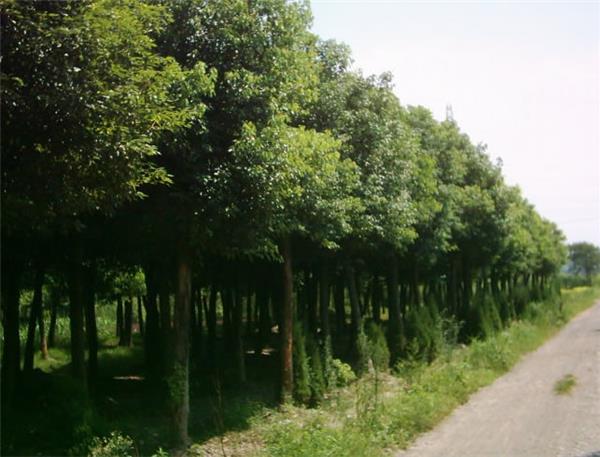
III. Cultivation techniques for Cinnamomum macrophyllum
Sowing: drilling is preferable, with row spacing of 15-20 cm, furrow depth 1.5-2.0 cm, width 3-4 cm, and 40-50 seeds sown per meter of sowing furrow (if "tender seedling transplanting" is to be used, broadcasting may be adopted). Cover with burned soil, 1-2 cm thick, and build a shade shed with 50% shading net for shade. Water once each morning and evening. When the seedlings have 3-4 pairs of true leaves, carry out bed splitting or transplanting into nutrition bags for cultivation, and strengthen management according to nursery specifications. One-year-old seedlings are 50-80 cm tall and can be lifted from the nursery for planting. During the growth period, remove side branches in time to protect the apical growth advantage, manage carefully, and provide sufficient water and fertilizer; the seedling height can reach 50-75 cm in the same year.
Transplanting: when lifting from the nursery, transplanting must be done with a soil ball, and large seedlings must be heavily pruned during transplanting to reduce transpiration. In cold weather areas, attention must be paid to cold protection and overwintering in the year of planting. Before the cold wave arrives, whitewash the trunk, water thoroughly with freezing water, mound soil 20-30 cm around the base of the trunk, then bind the trunk of the young tree with rice straw and remove it in spring. For saplings introduced from the south to the north, careful management must be continued for 3-4 years; after they adapt to the local climate, cold protection treatment of the trunk is no longer needed in winter.
Management: in order to cultivate strong seedlings, a series of seedling tending tasks such as intertillage, weeding, irrigation, hilling, pest control and disease elimination must be carried out in time. If conditions permit, root cutting or tender seedling transplanting should also be done during the seedling stage.
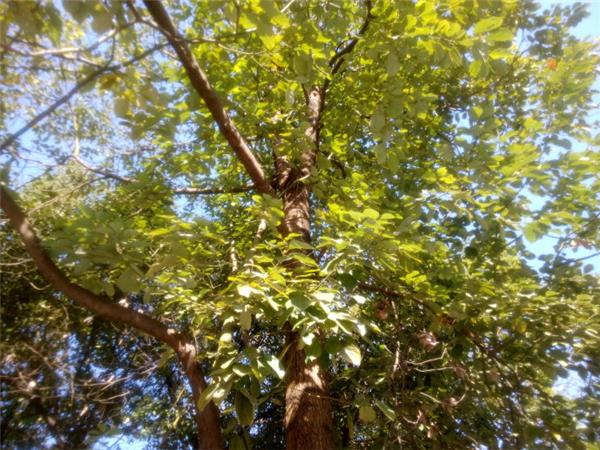
Cinnamomum macrophyllum has relatively high ornamental value and is often used in various landscape designs. It is also a plant very suitable for planting in courtyards; it can not only beautify the courtyard, but also provide people with shade to enjoy the cool.