Detailed Guide to Melon Cultivation Techniques: Key Growing Points from Sowing to Harvest
More and more people are passionate about growing vegetables on their home balconies, but enthusiasm and a love for it alone are far from enough - professional skills and knowledge are essential. Melons are a seasonal fruit with a crisp texture that makes them very popular, so many gardening enthusiasts want to try growing melons. So let's first talk about how melon seeds should be handled before sowing!
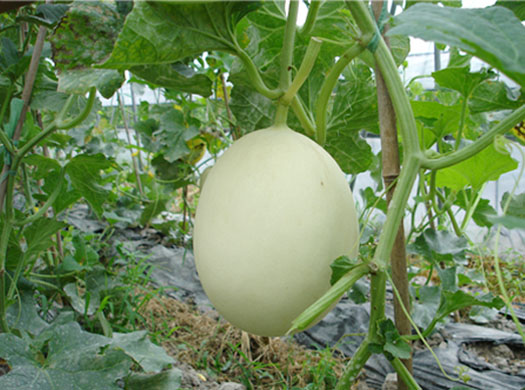
Melon Cultivation Techniques
1. Seed selection: Take the seeds out of the packaging bag or container, remove any deformed, moldy, damaged or insect-eaten seeds mixed in, and keep plump, uniform seeds for later use.
2. Sun-drying the seeds: Spread the selected seeds evenly on clean paper and dry them in sunny, windless weather with plenty of sunshine. During drying, turn them over every 2 hours so the seeds receive even sunlight. Sun-drying makes the seed moisture content uniform, promotes after-ripening, enhances seed vigor, and improves germination energy and germination rate; it also has a sterilizing effect.
3. Soaking the seeds: Generally, the warm water soaking method is used. Put the sun-dried seeds into water at 55-60 degrees, using about 5 times the volume of the seeds in water, and soak for 20-30 minutes. Then scoop out the seeds and let them dry. Next, soak the seeds in warm water at 28-30 degrees for 6-8 hours.
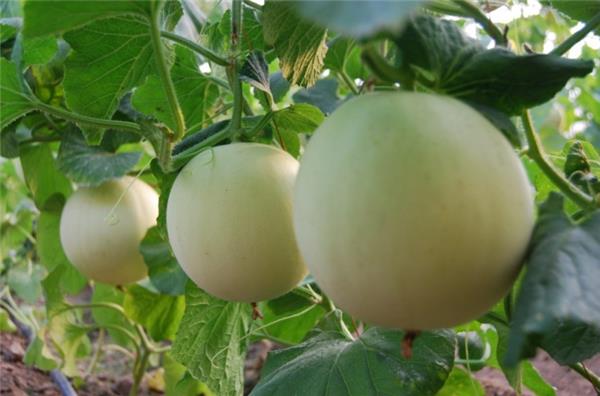
4. Pre-sprouting: Let the soaked seeds drain, wrap them in clean damp gauze, and sprout them at 25-30 degrees. They will sprout in about 24 hours, and once the seeds just begin to show white, they can be sown. During pre-sprouting, try to keep the sprout length within 0.5 cm to prevent it from growing too long, because overly long sprouts are easily broken during sowing, which reduces the emergence rate.
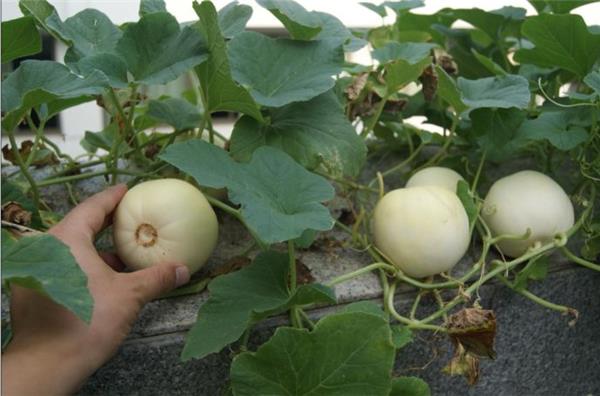
Why pinch melons? How to pinch them? Pinching means removing the growing tip. Pinching is a key technical measure in melon cultivation management. Due to differences in varietal characteristics, melons have different fruiting habits. Some varieties set fruit early and abundantly on the main vine; for these, pinching is often done a bit later, making use of the main vine's early and abundant fruiting. Some varieties set fruit late and sparsely on the main vine but early and abundantly on the secondary vines, so the main vine should be pinched to use the secondary vines for fruiting; some also use tertiary vines for fruiting. Some varieties set fruit late on both the main vine and secondary vines, but the tertiary vine can set fruit at the 1st node, so both the main vine and secondary vines should be pinched, using the tertiary vines for fruiting. For varieties that fruit on the main vine, pinching can be done after 4 true leaves. For varieties that use secondary or tertiary vines for fruiting, in order to encourage the 12582 Nongxintong website plants to send out secondary vines earlier, the growing tip should be removed (pinched) in the seedbed. That is, when the seedlings have 2 true leaves unfolded and the growing point is visible, in the morning when the tissue is tender, use a thin stick or bamboo splint to remove the seedling's growing point. Be careful when removing the tip: flick it in the direction opposite to the growing point, move gently, and do not injure the adjacent axillary buds. Some growers, although also using secondary or tertiary vines for fruiting, do not remove the growing tip but instead pinch at the 4-true-leaf stage; this method is less early-maturing than tip removal but gives slightly higher yield, and is suitable for mid- and late-maturing varieties.
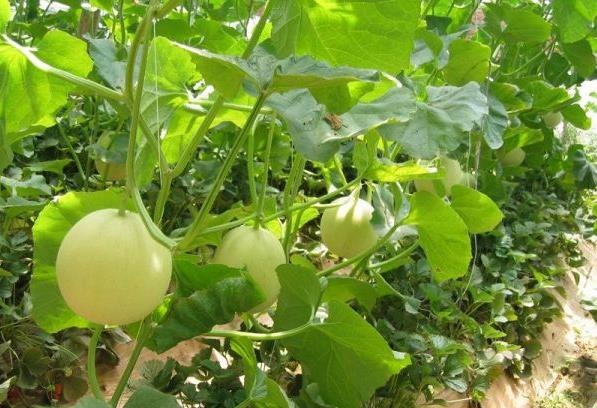
Precautions During the Melon Fruit Ripening Period
1. Harvest according to market and weather conditions. Each variety has a different growth period under different climatic conditions and cultivation methods. You can record the pollination date of the variety, then combine it with the variety grown, the climate and the cultivation method to infer the ripening date.
2. Maturity can be judged by traits such as skin color according to the variety. For example: yellow-skinned varieties turn yellow, white-skinned varieties turn white or milky white, and Elizabeth-type varieties have a fragrance when ripe. When ripe, the fruit's firmness changes; you can press lightly on the skin at the blossom end with your finger and feel elasticity, which indicates ripeness. The hairs on the fruit surface or the fruit stalk surface fall off when lightly touched or rubbed with the hand. When ripe, the small leaves and tendrils at the fruit-setting node lose their green color, turn yellow and dry up - this is also a way to judge maturity.