How to Grow Canna Lilies in Pots and in the Ground
Canna lilies are flowers with very high ornamental value, and they can often be seen in landscape design. Although canna lilies are mostly grown in the ground, they can also be grown in pots.
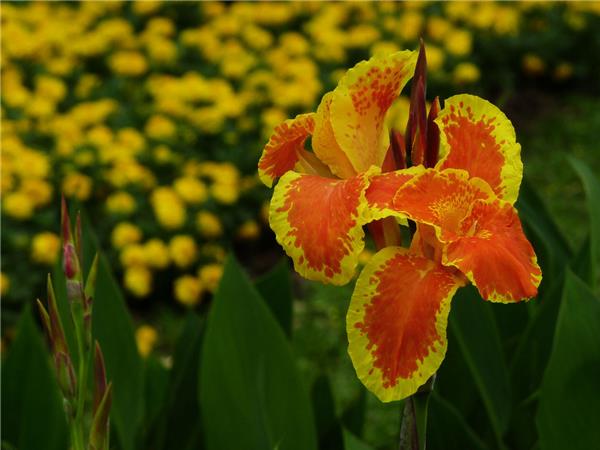
Points to Note When Growing Potted Canna Lilies
1. When growing canna lilies in pots, you must first choose a suitable variety; dwarf varieties are the most suitable for pot cultivation. Potted care should begin with selecting rhizomes, and be sure to master the cultivation techniques for every growth stage. In spring, from March to April, dig up the rhizomes, trim off the rotten parts, and cut them into several pieces according to the size of the rhizomes and the number of stem buds. The cuts should be smooth, and after cutting they must be coated with plant ash or charcoal powder, then planted separately.
2. When growing canna lilies in pots, using greenhouse forcing treatment can make them bloom earlier. To do this, in February to March, cover the old roots shallowly with wet sand or loose peat soil, just enough to cover the rhizomes, and place them at 16°C to force sprouting. After the buds on the rhizomes sprout, cut the old stems into several pieces, each with more than 1 bud, and plant them separately in flower pots with a diameter of 10-12 cm. In April, repot them 1 more time; depending on the actual situation, flower pots with a diameter of 15-20 cm can be used. In mid-May, move them outdoors for care or take them out of the pots and plant them in open ground, and they can bloom in July to August.
3. Canna lilies like fertilizer and tolerate moisture. The potting soil should be mixed and prepared from leaf mold, garden soil, peat soil, mountain soil, and other organic-rich soils, and organic fertilizers such as bean cake and bone meal should be applied as a base fertilizer.
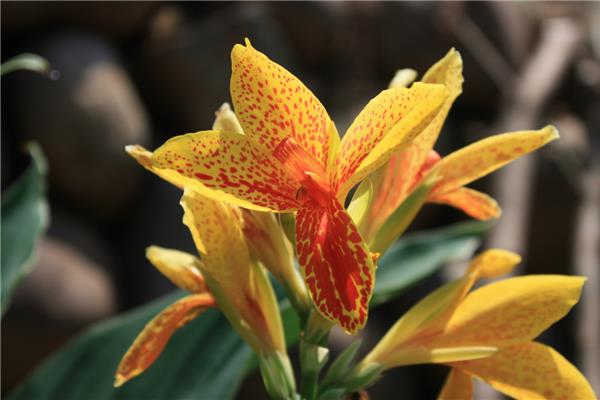
4. After separate planting, the first watering should be thorough, and afterward the potting soil should often be kept moist. When they grow to 5-6 leaves, apply liquid fertilizer once every 10-15 days. The liquid fertilizer can be fully decomposed dilute bean cake water with an appropriate amount of ferrous sulfate added, or a compound chemical fertilizer solution. The concentration should preferably be on the lighter side, generally around 0.3%, and fertilization should stop when they bloom.
5. During the flowering period, the flower pots should be moved to a shady and cool place, which helps extend the flowering period. After the flowers fade, the flower stems should be cut off in time to encourage new buds to sprout, grow flower branches, and continue blooming.
6. Potted canna lilies sometimes show symptoms of scorched and yellowing leaf edges, mainly caused by applying too much ferrous sulfate or by suffering drought and exposure to harsh sunlight. In hot summer, watering with water that is too cold can also cause scorched leaf edges, and if fertilizer is applied too strongly during the hottest part of summer, it can even burn the rhizomes and "burn them to death." Therefore, when the temperature is as high as above 40°C, the canna lilies can be moved to a ventilated and cool place. Around Frost's Descent, potted canna lilies can be moved to a place at 5-10°C, and they can overwinter safely; during overwintering, stop fertilizing.
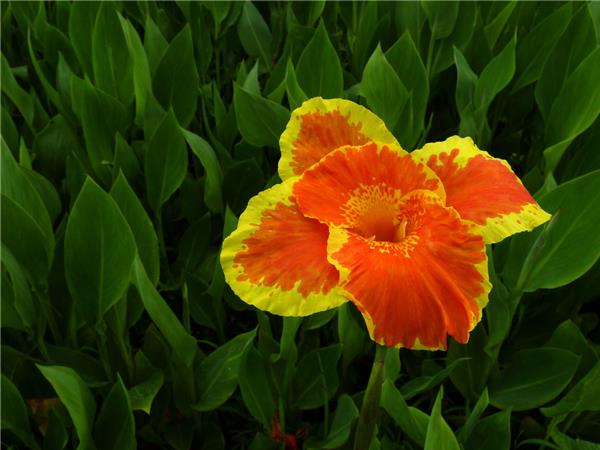
Overwintering Methods for Ground-Planted Canna Lilies
1. Around Frost's Descent, after the aboveground parts of ground-planted canna lilies die, cut off the dead leaves, dig out the underground rhizomes, let them dry slightly, and place them at home under the wall facing north, using the stratification method. This method requires regular checks for whether the humidity is too high and whether the temperature is too low or too high, to prevent rot and early sprouting.
2. Around Frost's Descent, on a clear day, cut off the dead aboveground parts of ground-planted canna lilies and let the wounds dry naturally. In the evening, use a shovel to turn the soil within 30 cm around the roots and mix in some fully decomposed compost, then pile up a small mound of soil to bury the underground parts. This method mainly uses the characteristics of fully decomposed compost being loose, well aerated, and able to release heat after becoming damp, thereby providing insulation.
3. The plant treatment is the same as above, except that the soil around the roots is not turned and no compost is used. Instead, sawdust, dried rice straw, weeds, and the like are used to cover the roots, and then a thin layer of soil is spread over the covering. After the aboveground parts wither, remove the dead branches and rotten leaves, and directly cover with plant ash or mix it into the soil around the roots, which can also achieve a very good insulation and overwintering effect.
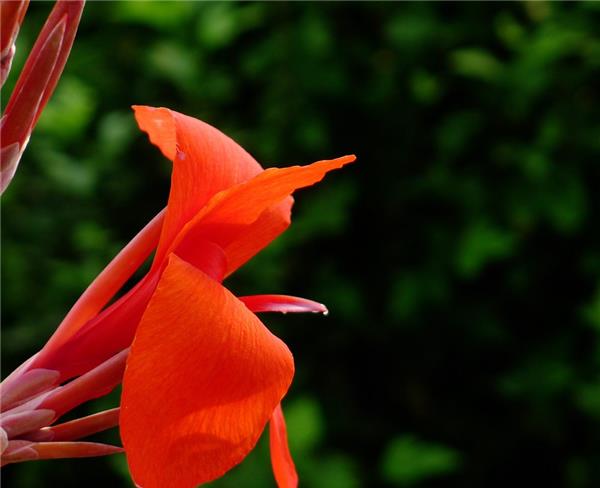
Overall, the cultivation techniques needed for growing canna lilies are still relatively simple; maintaining moisture, maintaining light, and maintaining warmth are enough to let them grow healthily into beautiful plants.