The uses and effects of Vitex negundo var. heterophylla, and how its economic value is reflected
Vitex negundo var. heterophylla is a plant with a great many uses, which is why more and more farmers now grow it, and it is also a very good honey source, so it is a fine choice for beekeeping as well. But what relates most closely to our home life is that it can be used to make bonsai and enhance the quality of a room.
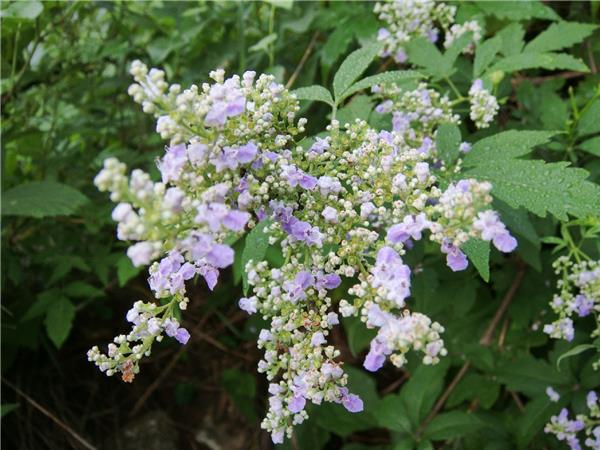
I. The economic value of Vitex negundo var. heterophylla
1. Vitex negundo var. heterophylla has high economic value, and its uses are many-sided. Its traditional use is mainly weaving: it can be woven into sturdy yet finely made back baskets, pack baskets, round baskets, cages, baskets and other utensils for daily life. Vitex hurdles are often used for mudflat improvement, construction sites, mine reclamation, highway construction and so on. It can also be woven into wine storage containers - jiu hai. By making use of its unusual forms, high-quality Vitex bonsai can also be cultivated.
2. The whole plant can be used as medicine, to treat colds, fever from burns, wind-toothache and other ailments. Vitex is also an excellent nectar plant (Vitex honey is one of the four famous honeys); its summer flowering period is long, its nectar content is high, and its honey flow period is long. During the Vitex flowering season, each bee colony can produce 15-20 kg of Vitex honey. Vitex leaves can be used to make Vitex tea, which has good effects in resisting fatigue, refreshing the mind and softening blood vessels. The crude protein content in the young branches and leaves of Vitex is moderate and the crude fat content is high, so each spring it can be used as feed for goats, sheep and cattle.
3. Every part of the Vitex plant has pest-control effects. Decoction made from its roots, stems, leaves and seeds, when sprayed, can control aphids, red spiders, cutworms, rice stem borers and other agricultural pests, and it can also be used to develop high-efficiency, low-toxicity pesticides.
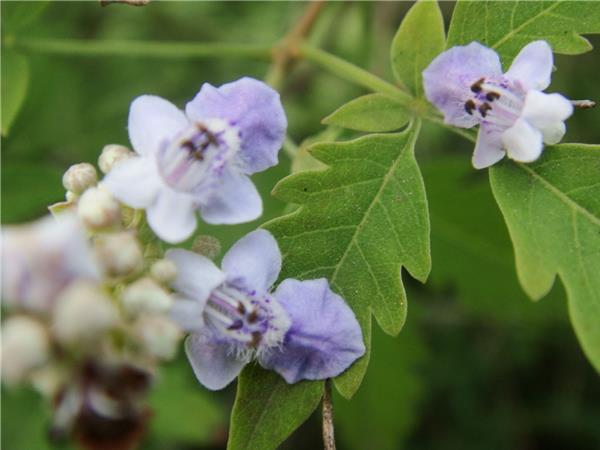
II. Several issues to note when harvesting Vitex nectar
Vitex is a major summer nectar source. Its nectar flow is large and is crucial to beekeeping production for the whole year. Scientifically organizing Vitex honey-collecting colonies is the prerequisite for achieving high yields of honey and royal jelly.
1. After reform and opening up, farmers' living standards rose, and farmers all cook with coal or gas, so they no longer go up the mountains to cut firewood. With no one cutting the Vitex on the mountains, it grew into old trees, and the flowering period shrank to late May to late July, with the main honey flow in June. By early July the flowering period is near its end, and most Vitex plants have set seed. Therefore, to get a good harvest during the Vitex flowering period, the focus of work must be placed on June, ensuring that a large number of foraging bees of the right age are put into production in June.
2. By late July the Vitex flowering is basically over, and the biggest threat to bee colonies is the hornet; a few hornets can destroy a colony in a few hours. In fact, hornet activity follows a pattern: generally at first light and at dusk, and on rainy days or just after rain clears, hornets are at their most rampant. You must make sure no one leaves the apiary, and strike down every hornet you see. An electric mosquito swatter works well for hitting hornets; after stunning a hornet, step on it at once. Another method is to move the bee colonies to a place without hornets for keeping.
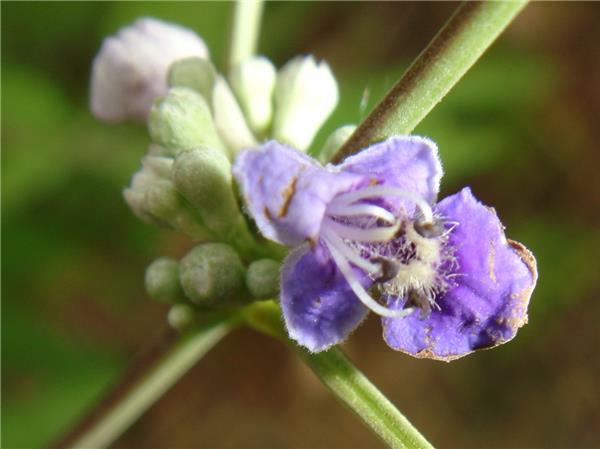
III. Making and caring for Vitex bonsai
1. Making: Vitex can be made into many forms of stump bonsai, and it is especially good for making formal upright, slanting, curved-trunk, lying-trunk and figurative bonsai. Shaping should be done according to the material and guided by its natural tendency. In the early cultivation stage, wiring and pulling are the main methods, with pruning secondary; in the later stage, pruning is the main method, with wiring and pulling secondary.
2. Care: Vitex likes light, tolerates drought and poor soil, is highly adaptable, tolerates pruning and is easy to manage. During the growing season, Vitex bonsai should be placed in a sunny, well-ventilated spot, and the direction of the pot should be turned once every so often. Do not fertilize or water too much, to avoid rampant shoot growth; overly long branches should be cut off in time to keep the crown shape intact. Pay constant attention to pinching out the growing tips, and remove surplus buds promptly. Applying a dilute organic fertilizer solution once each in spring, summer and autumn is enough. In the north, in winter place it in a sunny empty room, or bury the whole pot in the open ground, with the soil layer at least 20 cm above the pot rim. The time for changing the soil and repotting, and for shaping and pruning, generally starts after the fifteenth day of the first lunar month and continues until before budding. Vitex is not demanding about soil; add a small amount of decomposed organic fertilizer when changing the soil. In autumn, the leaves of potted Vitex bonsai turn yellow earlier than those of other tree species; this is a normal phenomenon.
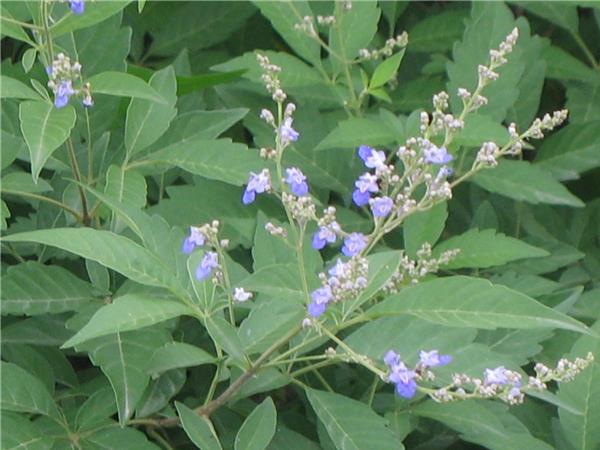
Overall, Vitex negundo var. heterophylla is relatively easy to grow, and as a bonsai it is easier to care for than other bonsai, and its ornamental effect is also different from ordinary stump bonsai, so it can add a touch of fresh and different color to home life.