How to grow Sophora japonica 'Pendula'? Three important aspects to note in cultivation and care
Sophora japonica 'Pendula' is relatively robust by nature, and generally suffers from few pests and diseases. The only common one is marginal leaf disease, so comparatively speaking it is fairly easy to grow and care for, and is suitable for home courtyard planting.
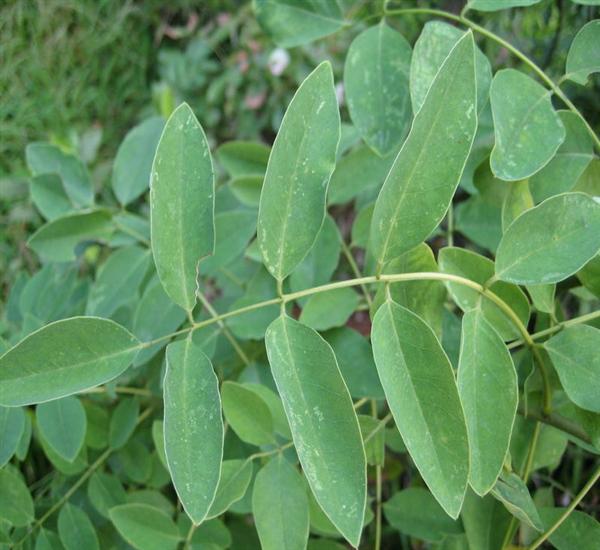
I. Grafting and seedling-raising techniques for Sophora japonica 'Pendula'
1. Preparatory work: In spring, select seedlings with a diameter at breast height of more than 5 cm in the nursery and cut the trunk back to 1.5-2.5 m. When the new shoots grow to about 10 cm, select and keep 6-8 shoots in different directions and evenly distributed. Remove the rest from the base. The attachment height of these shoots on the main trunk should preferably be concentrated within a range of 10 cm. You can pinch back the shoots adjacent to gaps by 5 cm to leave room and meet this requirement.
2. Transplanting: At the end of March and the beginning of April of the second year, transplant with soil attached at a spacing of 1.5 m x 2 m. Water after transplanting and wait for grafting.
3. Grafting: Carry out in early to mid-April. Scion selection: choose peripheral branches from a Sophora japonica 'Pendula' tree with a beautiful form and no pests or diseases. Branch collection can be combined with pruning of the mother tree. First, make a cut on the smooth upper side of the base of the rootstock branch, 5-15 cm from the base, and cut upward gradually, reaching as deep as the xylem, finally cutting out an oval interface about 2-3 cm long. Make a cut about 1 cm below a plump bud in the middle of the scion, and cut upward gradually, also reaching as deep as the xylem, until an oval bud plate is cut out about 1 cm above the bud. The length and width of the bud plate should both be slightly smaller than the rootstock interface. Place the bud plate onto the rootstock and align all four sides. Then wrap and bind it completely with plastic film.
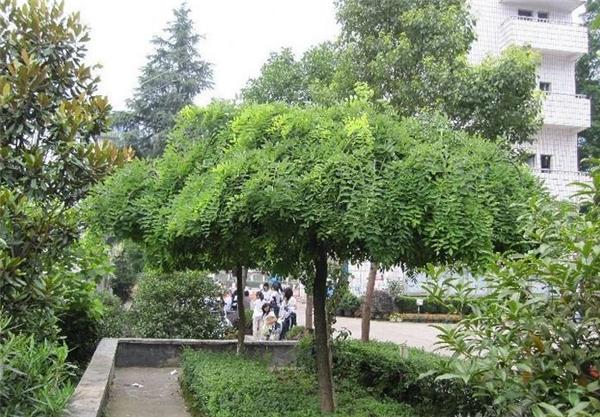
II. Pruning techniques for Sophora japonica 'Pendula'
1. Dormant-season pruning is generally carried out from after leaf fall in autumn to before bud break the following spring. The principle of pruning is to make the several major side branches radiate and extend evenly in all directions, forming a good umbrella-shaped framework. Overlapping branches should be removed from the base, inward-growing branches should also be removed, and then diseased and dead branches should be cut off. All extending branches should be cut back, leaving 4-5 buds. The bud at the very front should be a plump outer bud, which ensures that the side branches continue year after year in a wave-like arch after arch, expanding the crown toward the center. Thin and weak branches in the inner part of the crown should also be cut off. Through pruning, the overall crown structure can be made clear in primary and secondary order, numerous but not messy.
2. Summer pruning is a supplement to and continuation of winter pruning. In the vigorous growth period of late spring and early summer, coarse water sprouts often develop at the top of the umbrella-shaped crown from buds on the upper side of side branches, growing upright and ruining the umbrella-shaped crown. Therefore, overlapping branches and overly dense branches formed by improper retention of side buds during winter pruning should be cut off again. As for weeping branches, because their growth vigor differs, they may also form uneven lengths, so it is best to determine the same horizontal height and prune them neatly. In this way, a good umbrella-shaped crown can always be maintained.
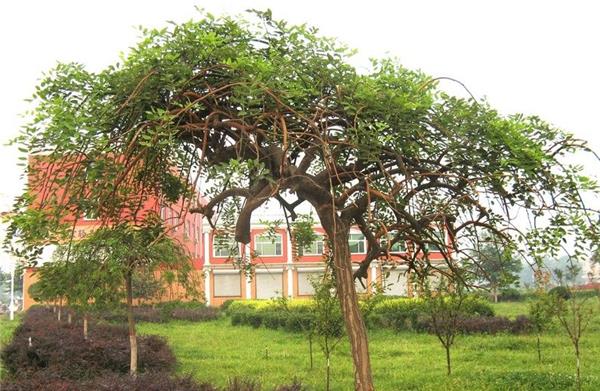
III. Control of marginal leaf disease, a common disease of Sophora japonica 'Pendula'
1. Bacterial disease: It mostly starts from the outer leaves or the margins of the heart leaves, yellowing along the leaf margin toward the petiole, with brown necrotic patches appearing on the leaf margins. As the disease progresses, the leaf margins become scorched, the leaf color fades, and finally the whole leaf wilts and dies. The pathogen infects from the leaf margin when the leaf loses relatively more water, causing pathological necrosis of the parasitized leaf tissue, gradually developing and spreading.
2. Calcium nutrient imbalance: Calcium in plants can form insoluble calcium salts and precipitate out, and is an element that cannot be reused. Therefore, calcium deficiency symptoms often appear on new tissues. After leaf scorch disease occurs, brown spots appear on the margins of outer leaves or heart leaves, and in severe cases they become necrotic and dry up.
Control methods:
1. Protect normal root function. Relative humidity should not remain too high for a long time; keep humidity as normal as possible.
2. Spraying foliar fertilizers such as Huimanfeng, Cufengbao and Baofengshou has a certain effect.
3. If there is pathogen infection, spray chemicals for controlling bacterial diseases, such as Jiaruinong (47% kasugamycin-copper oxychloride wettable powder) at 1000 times dilution, Ludeobao, Tongaoshang (30% basic copper sulfate suspension concentrate) at 400 times dilution, Keshabde (53.8% copper hydroxide dry suspension concentrate) at 500 times dilution, etc.
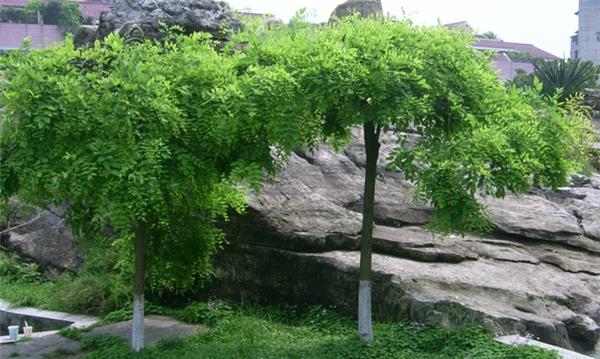
Generally speaking, Sophora japonica 'Pendula' is more suitable for planting in courtyards, but now there are also many dwarf varieties that can be grown in pots. Sophora japonica 'Pendula' has a unique tree form, elegant flowers and a rich fragrance, and is a top choice among ornamental plants.