Five-point maple, an afforestation tree species red as a sea of fire
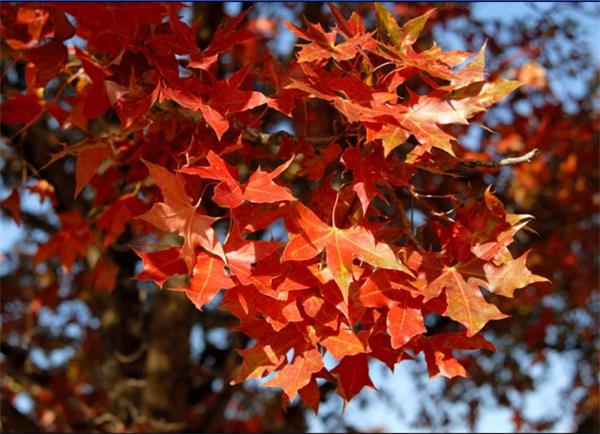
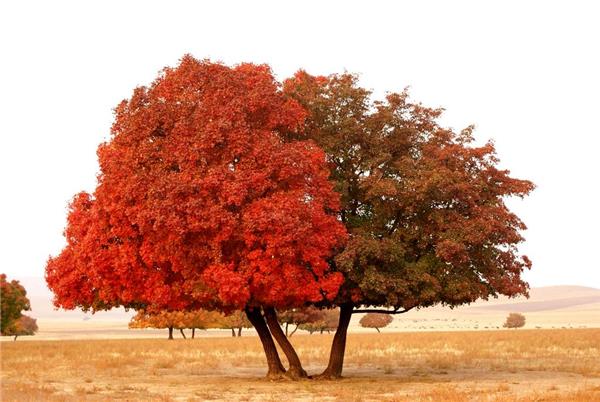
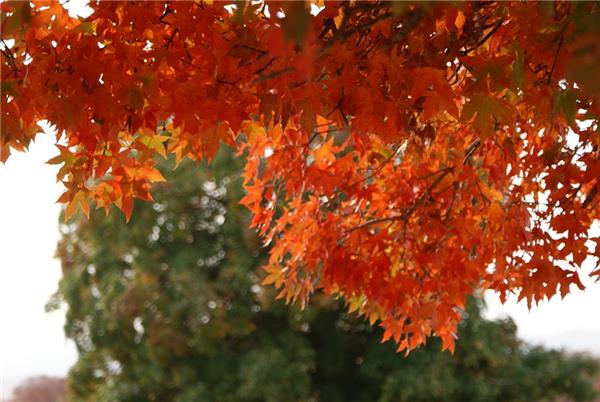
The five-point maple is a tree species very well suited for afforestation. When autumn arrives, large expanses of orange-red five-point maples form a stunning scene like a sea of fire. Even a single one planted in a courtyard can enhance the courtyard's beauty.
Planting techniques for five-point maple
Seed collection: For seed collection, select superior mother trees that are robust and free of pests and diseases. In October, when the samaras turn from green to yellow-brown, they are ripe and should be picked promptly. Sun-dry the harvested samaras for 3-4 days, remove debris and rub off the fruit wings, then store them after winnowing in a ventilated room for later use; they can also be stored with the wings attached. During storage, the most suitable moisture content for the seeds is 8%-11%. The cotyledons of healthy, superior seeds are fresh and tinged with yellow-green; if they have discolored, dried out, or give off an abnormal odor, they have deteriorated.
Land preparation: A sandy loam soil with gentle terrain, a north wind and sunny exposure, deep and loose soil, and good drainage is preferable. Carry out deep plowing in autumn, and before sowing, rake level and prepare the beds with careful, thorough land preparation. Apply 1000-2000 kg of decomposed farmyard manure and 25 kg of phosphate fertilizer per 667 sq m, and at the same time spray 1.5% dimethoate powder and 90% trichlorfon crystals to eliminate soil pests. The climate in northern Henan is relatively dry, so low beds are generally used.
Sowing: From late March to early April, sow 15-20 kg per 667 sq m; when seed quality or seedling-raising conditions are poor, increase the sowing rate appropriately. Cover with soil 2-3 cm thick, then cover with dry grass 3-4 cm thick. Remove the covering grass 4-5 days after the seedlings emerge completely.
Water and fertilizer: During seed germination, irrigate frequently but in small amounts; after the seedlings emerge completely, irrigate in larger amounts but less frequently, irrigating once every 5-7 days, and each time water thoroughly and sufficiently. Irrigation is best done in the morning and evening, and never irrigate heavily at noon. For seedlings, apply nitrogen, phosphorus and potassium in appropriate combination; during the hardening period of the seedlings, mainly apply potassium fertilizer and stop applying nitrogen fertilizer. Generally topdress 3-4 times, using furrow application.
Weeding: Generally carried out after rain. Loosen the soil within the rows to a depth shallower than the soil cover, and loosen somewhat deeper between the rows. After most seedlings have emerged, remove the covering grass in stages on cloudy days or in the evening, and thereafter strengthen management.
Pests and diseases: The main diseases at the five-point maple seedling stage are damping-off, brown spot and root rot. After all seedlings have emerged, 7-10 days later, spray 0.1% diniconazole-carbendazim to kill or inhibit various soil pathogens. After seedlings become diseased, immediately spray Bordeaux mixture at 1:2:200 or thiophanate-methyl wettable powder at 800-1000 times dilution. The main insect pests are aphids, longhorn beetles and scarab beetles; the former damage young twigs and leaves, while the latter bore into the trunk. Spray 1% abamectin emulsifiable concentrate at 5000 times dilution, or 50% phoxim emulsifiable concentrate at 1000-1500 times dilution.
Pruning and shaping methods for five-point maple
1. After trunk determination, keep 2 tiers of main branches, leaving 5-6 main branches on the whole tree, then cut back, with the first tier at about 50 cm and the second tier at about 50 cm. In summer, remove all sprouting buds below the branch points. On the main branches, select and retain 3-4 buds with suitable orientation and even distribution.
2. For the second bud selection, retain 2-3 buds on each main branch and let them develop into shoots. Thereafter form a round crown; keeping the crown-to-height ratio at 1:2 is more attractive. Each year, pinch off buds, and prune away sprouting branches, dead branches, pest- and disease-damaged branches, weak slender branches in the inner canopy, and upright water sprouts.
3. Five-point maple is susceptible to wind-cold when pruned in winter and early spring, and the cut wounds bleed continuously. Therefore, it is best to prune in late March to early April at the beginning of growth, when bleeding is slight, wounds heal easily, and tree vigor is not affected.
4. For trees with strong apical dominance that clearly exhibit monopodial branching, pruning must suppress lateral branches and promote the main branch; for those with weak apical dominance whose terminal buds die or develop incompletely, pruning must involve pinching off the tip and selecting a lower lateral branch to replace the main branch, keeping the vigorous bud closest to the main axis below the cut, and removing the opposite bud of the pair. The shoots that emerge later will be closest to the main axis. In the following year, the position and direction of the cut bud should be opposite to that of the previous year's cut bud, to ensure that the growth of the extension shoot does not deviate from the main axis.
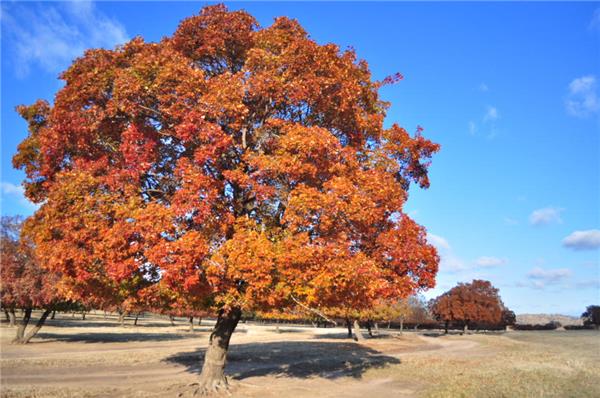
That concludes the introduction to the five-point maple. Here, everyone should be reminded that when pruning the five-point maple, you must be careful and meticulous, and ensure that no cuts are missed or made incorrectly; otherwise, not only will it fail to enhance its beauty, but it will instead make it uneven and lose its ornamental value.