How to Grow Dragon Fruit? A Step-by-Step Guide to the Planting Method
How should dragon fruit be watered during cultivation? What should be noted when watering dragon fruit? We also ask netizens with dragon fruit growing experience to share their input. Dragon fruit has strong drought resistance and tolerance, but this does not mean dragon fruit does not need watering. Therefore, we have compiled the methods and precautions for watering dragon fruit, listed in detail below for netizens' reference.
Dragon Fruit Planting Method
1. Site selection and soil requirements: The suitable growing temperature for dragon fruit is 25-35 degC, and it can be planted anywhere south of the Tropic of Cancer. For planting, choose loose, fertile sandy loam soil with good granular structure, a pH value of 6-7.5, and good drainage.
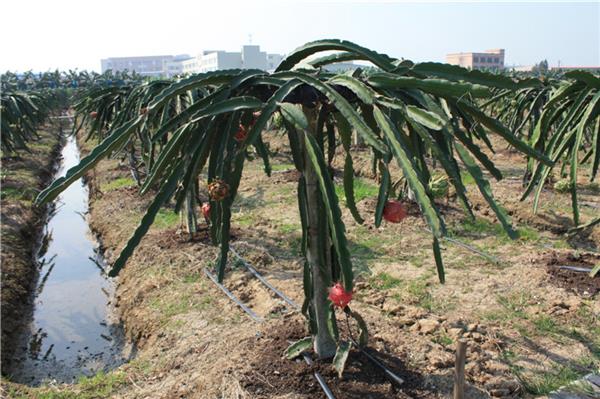
2. Planting and support: Dragon fruit can be planted all year round, but March to November is preferable. In terms of variety selection, excellent varieties such as Baiyu Longguo and Zhulong can be chosen for the Meixian area, and grafted seedlings should be used. Interplanting two varieties can increase the fruit-setting rate. Before planting, cement poles must be erected as supports for dragon fruit growth. The specifications of the cement poles are 10 cm x 10 cm x 210 cm, with steel reinforcement inside the pole body, and a symmetrical small hole through the top for future use in setting up supports. The row spacing specification for erecting cement poles is 2 m x 3 m, with 110 poles per mu, each cement pole buried 50 cm underground, with 160 cm above ground. Each mu of orchard is planted with 440 seedlings, with 1 plant around each cement pole. After the fruit seedlings grow, they are tied to the cement poles to grow upward.
3. Fertilizer, water and soil management: The root system of dragon fruit grows relatively shallow, with roots 2-5 cm below the soil surface being the most active in growth, so fertilizer, water and soil management should be carried out according to this characteristic. Dragon fruit is relatively drought-tolerant and intolerant of waterlogging, but its rapid growth still requires sufficient water, so water thoroughly by watering toward the roots; do not pour water over the whole plant or flood-irrigate the field, as flood irrigation can cause root oxygen deprivation and death. Fertilization is mainly based on decomposed farmyard manure, with the best formula being a 1:2:7 ratio of rapeseed cake residue, chicken manure and pig manure. The amount of fertilizer applied depends on the growth situation and soil fertility. During the new shoot growth and flowering/fruiting stages, quick-acting nitrogen, phosphorus and potassium fertilizers can be applied as a top dressing, mostly by drenching. Fruit-bearing plants are generally fertilized 4 times a year in spring, summer, autumn and winter, with the respective purposes of promoting bud break, promoting spring shoot growth, flowering and fruiting, and restoring vigor after harvest. The soil should be kept loose, and loosening can be combined with fertilizing and weeding, without damaging the roots. For the aerial roots on the above-ground part, measures such as guiding and tying can be used to lead them to the ground and into the soil, enhancing the plant's absorption function and promoting growth.
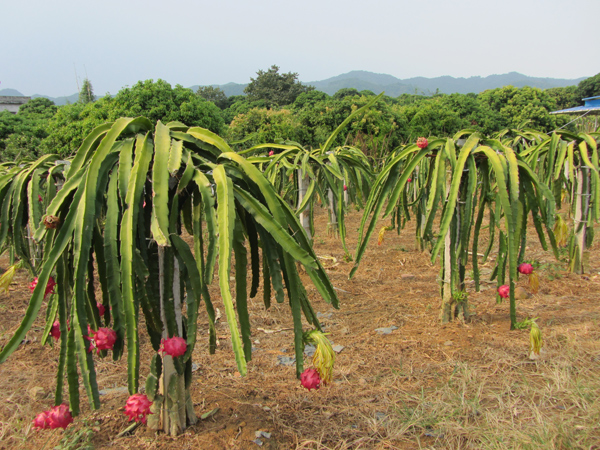
4. Shaping and pruning: During the seedling stage of dragon fruit, keep one main branch growing upward and remove other side branches. After the seedling grows along the cement pole to a height of 1.5 m, the top branches spread out in all directions in an umbrella shape. At the top of the cement pole, a circle is made with steel wire for guiding, fixing and supporting the plant. After the seedling grows vigorously, select 2/3 of the branches to be guided downward as fruiting branches, and 1/3 of the branches to grow upward as vegetative branches and reserve fruiting branches. Old branches that have already borne fruit are gradually thinned out.
5. Pest and disease control: Dragon fruit has relatively few pests and diseases, making it an environmentally friendly green food. The main pests and diseases include: rot disease, termites, red and yellow spiders, scale insects, etc. Among them, the more threatening one is rot disease, which is mainly caused by insect wounds or mechanical injuries. The treatment method is to cut off the diseased part with a knife on a hot sunny day or cut open the diseased part to drain it. For other pests and diseases, simply choose the appropriate pesticide and spray for control.
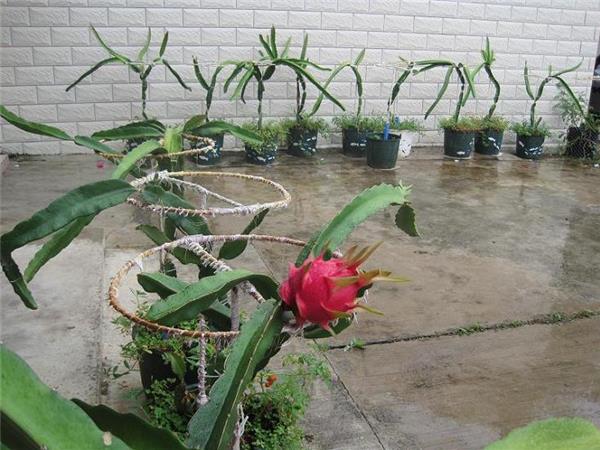
The role of watering dragon fruit at each stage:
1. Before and after sprouting to the flowering stage: If there is sufficient water in the soil at this time, it can strengthen new shoot growth, increase leaf area, enhance photosynthesis, and enable normal flowering and fruit setting, laying the foundation for a bumper harvest that year. In spring drought areas, this irrigation is particularly important.
2. New shoot growth and young fruit enlargement stage: This period is often called the critical water requirement period for fruit trees. At this time, the physiological functions of the fruit tree are at their peak. If water is insufficient, the leaves take water from the young fruit, causing the young fruit to shrivel and drop.
3. Rapid fruit enlargement stage: This watering can meet the fertilizer and water requirements for fruit enlargement. But the amount of watering must be well controlled at this time.
4. Before and after harvest and the dormant period: In arid autumn and winter areas, watering at this time can store sufficient water in the soil, help decompose fertilizers, and thereby promote the growth and development of the fruit tree the following spring. After the last batch of dragon fruit is harvested in autumn and winter, the plant enters the dormant period. If watered appropriately at this time, it can promote plant growth and help the branches become fruit-bearing branches as soon as possible.
Precautions for Growing Dragon Fruit
(1) Requirements for environment, soil and temperature: Dragon fruit is a tropical and subtropical plant, drought-tolerant and high-temperature tolerant, with low soil requirements. It can be planted on flat land, hillsides and sandy land, but it is best to choose sandy loam soil rich in organic matter and with good drainage. Areas where the winter temperature stays below 8 degC for a long time are generally not suitable for planting.
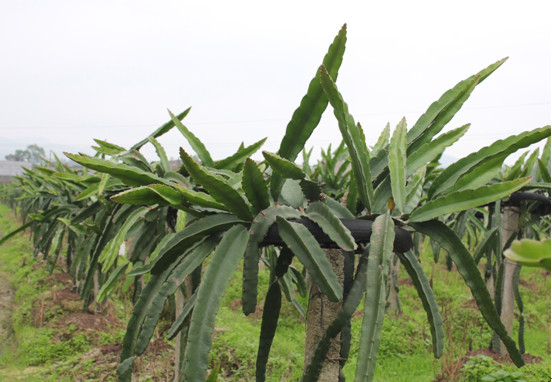
(2) Planting methods: There are many planting methods for dragon fruit. Some are grown along walls, some under trellises, but column-style cultivation is the most common, as it has low production costs and high land utilization. The so-called column style means erecting a cement column or wooden column and planting 3-4 dragon fruit plants around the column, letting the dragon fruit plants grow upward along the cement column.
(3) Planting specifications and season: 110 columns can be erected per mu (specification 2.5 m x 2.5 m). Calculating 4 seedlings per column, over 400 plants can be planted per mu, greatly improving land utilization. Dragon fruit can be planted all year round. Because its root system likes air permeability, it should not be planted too deep (generally about 3 cm of soil cover). The soil should be kept moist in the early stage, otherwise it is not conducive to its growth.