What are the benefits and effects of goji berries? This article gives you a detailed introduction
What are the benefits and effects of goji berries? Although goji berries have very good tonic and therapeutic effects, they are not suitable for everyone. Because their effect of warming the body is quite strong, people who are currently suffering from a cold or fever, have inflammation in the body, or have diarrhea had best not eat them. Goji berries are most suitable for people with weak constitutions and poor resistance. Moreover, you must persist over the long term, eating a little every day, for the effects to show. They are not suitable for everyone. Because their effect of warming the body is quite strong, people who are currently suffering from a cold or fever, have inflammation in the body, or have diarrhea had best not eat them.

The nutritional value of goji berries
Goji berries contain carotene, vitamin B1, vitamin B2, niacin, vitamin C, beta-sitosterol, linoleic acid, kukoamine A, betaine, calcium, phosphorus, iron and other components. These substances have effects such as lowering blood pressure, lowering cholesterol, softening blood vessels, lowering blood sugar, protecting the liver, and improving the human body's immune function. Goji berries are also a good medicine for preventing arteriosclerosis, diabetes, and cirrhosis, as well as enhancing the body's disease resistance.
Goji berries contain 14 kinds of amino acids, as well as special nutrients such as betaine, zeaxanthin, and physalien, which give them remarkable health benefits. Goji berries are rich in carotene, multiple vitamins, and essential nutrients for healthy eyes such as calcium and iron, so they have the effect of improving eyesight and are commonly known as "bright-eye berries." Physicians through the ages, when treating blurred vision and night blindness caused by insufficient liver blood and deficiency of kidney yin, often used goji berries. The famous formula "Qiju Dihuang Wan" (Goji and Chrysanthemum Rehmannia Pill) uses goji berries as its main ingredient.
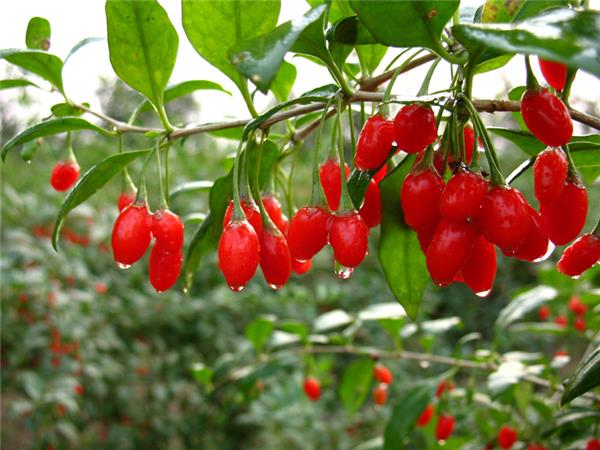
The benefits and effects of goji berries
1. Improve the body's immune function and enhance the body's adaptive and regulatory capacity.
Eating goji berries can strengthen the body's foundation and dispel pathogenic factors. It not only enhances body functions and promotes health recovery, but also improves the body's disease resistance and defends against the invasion of pathogenic factors. It enhances the body's ability to adapt to various harmful stimuli.
2. It can effectively delay aging.
Goji berries are a good medicine for strengthening the body's foundation, generating essence and replenishing marrow, nourishing yin and tonifying the kidneys, boosting qi and calming the mind, strengthening the body, and delaying aging. Since ancient times they have been a top-grade tonic that nourishes and strengthens the body. They effectively enhance the functions of various internal organs, can improve brain function and combat free radicals, and have a clear effect of delaying aging.
3. They have a significant effect on improving eyesight.
They are especially good at improving eyesight, so they are also commonly known as "bright-eye berries." Physicians through the ages, when treating blurred vision and night blindness caused by insufficient liver blood and deficiency of kidney yin, often used goji berries. The famous formula Qiju Dihuang Wan uses them as its main ingredient. Folk tradition also commonly uses goji berries to treat chronic eye diseases; steamed egg with goji berries is a simple and effective dietary therapy.

4. They have anti-cancer effects.
They have a clear inhibitory effect on the formation and spread of cancer cells. The results of contemporary experiments and clinical applications show that drinking goji leaf as a tea regularly can significantly improve and enhance the immune function and physiological function of the elderly, the frail and sickly, and tumor patients, and has the effect of strengthening the body and delaying aging. For cancer patients receiving chemotherapy, it has effects such as reducing toxic side effects, preventing the decrease of white blood cells, and regulating immune function.
5. They lower blood lipids and treat high blood pressure.
Eating them can significantly reduce serum cholesterol and triglyceride levels, reduce and prevent arteriosclerosis, and treat high blood pressure. They are a good health product for people with coronary heart disease.
6. They strengthen the body and boost yang, and improve male sexual function.
As a tonic and strengthening agent, they have very good effects in treating various syndromes of kidney deficiency and liver and kidney diseases. They can significantly increase the plasma testosterone level in the human body, achieving the effect of strengthening the body and boosting yang. They have a clear effect on diminished sexual function.
7. They have a skin-beautifying function.
Many people do not know that regularly eating goji berries can beautify the skin. This is because they can improve the skin's ability to absorb oxygen, and they also have a whitening effect. Goji berries have a clear effect on psoriasis and also have varying degrees of effect on some other skin diseases.

Precautions for eating goji berries
1. Some people often brew goji berries together with green tea to drink, which is not scientific. This is because green tea contains a large amount of tannic acid, which has an astringent and adsorptive effect, so the tannic acid will combine with trace elements in goji berries such as amino acids, alkaloids, and betaine to form substances that are difficult for the human body to digest and absorb, thereby also affecting the medicinal value of goji berries.
2. When goji berries are being cleaned and then steeped in boiled water to drink or used in soup, the time must not be too long. Soaking or simmering for too long will cause the trace elements in their medicinal effect to be lost. Goji berries should be added when the soup is almost done to ensure their medicinal effect is better preserved.
3. People who are currently suffering from a cold or fever, have inflammation in the body, diarrhea, or other acute conditions should not eat goji berries during the onset of the illness.
4. In everyday dietary patterns, people whose faces are flushed red due to a mainly meat-based diet are not suitable for eating goji berries.
5. People who have high blood pressure and an impatient temperament are not suitable for eating goji berries.
Side effects of goji berries
1. Because goji berries have a quite strong effect of warming the body, people with high blood pressure, people with too impatient a temperament, or people whose faces are flushed red from regularly consuming large amounts of meat had best not eat them.
2. Goji berries can nourish the liver and kidneys, but if the liver and kidneys are not deficient, there is no need to take them.
3. After all, it is a medicine. Medicines treat diseases by relying on their bias, which is what we commonly call their medicinal nature. Yin-nourishing medicines are also meant for deficiency syndromes. Anyone who is healthy and has no deficiency syndrome should not use them, and those with excess pathogenic factors but without deficiency of vital qi should not casually use deficiency-tonifying medicines, in order to prevent "closing the door and keeping the bandit in."
4. People with deficiency-cold constitutions who take them may experience the drawback of slippage and diarrhea; those with unclear internal heat should use them with caution.
5. Some people eat too many goji berries, causing red, swollen, uncomfortable eyes and blurred vision. Therefore, goji berries should not be eaten regularly; every medicine has some toxicity.
form substances that are difficult for the human body to digest and absorb, thereby also affecting the medicinal value of goji berries.2. When goji berries are being cleaned and then steeped in boiled water to drink or used in soup, the time must not be too long. Soaking or simmering for too long will cause the trace elements in their medicinal effect to be lost. Goji berries should be added when the soup is almost done to ensure their medicinal effect is better preserved.
3. People who are currently suffering from a cold or fever, have inflammation in the body, diarrhea, or other acute conditions should not eat goji berries during the onset of the illness.
4. In everyday dietary patterns, people whose faces are flushed red due to a mainly meat-based diet are not suitable for eating goji berries.
5. People who have high blood pressure and an impatient temperament are not suitable for eating goji berries.
Side effects of goji berries
1. Because goji berries have a quite strong effect of warming the body, people with high blood pressure, people with too impatient a temperament, or people whose faces are flushed red from regularly consuming large amounts of meat had best not eat them.
2. Goji berries can nourish the liver and kidneys, but if the liver and kidneys are not deficient, there is no need to take them.
3. After all, it is a medicine. Medicines treat diseases by relying on their bias, which is what we commonly call their medicinal nature. Yin-nourishing medicines are also meant for deficiency syndromes. Anyone who is healthy and has no deficiency syndrome should not use them, and those with excess pathogenic factors but without deficiency of vital qi should not casually use deficiency-tonifying medicines, in order to prevent "closing the door and keeping the bandit in."
4. People with deficiency-cold constitutions who take them may experience the drawback of slippage and diarrhea; those with unclear internal heat should use them with caution.
5. Some people eat too many goji berries, causing red, swollen, uncomfortable eyes and blurred vision. Therefore, goji berries should not be eaten regularly; every medicine has some toxicity.