How to Grow Lotus Root: A Detailed Guide to Lotus Root Cultivation Techniques
Lotus root is a low-fat food with high nutritional value. It can be eaten raw, or served cold-tossed, steamed, stewed, stir-fried, or braised. Lotus root is rich in vitamin C and crude fiber, which not only helps digestion and prevents constipation, but also supplies the carbohydrates and trace elements the body needs, prevents arteriosclerosis, improves blood circulation, and benefits health. It is generally recommended to eat lotus root 3 times a week, and eating it at dinner gives the best effect. When lotus root is simmered into soup with pork ribs, eating it can improve sleep quality. So what exactly do lotus root cultivation techniques look like?
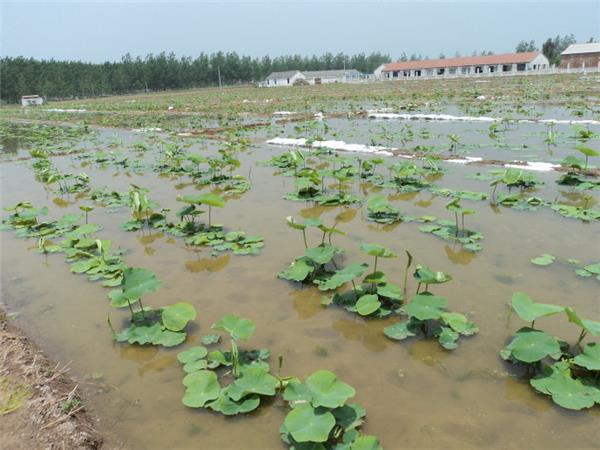
Lotus Root Cultivation Techniques
1. Water management: Lotus root is an aquatic plant and cannot do without water throughout its entire growing period. Summer is the peak growth period for lotus flowers, and the demand for water is also greatest, so throughout the whole summer, care must be taken that the pond never lacks water. Spraying New High-Fat Film on the leaf surface makes the branches and leaves lush and green, and enhances the accumulation of photosynthesis products and the ability for directional transport.
2. Fertilizer management: Lotus root likes fertilizer and also has a relatively high demand for it, but too much fertilizer will burn the seedlings, so fertilizer should be applied thinly and frequently. Spraying New High-Fat Film greatly increases the utilization rate of the effective components of the fertilizer, is not afraid of evaporation under the sun, and can regulate water absorption.
3. Pest and disease control: There are aphids, cotton leafworms, nettle caterpillars, and others. They harm the standing leaves and flower buds. Spraying targeted pesticides on the plant surface plus New High-Fat Film can improve the efficacy, effectively prevent viral infection of the leaves, and keep the branches and leaves lush and green. Water maggots suck the sap of lotus root roots, stems, and leaves, and can be driven out and killed by applying lime. Lotus ponds can also be used to raise loach; the feces of the loach can serve as fertilizer for the lotus root, the loach can also eat the pests in the lotus pond, and the loach can also loosen the soil in the lotus pond.
4. Growth period: The quality requirements for lotus root are very high. Spraying Diguo Zhuangdiling can promote the thickening of the nutrient transport vessels of the underground fruit, increase the vitality of underground fruit expansion, make the lotus root body plump, the flesh crisp and tender, juicy and sweet, high-quality and high-yield, with a delicate fragrance.
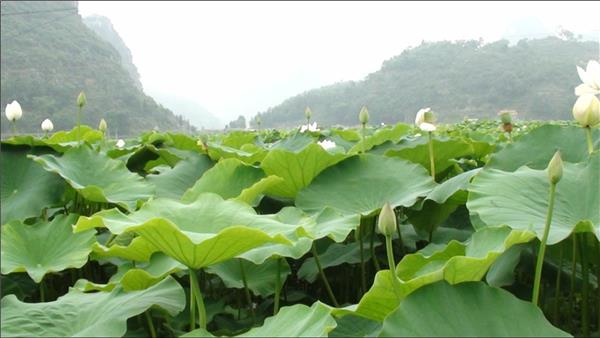
Key Techniques for Growing Lotus Root in Low-Lying Fields
Using paddy fields, especially low-lying fields, to grow lotus root gives a per-mu output value several times higher than growing rice, making it a relatively ideal choice for farmers to get rich.
1. Field selection and land preparation: Choose fertile sandy loam low-lying fields for planting. After the field for growing lotus root is plowed, apply 2000-3000 kg of organic fertilizer such as human and livestock manure per mu, and let the field soak for half a month.
2. Timely planting: Choose good varieties of white lotus root or red lotus root, and plant before "Jingzhe" (Awakening of Insects). When planting, use a plant-row spacing of 1 m x 1.4-1.5 m, with each lotus root segment having more than 3 nodes. During planting, keep a shallow water layer of 5-6 cm in the field, bury the lotus root head tilted into the mud, and let the lotus root tail slightly show above the water surface.
3. Heavy application of base fertilizer: When plowing the field for planting, apply another 30 kg of phosphate fertilizer and 30 kg of peanut bran per mu as base fertilizer. When 2-3 leaves emerge above the water surface, carry out the first topdressing, with 8-10 kg of urea and 10-12 kg of potassium fertilizer per mu. When lotus roots begin to form, apply 1000-1200 kg of pig and cattle manure per mu.
4. Strengthen management: In the early stage, pay attention to intertillage and weeding, and keep a 12-15 cm water layer in the field. Drain the water before each topdressing, and refill to the original water layer after fertilizing. When the leaves cover the field surface, check around the field edges and turn the tips of dense lotus runners toward sparse areas, so that they are evenly distributed and grow vigorously.
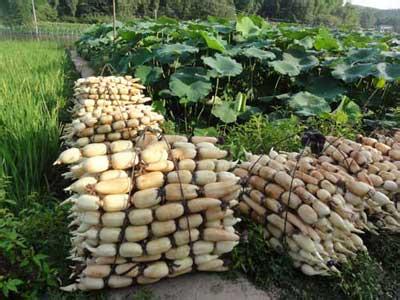
Management of Pond Lotus Root
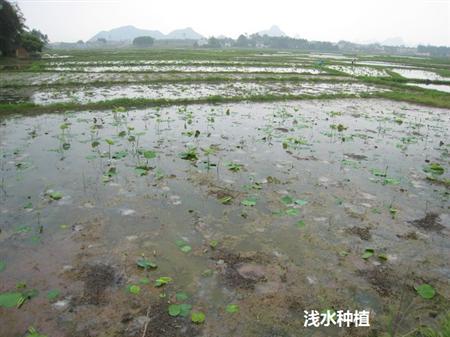
1. Water layer management: In principle, master "shallow-deep-shallow". After planting, to raise the ground temperature during the day, keep shallow water of 3-5 cm, but when encountering a cold wave or when the nighttime temperature is relatively low, irrigate deep water of about 10 cm to prevent cold and maintain the ground temperature. Generally, add water twice per season. When there is heavy rain and the water level is high, the water level can be adjusted through the drainage holes. When the temperature is relatively high, the water layer can be deepened to 15-20 cm to prevent high-temperature damage. After the Start of Autumn, the lotus root enters the root-forming period, and the water level should be kept at 5 cm. Especially in the early stage of root formation, it is enough to keep the paddy field from drying out, so as to "control the top and promote the bottom" and raise the ground temperature.
2. Topdressing: (1) Seedling-promoting fertilizer: after the standing leaves emerge above the water surface, apply 12 kg of urea per mu. (2) Root-promoting fertilizer: apply after the third standing leaf emerges above the water surface, with 12 kg of urea and 12 kg of potassium sulfate per mu; before Minor Heat, if the leaves turn yellow or the leaf edges curl, or if the lotus flowers are not bright, apply 12 kg of urea and 12 kg of potassium sulfate per mu. After Major Heat, fertilizer must not be applied.
3. Turning the lotus root heads: Turning the lotus root heads is called tidying the lotus runners. Adjust the lotus runners from the end of June to the end of July, once every 7 days, about 4 times in total. In the first two times, adjustment should be carried out when the new leaves of the lotus plants are less than 60 cm from the field ridge. In the last two times, adjustment should be carried out when the new leaves of the lotus plants are less than 40 cm from the field ridge. The adjustment time should be chosen on sunny days from 9 a.m. until there is sunlight in the afternoon.
3. Removing old leaves and breaking flower stems: When the standing leaves have spread fully, the floating leaves gradually wither and should be removed in time, so that the field water can receive as much sunlight as possible, raise the ground temperature, and improve aeration conditions. When some standing leaves turn yellow or wither due to pests, diseases, or other reasons, they should also be removed. Lotus root is grown for the purpose of harvesting the root, so if there are flower buds, the flower stems should be bent to avoid consuming nutrients through flowering. After lotus root production ends, about 15 days before harvest, irrigate and cut off the leaf stalks of the aboveground lotus leaves, so that the underground part stops respiration and the commercial value of the lotus root is improved.
3. Removing old leaves and breaking flower stems: When the standing leaves have spread fully, the floating leaves gradually wither and should be removed in time, so that the field water can receive as much sunlight as possible, raise the ground temperature, and improve aeration conditions. When some standing leaves turn yellow or wither due to pests, diseases, or other reasons, they should also be removed. Lotus root is grown for the purpose of harvesting the root, so if there are flower buds, the flower stems should be bent to avoid consuming nutrients through flowering. After lotus root production ends, about 15 days before harvest, irrigate and cut off the leaf stalks of the aboveground lotus leaves, so that the underground part stops respiration and the commercial value of the lotus root is improved.