How to grow grapes? A detailed explanation of grape growing techniques
Grapes have very high nutritional and commercial value. How do you grow grape seedlings? What are grape growing techniques? Summer is the season for planting grape seedlings, and summer cutting propagation is the main method of growing grapes. Summer cutting propagation of grapes can produce nursery stock for sale in the same autumn, making it an effective way to shorten the propagation cycle. Years of practice have proven that this method has advantages such as a short occupation of seedling land, a high survival rate, fewer winter storage steps and lower investment, good seedling quality, vigorous growth, and good economic returns. The specific techniques are as follows:
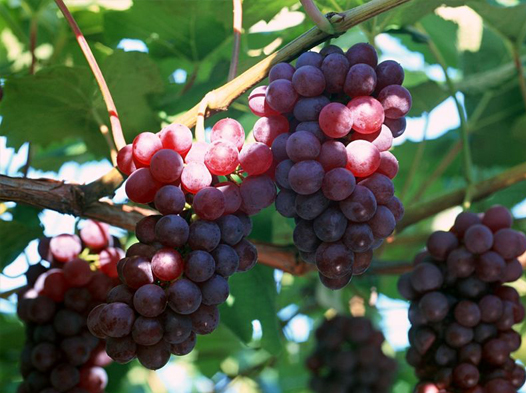
Grape growing techniques
How do you grow grape seedlings? Pay attention to the cutting time for grape seedlings
It can be done from June to August, and summer cutting is best. When new shoots have grown to 5 to 10 nodes and are semi-lignified with a certain hardness and maturity, cut and insert them immediately.
How do you grow grape seedlings? Prepare the cutting bed well
For the seedling bed, choose a plot with good light, convenient drainage and irrigation, and loose, fertile soil. Plow and level the seedling land, and build cutting beds 1 to 1.2 m wide (generally planting 3 to 4 rows, with a plant spacing of 6 to 8 cm) for later use. At the same time, prepare supports and branches, etc., for shading. To improve the survival rate of summer cuttings, before cutting you can soak the base of the cuttings in 0.005% to 0.007% indoleacetic acid solution for 6 to 8 hours, or dip them quickly in 0.1% to 0.3% indoleacetic acid solution for 5 seconds, or treat them with rooting powder.
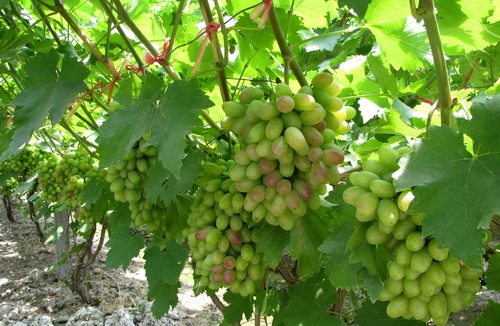
There are usually two methods for propagating grape nursery stock:
One is asexual propagation, that is, vegetative propagation; the other is sexual propagation, that is, seed propagation.
Vegetative propagation is the method of using part of the organs of the grape plant, mainly the stems, for propagation and cultivation of nursery stock. Its advantages are that the new plants vary little, can maintain the varietal characteristics of the mother plant, and can be propagated many times in one year. Plants propagated by this method take shape early, grow quickly, and enter the fruiting stage early, so it is widely used in production. Asexual propagation methods include hardwood cuttings, green cuttings, layering, grafting, and tissue culture of shoot tips and stem segments
1. Remove buds in time and prune reasonably
After grapes sprout in spring, remove double buds and small buds early, and keep strong buds. Before flowering, top the main shoots in 2 to 3 rounds in time, remove secondary shoots, so that more nutrients are transported to the flower organs, and at the same time appropriately thin out some inflorescences, and 3 to 5 days before flowering pinch off 1/4 to 1/5 of the end of the inflorescence, so that nutrients can be supplied in a concentrated way to the remaining berries. In winter, adopt medium and long cane pruning, leaving about 10 to 15 new shoots per sq m of trellis surface, staggered from top to bottom, ensuring that each cluster of grapes grows to 15 to 25 leaves, with the yield per mu controlled within 2500 kg. In this way, the clusters can be compact, the berries uniform, and the ripening consistent, improving the flavor and color of the berries.
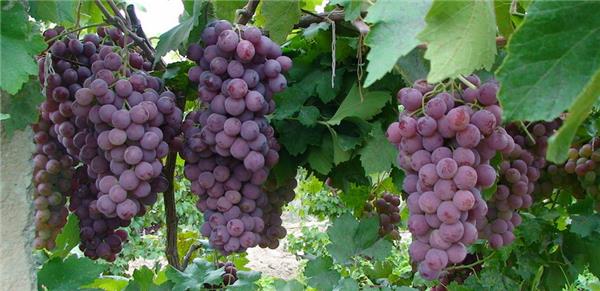
In order to pursue high yields, many fruit growers do not thin inflorescences in summer and do not pinch off the tips of clusters, which disperses nutrient supply and leads to uneven berry size and ripening. During winter pruning, they prune lightly and leave long canes and keep many branches and vines, causing the fruiting position to move upward rapidly, so that the clusters are concentrated in the upper part of the trellis. Due to excessive load and uneven distribution, nutrient imbalance occurs, and it is very difficult to form high-quality fruit.
In order to improve the light conditions of the trellis surface, reduce diseases, promote flower bud differentiation and make the branches and vines plump, after the grapes are harvested, prune the luxuriant branches and vines while they still have leaves. Remove overly tall and vigorous branches in the upper part of the trellis and overly dense weak branches in the lower part, as well as improperly positioned branches and vines, to reduce nutrient consumption and cultivate robust fruiting canes. At the same time, it can also reduce the air humidity under the trellis and avoid the occurrence of diseases.
2. Strengthen fertilizer and water management to prevent premature aging of the tree body
Kyoho grapes have strong growth vigor and relatively high requirements for fertilizer and water conditions. But irrigation should be moderate, especially stopping watering 15 to 20 days before picking. The amount of nitrogen fertilizer applied should be controlled, and phosphorus and potassium fertilizers should be increased.
For vineyards that have begun to bear fruit heavily, attention should be paid to increasing fertilizer application to keep the tree body robust and extend the years of full fruiting.
Organic fertilizer: fertilizer can be applied at a ratio of 3 kg of high-quality barnyard manure per 1 kg of fruit, and at the same time, mix 1 to 2 kg of superphosphate into every 100 kg of organic fertilizer. Apply it after fruit harvest (in September). The method is to dig trenches between the rows 30 to 40 cm deep, 40 to 60 cm wide, and as long as the rows, once every two years. When applying fertilizer, the fertilizer should be mixed evenly with the soil, then backfilled and trampled firm, followed by watering.
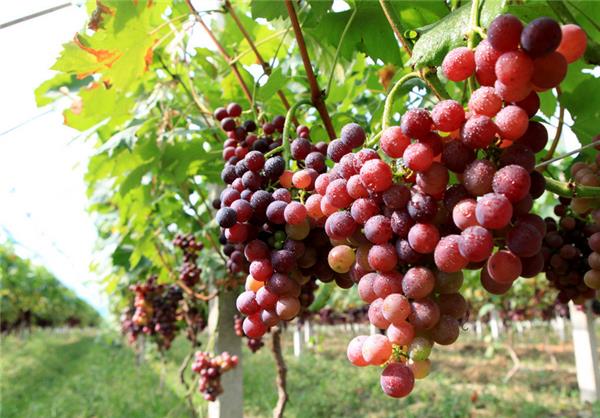
and cultivation, among which hardwood cuttings and grafting are more commonly used, and are also relatively traditional methods. Tissue culture seedling propagation is a modern propagation method, with relatively large investment and higher requirements for facilities and technology.
Sexual propagation is the method of using seeds to produce new plants, and is the result of sexual hybridization and genetic recombination. The new plants obtained have great genetic variation and it is difficult to maintain the characteristics of the original variety, so this method is not used for propagating fine varieties. Traditional conventional grape breeding usually uses seed propagation, obtaining hybrid seeds through crossing, and then selecting new varieties with excellent traits from a large number of seedlings. This method is often used for breeding new grape varieties but is labor-intensive, time-consuming, and has a long breeding cycle, so it is generally not suitable for nursery stock propagation
is the result of sexual hybridization and genetic recombination. The new plants obtained have great genetic variation and it is difficult to maintain the characteristics of the original variety, so this method is not used for propagating fine varieties. Traditional conventional grape breeding usually uses seed propagation, obtaining hybrid seeds through crossing, and then selecting new varieties with excellent traits from a large number of seedlings. This method is often used for breeding new grape varieties but is labor-intensive, time-consuming, and has a long breeding cycle, so it is generally not suitable for nursery stock propagation