Why string of pearls is called the wind chime among plants
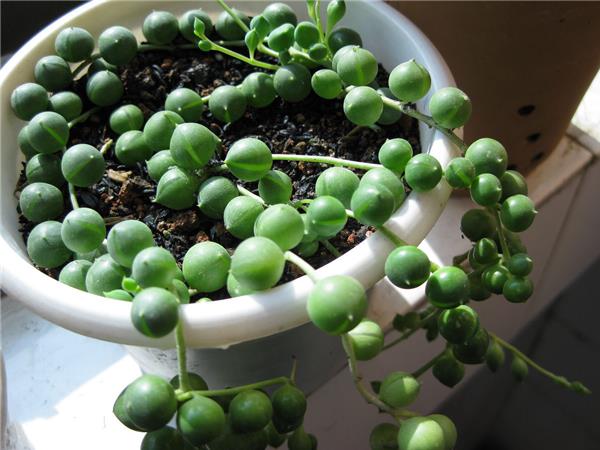
Having seen plenty of plants that grow leaf after green leaf, do you also feel there is nothing new about them? The foliage plant to be introduced today is absolutely able to bring you a different visual enjoyment - string of pearls (Senecio rowleyanus). Its leaves are shaped like little round spheres, like pearls spilled all over the pot, and also like strings of tears, very distinctive. If you have not seen this plant, do not be impatient; today let us get to know this lovely plant that looks like "big pearls and small pearls dropping onto a jade plate."
I. Introduction to string of pearls
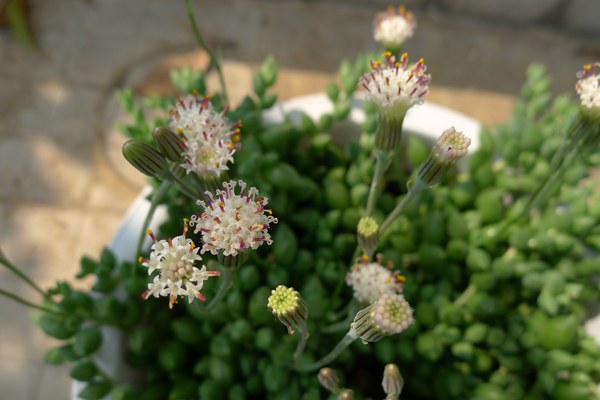
String of pearls is named for its plump, full, emerald-green oval little leaves that resemble pearls. Also known as jade beads, lover's tears, bead string necklace plant, jade beads, green bells, and green bell. Its flowering period is generally from December of the current year to January of the following year.
String of pearls likes soil rich in organic matter, loose and fertile. It grows best in a warm environment with relatively high air humidity and strong scattered light. In summer, avoid high temperature and high humidity, otherwise the stems rot very easily and the plant dies; the potted plant can be placed under rain shelter and in shade for cultivation. After autumn, the plant resumes growth, so light should be increased and liquid fertilizer applied as a top dressing. There are also blue string of pearls and brown string of pearls.
II. Price of string of pearls
String of pearls is an ordinary flower variety, so its price is not expensive either. Generally, string of pearls with a flower pot costs only within 20 yuan, while string of pearls alone costs even less, within 10 yuan, making it a very low-priced flower.
III. Flower language of string of pearls
String of pearls is also called lover's tears and jade beads. Its plant is small and exquisite, and the full, emerald-green leaves strung together sway like wind chimes. The emerald green is also like hanging green prayer beads, always giving people a feeling of tranquility and simple elegance. Its flower language is simple and elegant, innocent and tranquil.
IV. Propagation methods of string of pearls
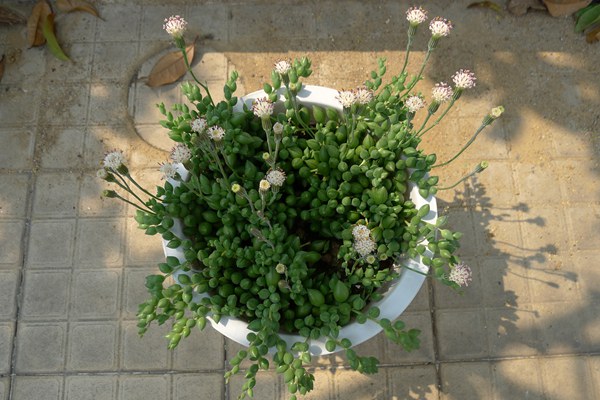
It can be propagated by cuttings. The vines very easily produce aerial roots; in spring and autumn, cut a few sections and bury half of them in sand or loose soil, keeping them moist but not waterlogged, and they will soon take root for planting (about half a month in spring and autumn, while in winter and summer rooting is not easy; when the potted plant is not uniform and full enough but has grown too long, this measure can be used to make up for it). String of pearls can be propagated by division. Except in winter, when the temperature is too low and unsuitable for division, it can be done in other seasons. For plants potted for 2-3 years, when repotting in spring, remove the old culture soil from the dense potted seedlings and divide them into two to several clumps, potting them separately as new plants. String of pearls can also be propagated using small plantlets on the runners. In the growing season, cut off the small plantlets on the runners and plant them in culture soil or water; after the small plantlets grow roots, transplant them into pots. In addition, it can also be sown from seeds, but this is generally seldom used.
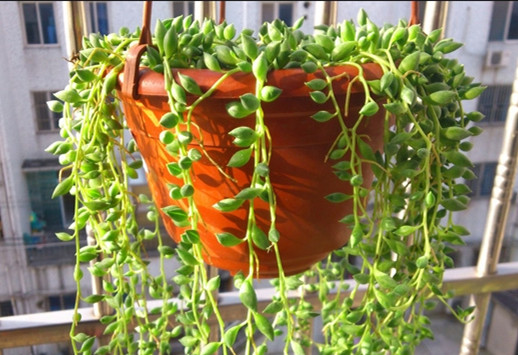
Grow string of pearls in a high place and let its branches and leaves hang down naturally. When it sways in the wind, it gives a feeling of wind chimes - that is absolutely a visual enjoyment. In addition, besides being used for ornamental purposes and beautifying the environment, this plant can also purify the air. Growing a pot of string of pearls can be said to achieve three benefits at once.