How to Grow Asparagus? A Detailed Guide to Asparagus Cultivation Methods
Asparagus enjoys the reputation of "King of Vegetables" on the international market. Asparagus is rich in various amino acids, proteins and vitamins, all of which are present in higher amounts than in ordinary fruits and vegetables. In particular, the asparagine and trace elements such as selenium, molybdenum, chromium and manganese in asparagus have the effect of regulating body metabolism and improving immunity. In the prevention and treatment of high blood pressure, heart disease, leukemia, blood cancer, edema, cystitis and others, they have a strong inhibitory effect and pharmacological action. Research by the International Cancer Patient Association believes that asparagus can normalize cell growth and has the function of preventing the spread of cancer cells. When used as an adjunct treatment for tumor diseases, it must be eaten every day to be effective. Asparagus has become one of the health-care vegetables, which is an important reason why it can be grown on a large scale around the world and remain popular. Asparagus has a fresh and fragrant flavor, and its dietary fiber is soft and palatable, which can increase appetite and help digestion. Famous asparagus dishes include "Fresh Mushroom Dragon Whiskers", "Stir-Fried Asparagus", "Shrimp with Asparagus", "Sauteed Asparagus with Sliced Pork", "Asparagus Omelette", "Sweet and Sour Asparagus Slices", "Braised Scallops with Asparagus", and "Asparagus and Abalone Soup".
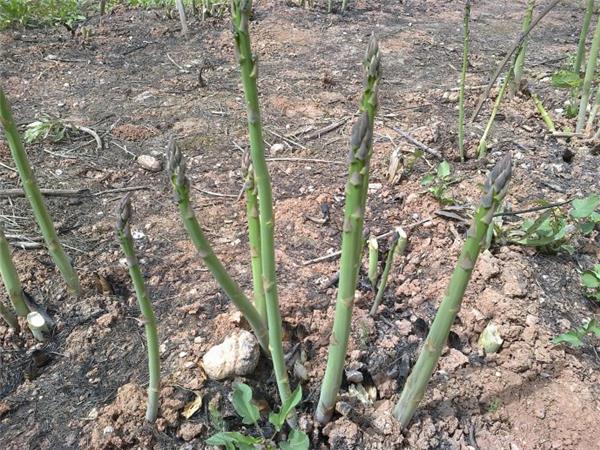
According to the Municipal Vegetable Office, asparagus cultivation in our city has developed relatively quickly in recent years. The city now has nearly 1,000 mu of asparagus bases. The most important thing in asparagus cultivation is good management. Keep it warm in winter so that it can come to market during the first month of the lunar year. Asparagus development here started relatively late. Growing asparagus in Fuyang is as widespread as growing strawberries in Jiande. However, they now face declining soil fertility, and the asparagus they grow is no longer as good in taste as that from Jiande. But asparagus development should not be too blind, because the investment per mu is about 15,000. Under normal cultivation, the yield is 3,000 jin per mu, and as long as the average price is above 3 yuan, the income per mu is 10,000 yuan.
The key points of cultivation techniques are as follows:
I. Select excellent varieties
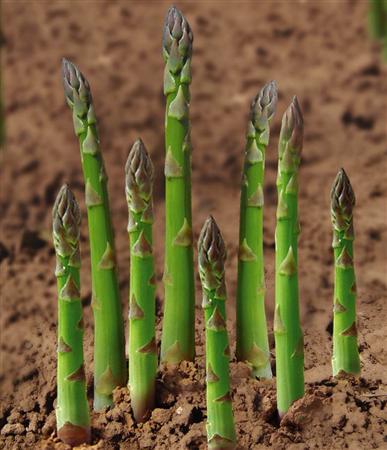
Asparagus is a perennial herbaceous plant with a persistent root system. It has strong adaptability and many varieties. Generally, the new variety UC800 can be selected. It shows early sprouting, fast growth, uniformly thick tender stems, tightly packed head scales that do not easily scatter, deep green color, good marketability and high yield. The plant is dwarf-type, disease-resistant and lodging-resistant, and is a dual-purpose variety for both green and white asparagus. It is currently a relatively ideal production seed.
II. Raise strong seedlings in nutrient pots
Using nutrient pots for seedling raising helps increase the seedling survival rate, cultivate strong seedlings, and cause only slight root damage during transplanting. This is conducive to the early vigorous growth of strong seedlings and helps achieve timely field planting and early high yield.
1. Prepare enough nutrient pots: First, choose loose sandy loam with relatively high fertility as the seedbed. The seedbed should be 1.3-1.5 m wide and 10-15 cm deep. Before making the pots, for each cubic meter of nutrient soil, apply 30-40 jin of fully decomposed chicken manure, 2 jin of phosphate fertilizer and 10 jin of plant ash. Mix thoroughly and then press into pots. The pot body should be more than 8 cm in diameter and 10 cm high. Each mu of field requires 2,500 pots.
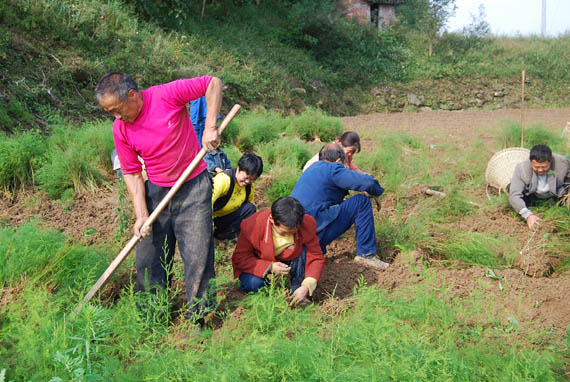
2. Seed soaking and germination: Asparagus seeds have a thick shell and a lipid layer, so they absorb water slowly. First soak the seeds in a 300-500 times dilution of 50% carbendazim for 24 hours, then place them in warm water at 25-30 degrees for 2-3 days, changing the water 2-3 times a day. After soaking, wrap them well in clean gauze and place them at 25-30 degrees for germination. During germination, sprinkle with warm water at about 25 degrees 1-2 times a day. Sow once the seeds show white sprouts.
3. Sow at the proper time: For transplanting before wheat harvest, sow in early to mid-March; for transplanting after wheat harvest, sow in early to mid-April. Before sowing, water the nutrient pots thoroughly, place one seed per pot, and after sowing cover with 2 cm of fine soil. Then broadcast poisoned bait to prevent underground pests. Finally, lay plastic film flat over the bed surface and cover the bed with an arched frame film for double-film mulching.
4. Seedbed management: Seedbed management should focus on regulating temperature and humidity, cultivating strong seedlings, and preventing and controlling pests and diseases. Before emergence, keep the bed temperature at 20-30 degrees during the day and not lower than 12 degrees at night. When 70% of the seedlings have emerged, remove the flat plastic film and gradually ventilate to harden the seedlings. When the seedlings are about 20 cm tall, ventilation without removing the film can be adopted so the seedlings adapt to the external environment. During this period, keep the seedbed moist. If the seedlings are thin and weak, supplemental seedling fertilizer should be applied, combining fertilizer with water. Remove weeds from the seedbed in time, and spray promptly to control aphids and other pests when found.
Pest and disease control
The main disease is asparagus stem blight. There is still no way to cure this disease, so it can only be prevented.
Soil disinfection: Use 2 kg of 50% thiram powder mixed with 50 kg of fine soil, together with phoxim granules or chlorpyrifos granules for killing underground pests, and apply all at once during land preparation. It can also be applied in furrows or holes.
Thorough field sanitation: Remove the stems and branches from the aboveground part of the asparagus field and transport the stems out of the field for harmless treatment. Winter-spring field sanitation and autumn stem-clearing field sanitation are equally important.
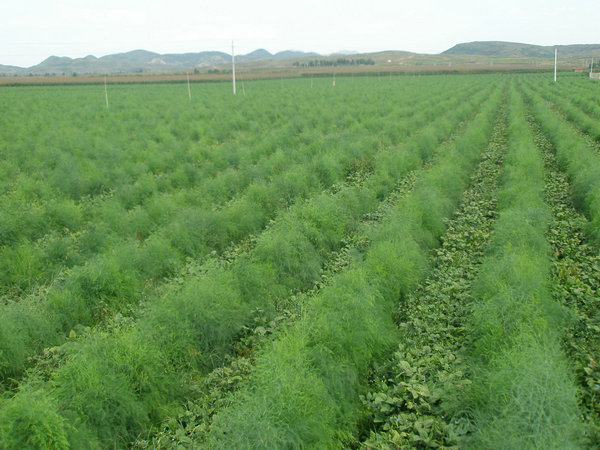
Chemical root drenching: A 300 times dilution of 45% Shenaning can be used for root drenching.
From the end of May to the end of August, fungicides such as thiophanate-methyl, difenoconazole and tebuconazole should be sprayed alternately multiple times. After rain, re-spray promptly. Copper-based preparations can also be used alternately 1-2 times to strengthen the protective function.
Pests mainly refer to underground pests: generally controlled by applying them together with fungicides. Aboveground pests are mainly noctuid pests, such as beet armyworm and cotton bollworm, which can be controlled by spraying pyrethroid pesticides combined with chlorpyrifos.