How to Grow Dendrobium officinale? A Detailed Guide to the Growing Methods
Nowadays many people like to grow some fresh, green plants indoors. That is because growing green plants can not only purify indoor air and protect human health, but also beautify the environment and make the whole room poetic and picturesque. So growing plants indoors has many benefits. But do you know how to grow Dendrobium officinale indoors? If not, please read on.
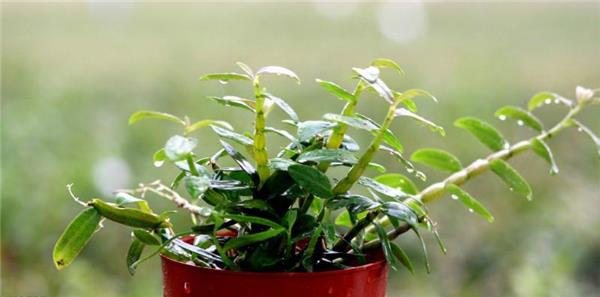
Preparing the Growing Substrate
When transplanting tissue-cultured seedlings of Dendrobium officinale, a suitable substrate must be chosen. The roots of Dendrobium officinale are aerial roots, with obvious aerophilic and shallow-rooted characteristics, so the substrate should be loose, breathable, well-draining, and not prone to harboring fungi and pests. A single substrate can hardly meet the requirements of both water retention and aeration at the same time, so you can choose a mix of sphagnum moss, limestone, crushed brick, sawdust, tree bark, wood shavings, fern roots, board edges, mushroom bran, wood bran, etc. as the transplanting substrate. (Because organic substrates with a high carbon-to-nitrogen ratio such as sawdust take a very long time to ferment, you can use the Jinbaobei substrate nutrient soil fermentation agent to ferment the mixed material, which not only shortens the fermentation time but also transforms the nutrients in the material through high-temperature fermentation, thereby reducing the amount of fertilizer applied later; moreover, the fermented material also contains many beneficial microorganisms, which can form a protective layer around the root system of Dendrobium officinale and effectively prevent root diseases. In addition, microbial metabolites such as cytokinins, gibberellins, and indoleacetic acid can also stimulate root growth.) In actual production, the best substrate ratio is the formula peat : tree bark : fine wood shavings = 2 : 4 : 4. Fine sawdust, however, has particles that are too small, and its poor permeability easily causes compaction, which limits the growth of the root system of Dendrobium officinale.
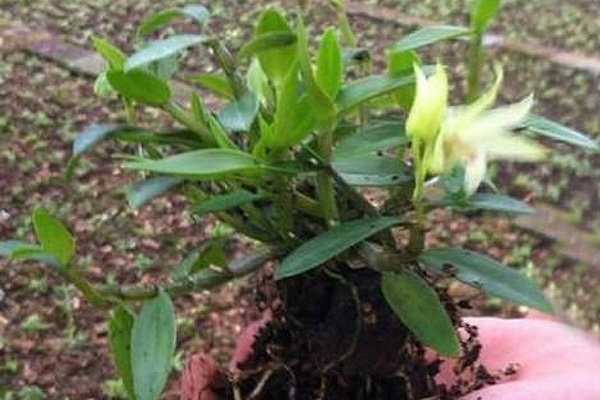
Transplanting at the Right Time
(1) The best season for transplanting should be when the average daily temperature is 15-30°C; when the temperature is too low or too high, it is not suitable to take the seedlings out of the bottles for transplanting. Generally speaking, in the main production areas of Dendrobium officinale, planting can be done except in the coldest season. When growing Dendrobium officinale in a greenhouse, transplanting from the Spring Equinox to Qingming, as well as at the Autumn Equinox, gives the highest survival rate.
(2) Carefully take out the tissue-cultured seedlings without damaging or breaking the root system; after the seedlings come out of the bottles, gently rinse the culture medium off the roots. If transplanted with culture medium still attached, the nutrients in the medium easily breed fungi and cause root rot, reducing the survival rate. After the tissue-cultured seedlings are cleaned, soak the small seedlings for 15 minutes in a 500 mL dilution of Jinbaobei Genmiaozhuang at 500-800 times. (Jinbaobei Genmiaozhuang contains active rooting agents, virus inhibitors, and BYM microbial fermentation liquid; dipping the roots can reduce root diseases of the small seedlings, promote the growth of fibrous roots, and improve root absorption capacity, making the seedlings grow robustly.) After soaking, place the seedlings on something with good water absorbency and let them dry naturally in scattered light for 5-7 hours.
Moderate Temperature
Growing Dendrobium officinale generally requires an indoor temperature of 0-30°C and a growing temperature of 15-30°C. In summer, pay attention to shading and ventilation indoors, and water or mist frequently to retain moisture and lower the temperature; in winter, pay attention to the indoor temperature and keep the plants warm.
Appropriate Humidity
The growing of Dendrobium officinale requires appropriate conditions, and humidity adjustment changes according to temperature: high temperatures require high humidity, and low temperatures require low humidity. During the vigorous growth period, the indoor air humidity should be kept at 60%-90%.
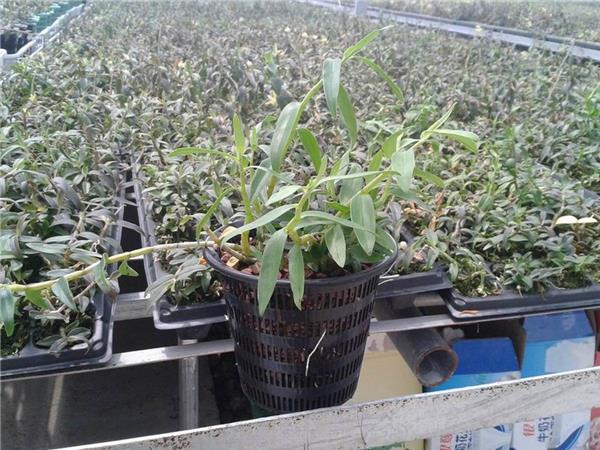
Moderate Water Quality
When cultivating Dendrobium officinale, weakly acidic water or neutral water is required, and the substrate used in cultivation should be easily breathable, easily draining, and full of gaps.
Suitable Site
The cultivation site for Dendrobium officinale requires good ventilation facilities. Indoors, it requires warmth, moisture, weak light, and ventilation.
Propagation Techniques for Dendrobium officinale
The propagation methods of Dendrobium are divided into two major categories: sexual propagation and asexual propagation. At present, asexual propagation is mainly used in production.
1. Sexual propagation, that is, seed propagation. Dendrobium seeds are extremely small, with about 20,000 seeds per capsule, in the form of yellow powder. They usually do not germinate and can only sprout and grow under conditions of sufficient nutrients, suitable humidity, and moderate light, generally requiring cultivation in a tissue culture room. However, although the propagation coefficient of Dendrobium is very high, the success rate of its sexual propagation is extremely low.
2. Asexual propagation
(1) Division propagation: carried out in spring or autumn, preferably at the end of March or the beginning of April before Dendrobium sprouts. Select 1-2 year old plants with good growth, no pests or diseases, well-developed roots, and many sprouts as stock plants; pull them up with the roots, remove dead branches and broken stems, cut off excessively long fibrous roots, keep the old roots at about 3 cm, and divide them into several clumps according to the number of stems. Each clump must have 4-5 stems and can then be used as seed stems.
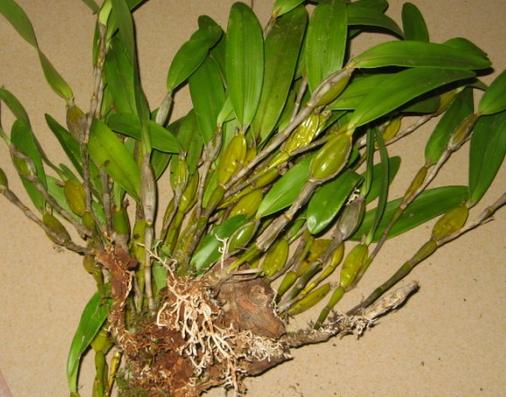
(2) Cutting propagation: carried out in spring or summer, preferably in May-June. Select robust three-year-old plants, take plump and rounded stem segments, keep 4-5 nodes per segment at about 15-25 cm long, and insert them into vermiculite or river sand, with the depth set so that the stem does not fall over. Wait until the axillary buds on the stem sprout and grow white aerial roots, and then they can be transplanted. Generally, when selecting material, the upper stem segments are mostly used because they have apical dominance, a high survival rate, many sprouts, and fast growth and development.
(3) Aerial shoot propagation: mostly carried out in spring or summer, mainly in summer. On Dendrobium plants more than three years old, axillary buds, also called aerial shoots, sprout on the stems every year and grow aerial roots to become small seedlings. When they grow to 5-7 cm, they can be cut off for transplanting.
(4) In vitro tissue culture propagation: Dendrobium nobile can be rapidly propagated into test-tube plantlets by tissue culture using the following method. After routine disinfection, cut the leaves, tender stems, and roots of Dendrobium nobile into 0.5-1 cm explants, use MS and B5 as basic media, and add various media with different hormone combinations such as NAA (0.05-1.5 mg/L), IAA (0.2-1.0 mg/L), and 6-BA (1.0-5.0 mg/L). Perform tissue culture at a medium pH of 5.6-6.0, a culture temperature of 25°C-28°C, 9-10 hours of light per day, and a light intensity of 1800-1900 lx. After 19 days, small bud points appear at the stems and leaves; after about 1 month, the small buds elongate and fork at the tips; after 2 months, the small buds grow into test-tube plantlets about 2.0-2.7 cm high with 4-8 leaves. The leaf and root segments, however, showed no changes. It was also found that among the different formula combinations of media, MS had a clear advantage over B5 basic medium in growth speed.
The above points are the techniques for growing Dendrobium officinale. Have you learned them? If you have, you might as well try growing it at home, because Dendrobium officinale is a precious plant and will be very helpful to your health.