A Detailed Guide to the Planting Techniques and Pest and Disease Control Methods for Box Elder
Box elder (Acer negundo) is a tree well worth growing, because it is not only ornamental but can also be used as a Chinese medicinal material to treat a variety of ailments. Let us now learn how to cultivate it correctly.
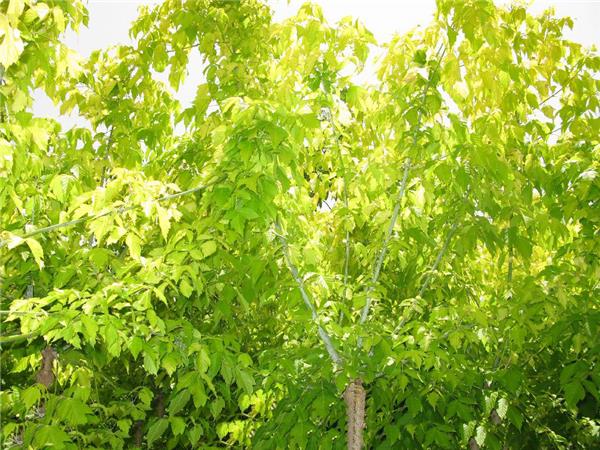
Planting Techniques for Box Elder
Seed treatment: Collect the seeds and measure their size and traits, then rub off the fruit coat and assess the seed quality. Treat them with mixed sand for stratification to promote germination, that is, mix wet sand and seeds in a 3:1 ratio, and place the mixture in a ventilated, moist, low-temperature environment to overwinter.
Sowing method: Sow directly in rows by dibbling, with the depth controlled at 2.5-3.0 cm, a hole spacing of 2.0-4.0 cm, and a row spacing of 25-30 cm. After sowing, cover with soil and water evenly to keep it moist.
Trait observation: After sowing, observe the seed germination, selecting a certain area from each of the above two seedling-raising methods to observe and record the germination rate and germination time of the seeds. After transplanting, randomly select 50 seedlings as subjects for study, that is, survey the seedlings once every 10 d. In autumn, observe traits such as drought resistance, leaf-fall phenology, and leaf color change.
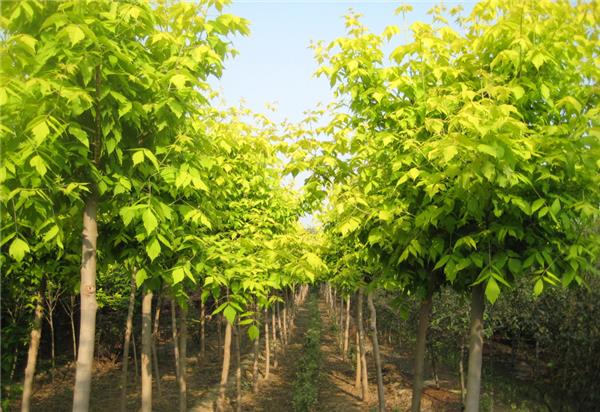
Temperature and light: It has strong adaptability. In southern regions, even without cold-protection measures in winter, one-year-old box elder seedlings will not be damaged by freezing, and in summer no symptoms such as high-humidity damage or sunscald appear.
Fertilizer and water management: Box elder is afraid of waterlogging, so plant it in an environment with good light and pay attention to drainage during the rainy season. Golden box elder has high requirements for water and fertilizer; after leaf fall each autumn and before bud break each spring, fertilize together with watering. In summer, depending on the amount of rainfall, water when dry and drain when waterlogged.
Shaping and pruning: Box elder grows fast and its trunk is prone to bending. Therefore, while planting the seedling, insert a bamboo pole deep into the ground close against the seedling, and tie the seedling and the bamboo pole together with cloth strips; do not tie too tightly, so as not to affect the trunk form because of the seedling's rapid growth. Box elder has strong sprouting ability, so pay attention to timely bud removal and pruning; pruning should be done during the growing season, because pruning after leaf fall and during the dormant period easily causes sap bleeding from the wounds, which will affect the next year's growth.
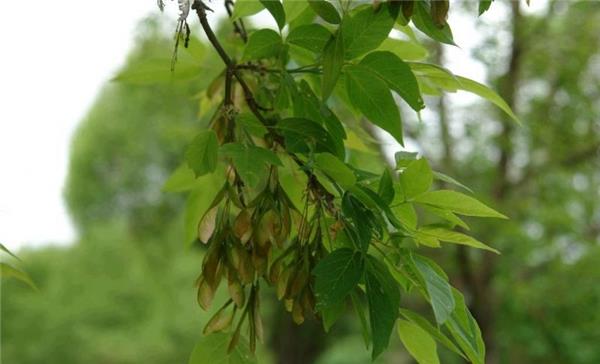
Pest and Disease Control of Box Elder
Leaf blight: Affected sugar maple leaves turn yellow and wither and fall in large numbers early, and in severe cases few green leaves remain on the tree, making it look like a dead tree. In the early stage of the disease, spraying 70% thiophanate-methyl wettable powder at 1000 times dilution or 75% chlorothalonil wettable powder at 800 times dilution can both achieve fairly good results.
Powdery mildew: When plants are found to be infected, first remove the diseased leaves, then dilute 75% chlorothalonil and 20% fenarimol wettable powder each with water at 1000 times dilution, and spray them alternately or as a mixture, for 3-4 consecutive applications, once every 1 week; this has a good curative effect on powdery mildew. For severely infected plants, also spray the medicine on the undersides of the leaves. After powdery mildew is brought under control, still use the above medicines or 50% carbendazim at 500 times dilution and spray once every 15 days, for 2-3 consecutive applications.
Box elder scale: In April and May, to control the nymph scales, spray 40% methidathion at 1000-1500 times dilution.
Yellow slug moth: When newly hatched larvae are found, remove the infested leaves and crush them to death. During the larval damage period, promptly spray 50% phoxim emulsion at 1000-1500 times dilution, or 50% fenitrothion emulsion at 1000 times dilution. In August, to control adults, use 40% methidathion at 800-1000 times dilution.
Asian longhorned beetle: For adults that have emerged after missed control, from June to July spray "Lüse Weilei" at 150-200 times dilution or 40% methidathion at 800-1000 times dilution to kill the adults on contact.
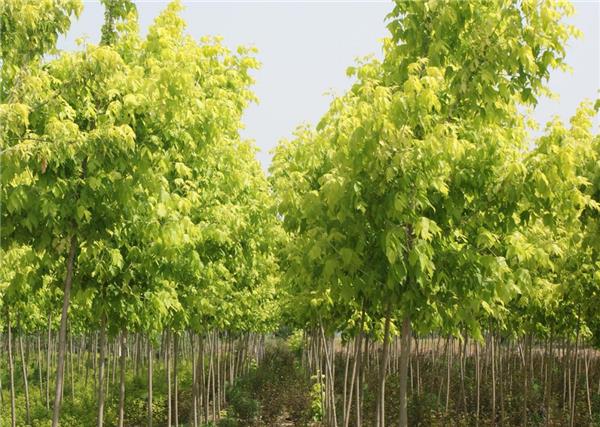
Finally, what I want to tell everyone is that box elder has a total of three varieties: golden box elder, pink-leaf box elder, and variegated box elder, among which golden box elder has the strongest cold resistance. It can be planted alone or in groups. Golden box elder has fairly well-developed fine roots, is relatively easy to plant and transplant, and can be transplanted in all four seasons. The survival rate is very high, so the water and fertilizer management for its care is also relatively easy; it is the most suitable box elder variety to grow.