How to Grow Firethorn? A Detailed Guide to Firethorn Cultivation Methods
Firethorn has many uses, so it has relatively high cultivation value, but it also needs careful attention during cultivation to prevent it from being affected by pests and diseases.
The Uses and Benefits of Firethorn
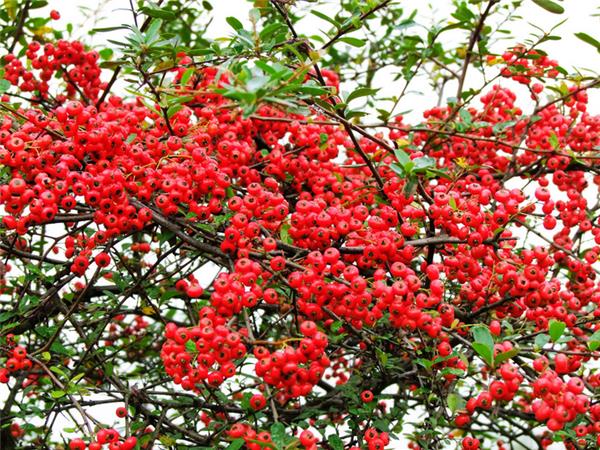
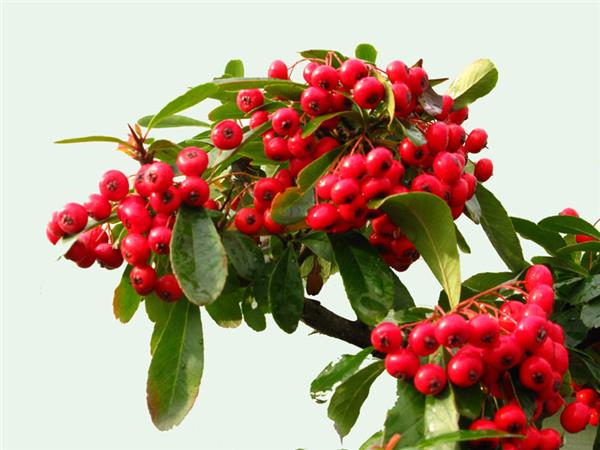
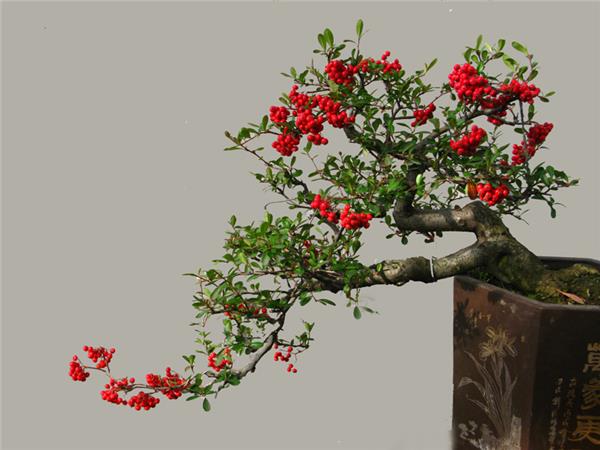
Ornamental: Firethorn stays evergreen all year round, with soft, small branches and leaves and waxy foliage. It blooms with white flowers in spring, then bears green fruit, and in late autumn the fruit turns fire-red. Its ornamental value is very high, making it an ideal flowering bonsai.
Artwork: Firethorn wood is hard and has good toughness. Firethorn over ten years old is a superior wood material. Its roots can naturally form twisted, grotesque shapes, and the roots of 3-5 year old firethorn trees can also be made into root-carving artworks.
Food: Firethorn fruit is rich in organic acids, proteins, amino acids, vitamins and various mineral elements. It can be eaten fresh and can also be processed into various beverages.
Medicinal: Firethorn root can be used as medicine. Its nature and flavor are bitter and astringent, and it has effects such as stopping diarrhea, dispersing blood stasis and promoting digestion. The fruit, leaves and stem bark also have similar medicinal effects. Firethorn leaves can be made into tea, which has the effects of clearing heat and detoxifying, promoting salivation and quenching thirst, and astringing to stop diarrhea.
Cultivation Methods for Firethorn
Substrate: Use river sand or a loose, well-draining soil. River sand can be washed clean with boiled water, and the growing soil can be disinfected by exposure to sunlight or with a 50-fold dilution of formalin.
Temperature: Firethorn likes warmth, but has a certain degree of cold tolerance. Potted plants should be moved indoors. To ensure that it does not lose its leaves, the minimum temperature should be around 5°C. The method of bagging to keep warm and retain moisture can also be used for cold protection, that is, wrap the pot with dry rice straw, and put a plastic bag over the outside of the pot or the entire potted plant. The bag should be appropriately large; choose a colorless, transparent bag. After tying the opening securely, place it in a wind-sheltered, sunny spot. When the temperature is high at noon, open the bag opening for ventilation.
Light: Firethorn is a light-loving tree species. Apart from short-term shading at the initial planting stage, it should be maintained under full-light conditions throughout the entire growing season. For potted firethorn placed on cement or tile-paved ground, appropriate shading is needed during the hottest summer season to prevent leaf scorch. In winter, plants kept indoors for fruit viewing should be placed in a spot with sunlight.
Fertilization: After firethorn survives planting, apply dilute fertilizer water once every 15-20 days to promote rapid branch growth and formation. After 3 years of planting, apply base fertilizer once each year in winter or spring.
Watering: For newly potted plants, water once each at 8 a.m. and 6 p.m., and also splash water on the branches and trunk. When new shoots are 5-6 cm, generally only one watering per day is needed, and the soil must not be too wet. When the shoots reach 8-10 cm, new roots have formed, so water according to the soil conditions. Before flowering in spring, water thoroughly once. Since the flowering period coincides with the rainy season, pay attention to timely drainage. Water thoroughly before the onset of winter.
Pruning: Naturally growing plants have messy shapes and are not conducive to the growth of internal branches, so pruning should be carried out every year. Cut off unwanted leggy branches, vegetative branches and overly dense branches, and keep the newly grown short branches.
Pests: The main pests are scale insects and aphids. For the former, remove them with hard objects such as wire or a small knife, or spray a 0.1% machine oil emulsion onto the plants and bury carbofuran into the soil for comprehensive removal. For the latter, remove them with omethoate solution or dichlorvos.
Overall, firethorn is still relatively easy to grow, because it is robust by nature and equally robust in adaptability. As for planting methods, the technical requirements for potted cultivation are also much lower than for ground planting, so everyone can try growing it.