Methods for Growing Acorus gramineus Hydroponically and in Soil
Acorus gramineus is a beautiful plant that combines inner and outer beauty. Not only can its beautiful appearance delight the body and mind of viewers, but its rhizome can also help people protect their health, so it has relatively high cultivation value.
I. Functions and Benefits of Acorus gramineus
Improving hearing and eyesight: Acorus gramineus is aromatic and opens the orifices, dispersing and penetrating. "Mingyi Bielu" states that it has the effect of "improving hearing and eyesight and benefiting the mind," so it is good for treating conditions such as confusion, forgetfulness, tinnitus and hearing loss. For example, (Buwang San from "Zhengzhi Zhunsheng") uses Acorus gramineus combined with Polygala tenuifolia and other herbs, specifically to treat confusion and forgetfulness; Kaixin San from "Qianjin Fang" also uses this product combined with other herbs to mainly treat forgetfulness.
Resolving dampness and harmonizing the stomach: Acorus gramineus is bitter, pungent and aromatic. Entering the stomach meridian, it can diffuse and transform damp turbidity and open the stomach to promote digestion, making it a good medicine for resolving dampness and harmonizing the stomach. "Bencao Beiyao" states that it "removes dampness and expels wind, for those with stuffiness in the epigastrium and no hunger, with symptoms including: distension, fullness, stuffiness and pain in the gastric cavity, tastelessness in food, loss of appetite, emaciation and fatigue, greasy tongue coating and thin pulse, using it is mostly effective. All of these take advantage of its effects of bitter drying to remove dampness, pungent aroma to diffuse and disperse, opening the orifices and the stomach, and eliminating accumulation and relieving distension."
Dispersing cold and eliminating bi syndrome: Acorus gramineus is aromatic, pungent and warm. Warmth can overcome cold, and pungent aroma disperses dampness; it further travels to the middle jiao, so it can develop the qi of the spleen and stomach and eliminate wind-cold-damp bi syndrome. As "Bencao Qiuzhen" states: the first mention of treating wind-cold-damp bi syndrome is taking advantage of its pungent and warm power to develop spleen qi. This product both "mainly treats damp bi of the limbs, with inability to flex and extend" ("Mingyi Bielu"), and also treats evil wind cold bi and generalized body pain, such as (Changpu San from "Shengji Zonglu"), which uses this product combined with Aconitum and other herbs to treat cold bi and body pain.
II. Methods for Growing Acorus gramineus Hydroponically
1. Acorus gramineus can only be grown in containers and then placed as an accent at the bottom of small streams or ponds. For container cultivation, you can choose flower pots with a diameter of 30x50 cm or soft plastic basins of 40x40 and 60x60 cm. If the pond water is very clear and the bottom is visible when looking down, it is best to choose the former, which is beautiful and elegant.
2. For the cultivation soil, ordinary garden soil can be used, as well as pond mud or river mud free of chemical pollution. Plant 6-10 plants per pot or basin. If the design requires it, it should be implemented according to the design. If the cultivation soil is too poor, an appropriate amount of base fertilizer should be added to the soil.
3. Keep the water depth at 30-40 cm. If the water is too deep, the pot or basin should be raised. If fish are kept in the pond or river, a layer of small pebbles should be placed on the surface of the potting soil to prevent the fish from rolling and stirring the soil out of the pot or basin.
4. When the natural temperature is below 3°C, move them to a well-lit site in a greenhouse to overwinter. If you do not plan to keep them evergreen through the winter, they should be taken out before the pond water freezes, the aboveground parts cut off, and they should overwinter in a cellar or cold room. If the pond or river water is not drained in winter, flows year-round, or still has water above the ice layer, they can also be placed in the water to overwinter. They can also be removed from the pot (when grown in soft plastic basins, do not remove the basin) and buried in a wind-sheltered, sunny trench with maintained humidity to overwinter, and repotted the following spring and placed back in the pond or river.
III. Methods for Growing Acorus gramineus in Soil
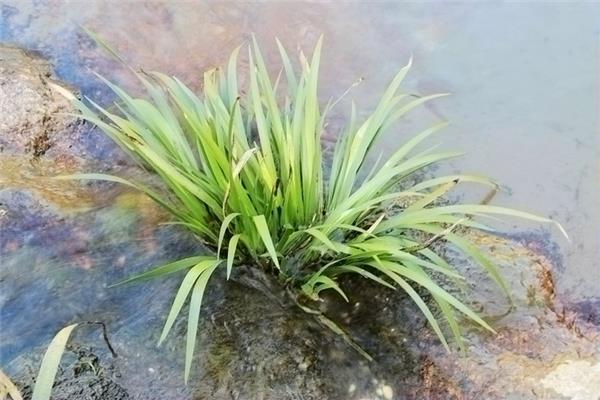
1. Acorus gramineus prefers a cool and humid climate and a shaded, moist environment. It is cold-tolerant and averse to drought. It is best cultivated in swampy wetlands or sandy loam that is convenient for irrigation, or loam rich in humus.
2. Acorus gramineus is propagated by rhizomes. In spring, dig out the rhizomes and select small rhizomes with fibrous roots and leaves as seeds. Before sowing, spray the stem blocks with New High-Fat Film, which can be mixed with seed coating agents to repel underground pests and diseases and isolate viral infections. After planting, cover with soil and press firmly.
3. During the growth period after planting Acorus gramineus, pay attention to pulling out weeds around the roots, loosening the soil and watering. Never let it dry out. Also apply human feces and urine as top dressing 2 times. Mainly use nitrogen fertilizer, appropriately increase phosphorus and potassium fertilizer, and combine with spraying New High-Fat Film to enhance fertilizer efficiency. Also spray medicinal material Root Daling to promote the transport of leaf surface photosynthesis products (nutrients) to the root system, improve the nutrient conversion rate and soil-loosening capacity, so that the rhizome expands rapidly and the medicinal content is greatly increased.
4. The pest of Acorus gramineus includes rice locust, which damages the leaves. It can be controlled with a 1000-fold dilution of 90% crystal trichlorfon. Also spray New High-Fat Film to enhance the control effect. In late autumn, do a good job of cold protection and heat preservation for overwintering to ensure safe overwintering and a bumper harvest the following year.
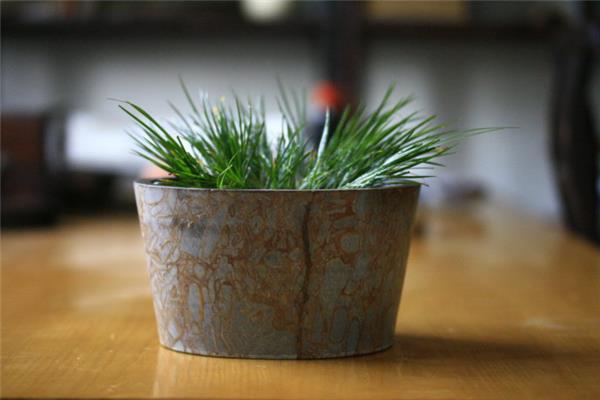
Overall, whether growing Acorus gramineus in water or in soil, it cannot do without the word "water," so in the process of cultivating Acorus gramineus, you must avoid phenomena such as drought and make sure to water frequently and abundantly.