What are the benefits and effects of the August melon and how good are its economic returns?
Judging by its appearance alone, it is hard to warm to the August melon, because it really does look rather bizarre. But despite its unattractive looks, it is in fact a very valuable little treasure.
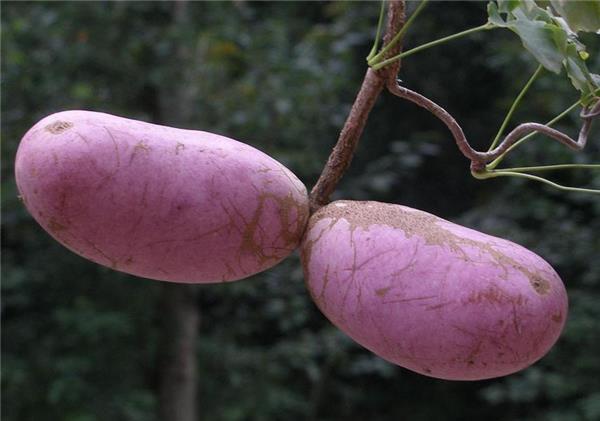
I. The effects and benefits of the August melon
1. The August melon has high medicinal value. Its seeds, stems, leaves and roots can all be used as medicine. In folk practice it is mostly used to treat conditions such as painful, dark urine, amenorrhea in women and blocked lactation.
2. The August melon is rich in nutrients and has effects such as fading facial spots and fighting inflammation and bacteria; eating the flesh of the akebia fruit can clear toxins from the body and strengthen immunity.
3. In recent years, research and trials by many universities and scientific research departments have fully confirmed that the akebia melon can prevent and fight cancer and prevent and treat many diseases, with particularly remarkable effects on inflammation and tumours of the esophageal and digestive system, breast cancer, lung cancer, liver cancer, high blood pressure and high blood lipids.
4. The August melon also plays an important role in soil and water conservation. The akebia plant grows by clinging to tall trees, and compared with herbaceous plants it can make fuller use of woodland space. At the same time, the combination of tree (woody) and vine (herbaceous) effectively blocks rainfall from forming runoff, thereby preventing soil erosion and non-point source pollution, thus protecting water bodies and air and improving the ecological environment of small watersheds.
5. The August melon can also be deeply processed and utilised. The whole August melon is a treasure: the flesh can be eaten fresh or processed into jam, juice or fruit wine; the flowers, tender leaves, tender shoots, green fruit and fruit skin can be processed into health tea; and the tender leaves and tender shoots are also a nutritious delicacy as wild vegetables.
II. The economic returns of the August melon
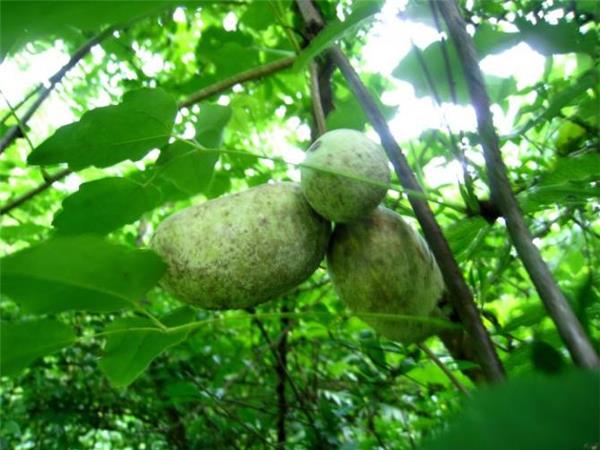
With about 330 plants per mu, the yield of the August melon can reach more than 2,500 kg. Calculated at the current highest market price of 8 yuan per jin, the income per mu is more than 40,000 yuan. Seedlings at 6 yuan each for 330 plants come to 1,980 yuan, land rent is 200 yuan per mu, and if labour and ploughing in the first year are calculated at 1,500 yuan, farmyard manure can be obtained cheaply from a nearby livestock farm, so calculating at 2,000 kg per mu at 2 mao per jin that is 400 yuan, cement posts at 15 yuan each for 100 per mu come to 1,500 yuan, and wire is 1,000 yuan. The total is 6,580 yuan, and 40,000 - 6,580 yuan = 33,420 yuan. The returns are several times or even dozens of times those of conventional planting. Although there is no fruit income in the first year, from the second year onward the fruit can gradually be sold, and the seedlings are only an investment in the first year. After the third year the yield enters its peak period and the output value will be even higher, so the economic potential of growing it is enormous.
III. The propagation methods of the August melon
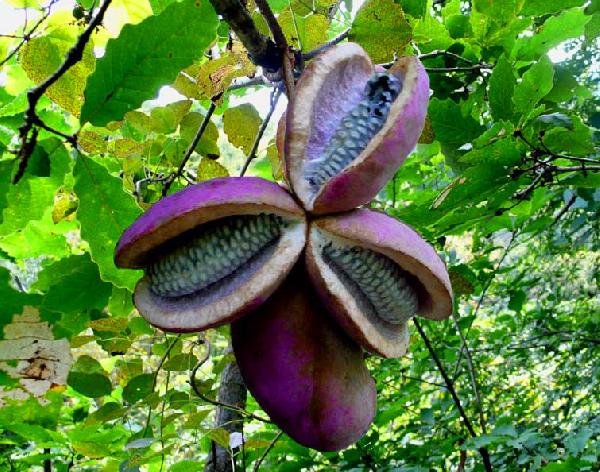
1. Seed propagation. In September-October, when the August melon fruit is ripe, pick the August melon fruit, eat the flesh and keep the seeds for timely autumn sowing. First rub and wash the seeds with alkaline water, rinse them clean with fresh water, drain off the water, and sow them promptly in a prepared seedbed. Seed propagation is simple and easy to carry out, but the seedlings produced bear fruit late, generally only after 3 years. It is generally not used in production.
2. Layering propagation. The August melon vine has strong sprouting ability. Select 1-2 year old branches and vines and bury them in the soil; after 1 month they will root, and propagation can be done in all four seasons. Generally, after planting they will flower and set fruit in the second year.
3. Root division propagation. Root division propagation is carried out before sprouting in early spring. A single clump of August melon containing several plants is divided by hand from the roots into several plants. Without cutting the branches and vines, planting in the same year will produce fruit in that same year.
4. Cutting propagation. Cuttings can be taken in all four seasons. Select healthy, pest- and disease-free 1-2 year old branches and vines, cut them into 10 cm long cuttings, and insert them into a prepared seedbed, taking care about waterlogging, shading and drought prevention. If conditions allow, the branches and vines can be soaked in ABT No. 2 rooting powder before cutting, raising the survival rate to 100%.
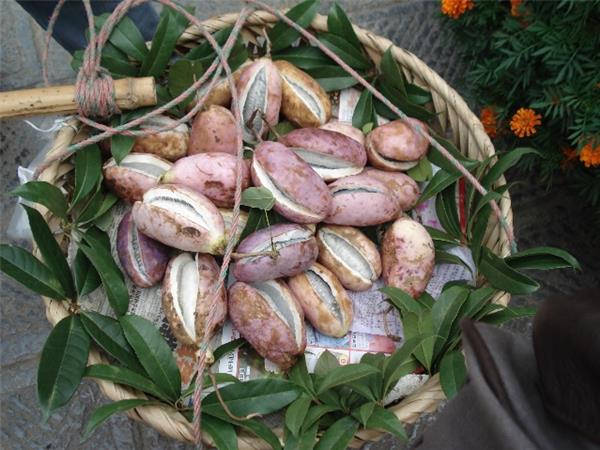
The seeds of the August melon can be pressed into top-grade oil, the fruit pulp can be processed into top-grade beverages and juice, and the fruit skin can be made into Chinese medicinal materials, so it can be said to be a treasure from head to toe, which is why it has relatively high cultivation value.