Pruning Principles and Methods for Apricot Trees at Different Stages
The main value of the apricot tree lies in the edible value of its fruit, but the apricot tree is actually also a fairly common ornamental tree grown for its flowers and fruit, so pruning it is especially important.
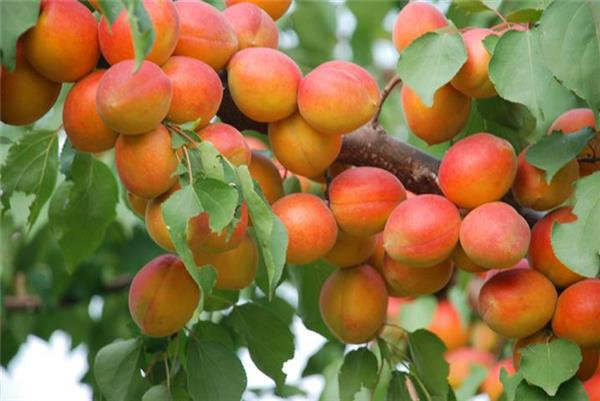
I. Pruning Techniques for Apricot Trees in the Young Tree Stage
1. Shaping and pruning of young trees. The apricot tree has strong apical dominance, so a multi-main-branch natural open-center tree form is suitable. The trunk height is 40-50 cm, with three adjacent main branches at the base; after forming 4-6 secondary main branches by dichotomous branching, no further branching levels are formed. Each main branch is trained with 2 fixed outer lateral branches. When the basic tree form is complete, a spacing of about 100 cm is maintained between the scaffold branches. This tree form gives lateral branches a long life, strong branch groups, rapid canopy formation, and high use of space.
2. During shaping, the extension shoots of the main and lateral branches must be headed back every year, and the amount cut depends on the variety, the strength of branching ability, shoot length and growth vigor. In general, strong branches are pruned lightly and weak branches heavily, and cutting off 1/3 to 2/5 of the original shoot tip is appropriate. Overly dense branches and water sprouts should be removed early. But note: young trees should avoid overly heavy pruning and should retain more small branches, so as to speed up canopy formation and bear fruit earlier.
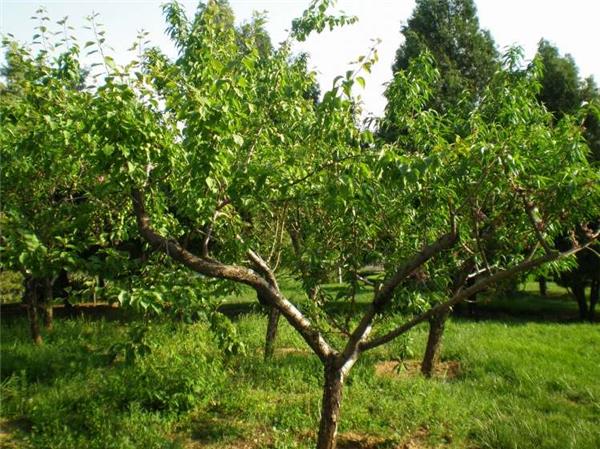
II. Pruning Techniques for Apricot Trees in the Full Fruit Stage
1. Where fertilizer and water conditions are good and the tree is growing vigorously, heading back during pruning should not be too severe, otherwise it will stimulate vigorous shoots to sprout near the cut, inhibit the sprouting of lower buds, and may even cause the small branches at the base to decline and die prematurely. Pruning of extension shoots and vegetative shoots. It can be handled flexibly according to the principle of cutting less from strong branches and more from weak branches. Generally, cutting off about 1/3 to 1/4 of the current year's new shoots is appropriate. After proper heading back of vegetative shoots and extension shoots, vigorous new shoots can grow from the top and fruit branches can grow from the lower part. If heading back is too light, although more fruit branches can form, the new shoots produced at the top will grow weakly, which easily throws vegetative growth and reproductive growth out of balance, weakening the tree's vigor and shortening the years of the full fruit stage.
2. Fruit-bearing branch groups on the upper side of main or lateral branches have a relatively long effective fruiting life, but if allowed to grow naturally, they easily form a tree on top of the tree, disrupting the tree form and competing with the scaffold branches. If, through pruning, their direction of extension is changed, that is, from upright to slanting, this can both slow their growth so they do not compete with the scaffold branches and also allow them to be used for fruiting over the long term.
3. For vigorous water-sprout-type branches that sprout inside the canopy and are suitably positioned, pinching can be done at the right time and they can be left unpruned for use. When pruning main and lateral branches at all levels, retain full outer buds so that growth continues outward and the canopy is expanded.
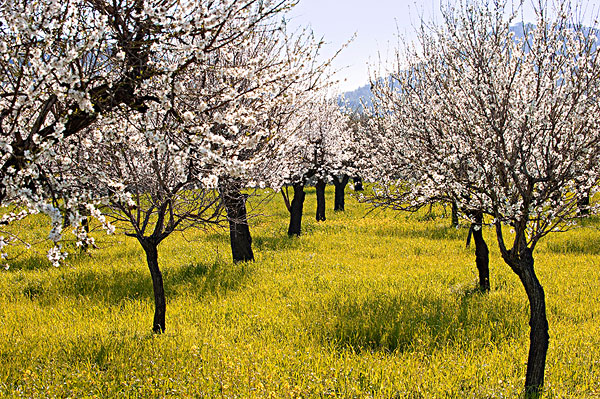
III. Winter Pruning Techniques for Apricot Trees
1. Renewal pruning, also called retrenchment pruning. This means cutting back a perennial branch section to the base of a 1-year-old branch or to the branching point of a perennial branch. The effect of retrenchment pruning is to weaken and control the growth of the mother branch in an unsuitable position, promote later shoot growth or stimulate the sprouting of latent buds, and change the direction and angle of extension of various types of extension shoots.
2. Thinning, that is, removing branches from the base. The main targets of thinning are: competing branches on the upper side; overly dense branches and crossing branches in the middle and upper part of the canopy; whorled branches and adjacent branches near the pruning cut; at the same time, it can also suppress the front and promote the back and improve ventilation and light conditions inside the canopy.
3. Leaving unpruned, as with pruning of other fruit trees, means not cutting. The method of leaving shoots unpruned is mostly used on young trees and vigorously growing branches, with the aim of slowing the vegetative growth vigor of these branches so that more short fruit branches form in the middle and upper parts of the branches, increasing fruiting sites and raising yield.
Overall, pruning apricot trees in the young tree stage mainly involves heading back, and pruning should not be too heavy, while in the full fruit stage, winter and other periods the degree of pruning should be judged according to the apricot tree's own growth conditions. In fact, as long as you are careful, it is not a difficult task.