What are the pollution-free control methods for aphids?
There are actually many methods for controlling aphids. Out of consideration for the healthy growth of plants, the ones we should choose first are pollution-free control methods, and chemical pesticides come second.
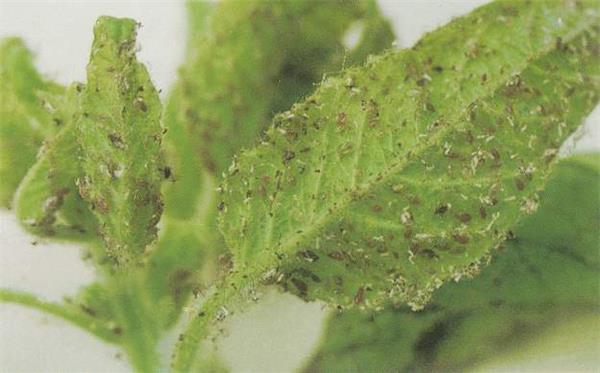
I. Pollution-free control methods for aphids
1. Use sugar-vinegar liquid to trap and kill aphids. The formula for the sugar-vinegar liquid is: alcohol : water : sugar : vinegar = 1:2:3:4. Place the prepared sugar-vinegar liquid in a container with an opening at the top, generally setting it out in the evening at plant locations where aphids occur in large numbers; the trapping and killing effect is very significant.
2. Use willow branches bundled together to attract and gather aphids. Aphids have a strong tropism toward the odor released by willow and poplar. For this purpose, take a certain amount of willow branches and tie them into bundles, then place them at plant locations where aphids occur in large numbers; this can attract and gather large numbers of aphids together, making it easier to kill them in a concentrated way.
3. Use plant ash water to control aphids. The method is to take 10-15 kg of plant ash, add 50 kg of water, and soak for 1 day and night. On the second day, take the supernatant liquid and spray it on plants where aphids occur; this achieves two things at once: it can effectively control aphids and also supply plant nutrients.
4. Use natural enemies to control aphids. Using natural enemies to control aphids is currently a relatively economical and effective method. The seven-spot ladybird is a natural enemy of aphids. For this purpose, collect a certain number of seven-spot ladybirds and place them on plants where aphids are causing damage; the effect is very good.
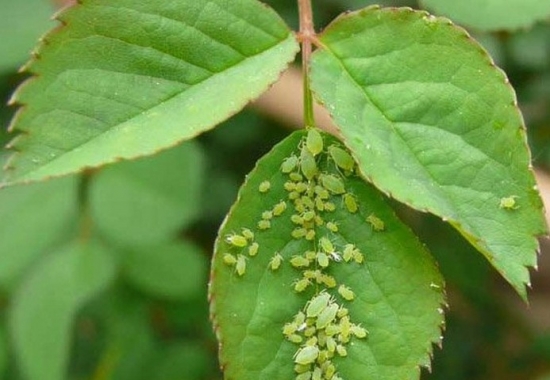
II. Folk methods for controlling aphids on saplings
Method 1: Take 500 g of garlic, crush it, add 5 kg of water, filter, and spray.
Method 2: Take 500 g of ginger, add 250 g of water, crush and extract the juice; for every 500 g of juice, add 3 kg of water, stir evenly, and spray.
Method 3: Take Platycodon grandiflorus, chop it, add 20 times its amount of water, boil for 1 hour, cool, squeeze, and filter; use 50 kg of filtrate per 667 sq m for spraying.
Method 4: Take 200 g of Sichuan pepper, add 2 kg of water, boil down to 1 kg of stock solution; for every 500 g of stock solution, add another 3 kg of water and spray.
Method 5: Take the stems and leaves of Fallopia multiflora, chop and crush them, add 16 times their amount of water, soak for 1-2 days, then filter; use 40-60 kg of filtrate per 667 sq m for spraying.
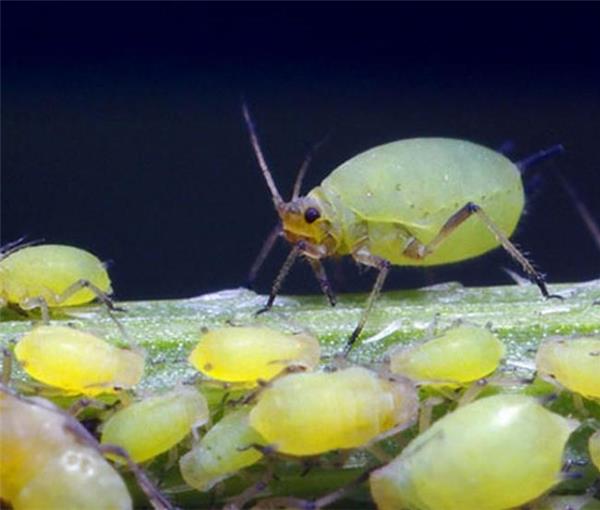
III. Types of pests that cause the same kind of damage as aphids and their control
1. Mite pests. Mites belong to the class Arachnida in the phylum Arthropoda, and there are many species that harm ornamental trees. During the nymph stage, spray 20% permethrin EC at 3000 times dilution, or 50% triazophos EC at 1500 times dilution, or 40% isocarbophos EC at 1000 times dilution, or 20% pyridaben at 1500 times dilution, or 50% dichlorvos EC at 1500 times dilution, or 35% propargite at 1500 times dilution, or 50% phoxim EC at 1500 times dilution, etc. For eriophyid mites, pesticide spraying should be carried out at the budding or leafing stage.
2. Thrips pests. The thrips that harm ornamental trees include flower thrips, Chinese thrips, etc. Spray 50% phoxim EC at 1000 times dilution, or 80% dichlorvos EC at 1500 times dilution, or 50% fenitrothion EC at 1000 times dilution, or 2.5% deltamethrin EC at 2500 times dilution.
3. Scale insect pests. Scale insects are important pests of ornamental trees, with many species and severe damage; common ones include cottony cushion scale, citrus mealybug, etc. During the newly hatched nymph stage, spray 80% dichlorvos EC at 1000-1500 times dilution, or 50% fenitrothion EC at 800-1000 times dilution, etc.
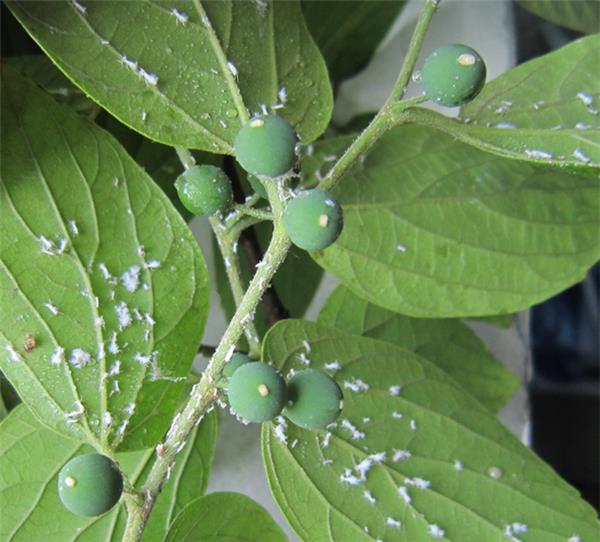
Although aphids can be controlled by these methods, once aphids appear they will cause more or less damage to plants. Therefore, in aphid control, everyone should still follow the principle of giving priority to prevention and combining prevention with control, and try as much as possible to eliminate the occurrence of aphid infestation at the root.