A Complete Guide to Black Locust Tree Planting Techniques and Care Methods
The black locust tree (Robinia pseudoacacia) is a fairly common tree species. It can be used to beautify the environment and purify urban air, and can also serve as a raw material for honey, timber, and more. It could be said to be a plant that is "treasure from every part," so extra effort should be put into caring for it when growing it.
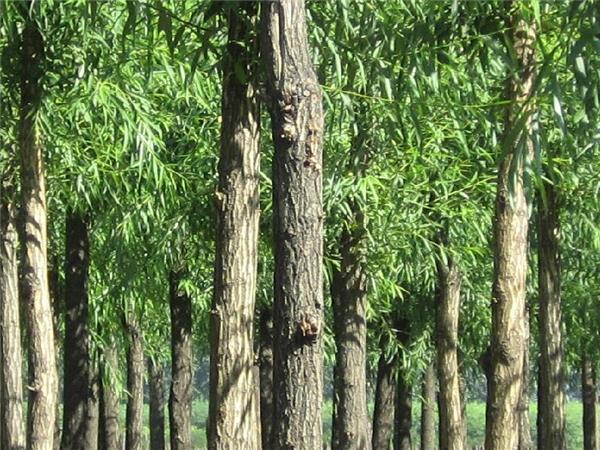
I. Seed Sowing and Planting Techniques for Black Locust Trees
1. Selecting the nursery site. Black locust seedlings are afraid of waterlogging, cold, and heavy alkali, and prefer loose, fertile soil. The nursery plot should preferably be loose sandy loam, avoiding heavy saline-alkali soil and soil that is severely compacted or has an excessively high groundwater table. Before raising seedlings, land preparation, base fertilizer application, and soil disinfection should be done well.
2. Seed germination. Before sowing, germination treatment must be carried out. First soak the seeds in hot water at 60-70°C, pouring the hot water over the seeds while stirring until it is no longer too hot to touch. After soaking for 1 day and night, remove the floating shriveled seeds, bad seeds, and impurities. Use a fine-mesh sieve to separate the swollen seeds from the hard ones, then treat the unswollen seeds again with hot water at 80-90°C in the same way as before. The water-absorbing swollen seeds selected each time should be promptly mixed with sand and placed in a warm spot. After about 4-5 days, when 1/3 of the seeds show white root tips, they can be taken out for sowing.
3. Sowing. Generally sown in spring, with timely early sowing. Seeds that have been germinated should be given sufficient bottom water before sowing. When the seed germination rate is 80%, the sowing rate is 3-4 kg per mu. The operation method generally uses ridge planting or bed planting. On ridges, the row spacing is 15 cm and the sowing width is 3 cm. For bed planting, the row spacing is 20-25 cm, the soil covering thickness is 1-2 cm, and the soil should be pressed down after covering. Seedlings emerge in 3-5 days.
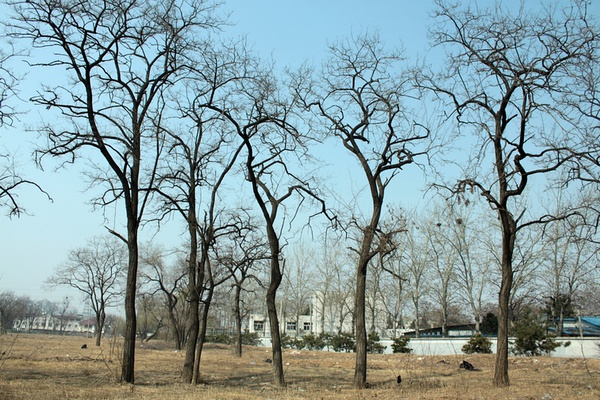
II. Daily Care of Black Locust Trees
1. Since the seeds emerge in a relatively short time, during the seedling stage it is necessary to keep the soil and water moist and prevent phenomena such as surface crusting. However, irrigation should also be reasonable; seedlings must not be left soaking. After about 4 weeks, one pest control and loosening-and-weeding operation can be carried out. During this period, the weaker leaves among the seedlings can be removed to ensure photosynthesis during their growth.
2. When the saplings reach about 1 m, thinning can be carried out, and then fertilization should be done before July. Finally, during the growth period of the black locust, gradually reduce fertilization, irrigation, weeding, and other operations to ensure its natural growth state.
3. Surviving black locust trees have relatively strong adaptability, so there are no strict requirements for the cultivation soil and afforestation method. Once the young forest takes shape, as long as loosening the soil, fertilizing, weeding, and pest removal are carried out regularly, the black locust forest can grow lushly.
4. The growth peak of black locust is in July, so the most appropriate time for fertilization is generally in June. After August, watering should stop, to enhance lignification and improve the ability to resist drying out and overwinter.
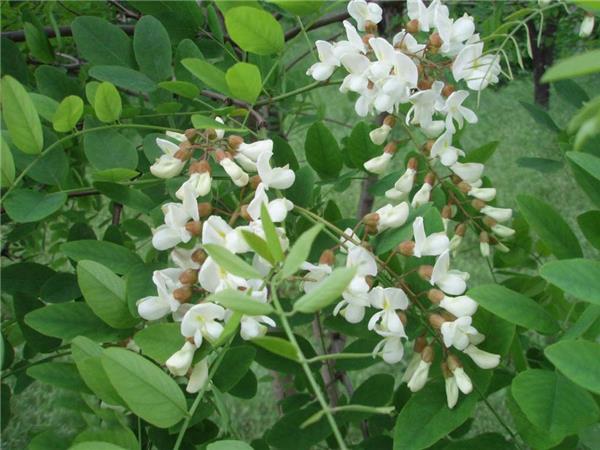
III. Shaping and Pruning Methods for Black Locust Trees
1. Under natural growth conditions, black locust has strong branching ability and vigorous growth, often forming a broad ovate crown, but most trunks are low and have too many branches, forming "small old trees." Shaping is to make the trunk straight. Starting from the winter of the 1st year after planting or the spring of the 2nd year, side branches competing with the main trunk should be pruned away, until after 5-8 years when the trunk height is above 6 m and reaches the standard for civil-use timber.
2. Large black locust saplings used for landscaping are generally relatively robust. First select a robust, upright 1-year-old branch at the top as the trunk extension branch, then cut off 1/3-1/2 of its tip, with weak branches heavily pruned. If there are small weak branches near the cut, some should be pruned away. The side branches on it should be shortened one by one so that none of their tips are higher than the trunk cut.
3. After pruning, the vigorous growing branches on the main trunk or main side branches should be pinched or tipped. For new buds and suckers sprouting at the base of the trunk where branches were removed and at the top of the trunk where the winter heading cut was made, all should be cut off early. Pruning should be done in summer. Pruning must not be too heavy, and should be close to the trunk, leaving no stubs, so as to avoid forming knots. The tools used should be sharp, the wounds should be smooth, and the branches and trunk should not be split.
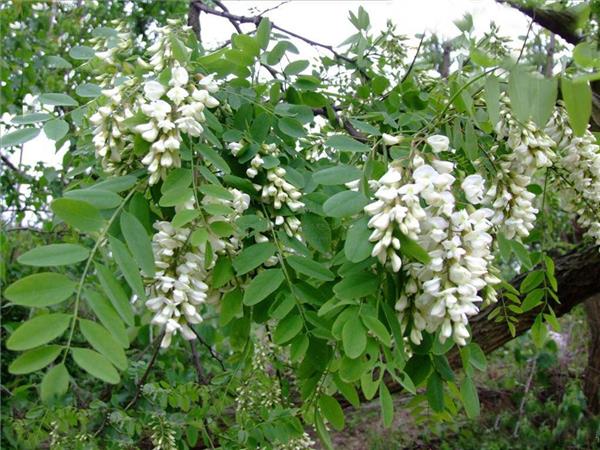
Black locust can improve the soil. Its leaves can also be used as livestock feed, and its trunk can serve as excellent industrial timber. It also has high ornamental value, so it is very worth planting and growing.