What are the cultivation methods and precautions for Hibiscus rosa-sinensis?
Names such as Zhujin peony and Dahonghua are alternative names for the hibiscus flower (Hibiscus rosa-sinensis), which is an evergreen large shrub in the Malvaceae family. With a flower language of fresh romance and subtle beauty, the hibiscus flower is as bright and beautiful as its name. Below, we explain the cultivation methods and precautions for hibiscus flowers, providing information for friends who want to grow them!
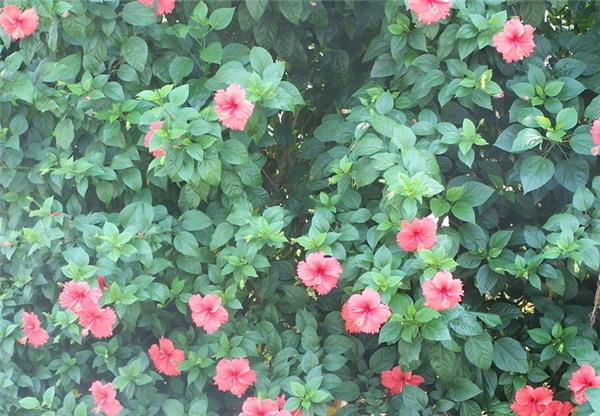
I. Cultivation Methods for Hibiscus rosa-sinensis
Repotting
Before moving it outdoors in April each year, it should be repotted. The soil should be loose, fertile sandy soil. When repotting, also replace with fresh potting soil, cut away some of the overly dense and curled fibrous roots, apply sufficient base fertilizer, and add a little phosphate fertilizer at the bottom of the pot.
Pruning
After moving it outdoors, carry out pruning. For each branch, leave 2-3 buds at the base, and cut off everything above. Pruning can promote new branch growth, making the plant grow more vigorously and giving it a more attractive shape. After pruning, appropriately reduce water and fertilizer.
Hibiscus Flower Language: Cultivation Methods and Precautions for Hibiscus rosa-sinensis
Temperature
After Frost's Descent and before the Start of Winter, it must be moved indoors, because hibiscus is not resistant to frost. The overwintering temperature should not be lower than 5°C, to avoid frost damage; and not higher than 15°C, to avoid affecting dormancy. When the weather is colder, you can cover it with paper or plastic film for warmth. When first moved indoors, open the windows for ventilation during the day every day, pay attention to changes in the dryness and moisture of the potting soil, and water appropriately. On the coldest days, watering helps prevent frost damage, but fertilizing should stop.
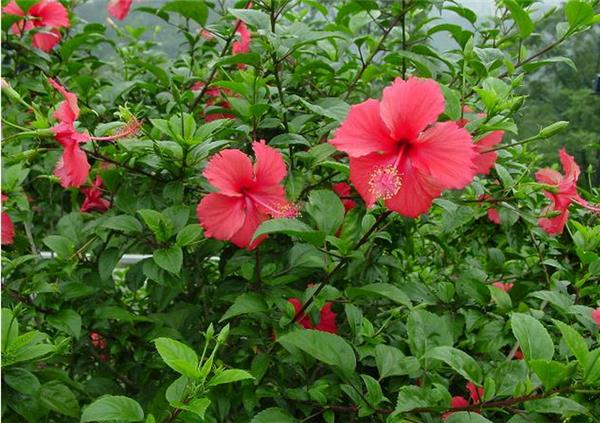
II. Propagation of Hibiscus rosa-sinensis
Cuttings and grafting are commonly used for propagation. Cuttings can be taken at any time except winter, but the survival rate is highest during the plum rain season. The best cuttings are one-year-old semi-lignified ones, 10 cm long, with the top leaves retained, a flat cut, inserted into a sand bed, and they root about 3 weeks after insertion.
1. Cutting propagation: carried out from May to October, with the highest survival rate during the plum rain season. In winter, do it in a greenhouse. The best cuttings are current-year semi-lignified branches, 10 cm long; remove the lower leaves, keep the top leaves, make a flat cut, insert into a sand bed, and maintain relatively high air humidity at a room temperature of 18-21°C. They root 20-25 days after insertion. Treating the base of the cuttings with 0.3%-0.4% indolebutyric acid for 1-2 seconds can shorten the rooting period. When the roots are 3-4 cm long, transplant into pots.
2. Grafting propagation: carried out in spring and autumn. It is mostly used for hibiscus varieties that are difficult to root from cuttings or root slowly, especially double-petaled varieties with a low cutting survival rate. Use branch grafting or bud grafting, with single-petaled hibiscus as the rootstock. Grafted seedlings produce branches and bloom in the same year.
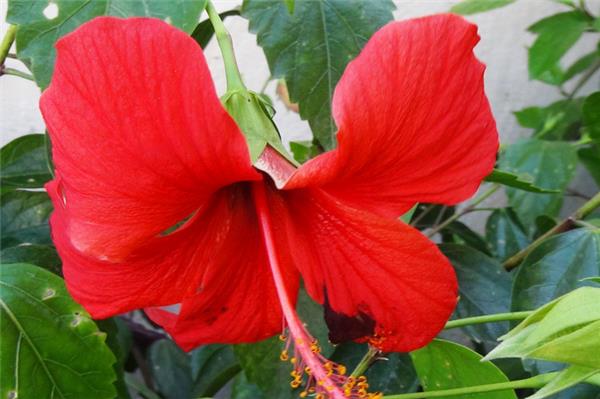
III. The Impact of Hibiscus rosa-sinensis on the Home Environment
The Zhujin mentioned above, namely hibiscus, has bright flower colors and large, beautiful blooms. It has many varieties and is a famous ornamental flowering plant. Because the hibiscus plant is relatively large, it is mostly used to beautify fences, courtyards, or flowering hedges. In the south, it is often scattered along pond banks, in front of pavilions, beside roads, and along walls, to beautify the surroundings of the home and add atmosphere.
Furthermore, hibiscus can also be made into potted plants. Its flowers are bright and eye-catching, in brilliant purples and reds. Potted hibiscus is suitable for display in living rooms and entrances, to highlight its warm and cheerful aura, so that guests are struck by it as soon as they enter and feel happy and relaxed under the influence of the brilliantly blooming hibiscus flowers, and feel the host's warmth, making your home cozy and pleasant. Moreover, even if the hibiscus is not blooming at the time, its leaves, if solid-colored, are so green they seem about to drip, lively and fresh; if it is a variegated-leaf hibiscus, its leaves are also colorful, beautiful and unique, no less than its flowers. Hibiscus is not only beautiful, but unlike other flowers, it is not delicate and is easy to cultivate and manage. It asks little from people but offers much for people to enjoy, so it is deeply loved by people.
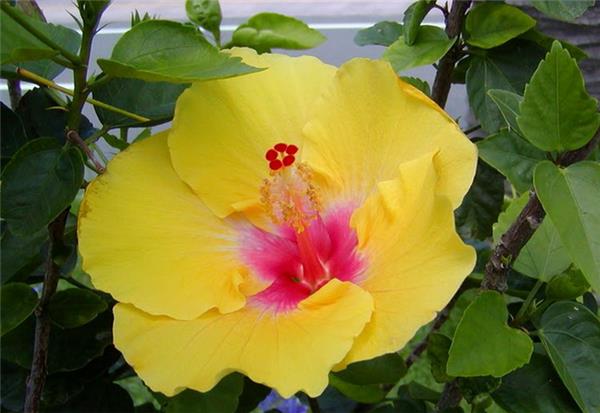
Regarding the issue of hibiscus overwintering, let me add a few more words here: hibiscus is not cold-resistant, and in the north it is generally grown in pots. When the temperature drops to 14°C at the lowest, it is recommended to move it indoors (except for enclosed balconies where the temperature can be controlled), so that it can continue to bloom.