What are the care tips for growing Sedum pachyphyllum
Sedum pachyphyllum, also known as Juyuan and sometimes called Wangyuzhulian, is, as its names suggest, a plant with an auspicious meaning that is deeply loved by many. Its form is small and unique, tender green and juicy, yet when it blooms it is elegant and understated, making it a plant with a very delicate, feminine charm.
At first, the flower buds of Sedum pachyphyllum are like a shy little girl, tightly surrounded by leaf after leaf, its guardian angels. Only when the leaves open does the bashful little bud peek out and let you see its true form, often dressed in a pale yellow coat, ready to bloom in spring and summer, quietly waiting for people to discover its beauty.
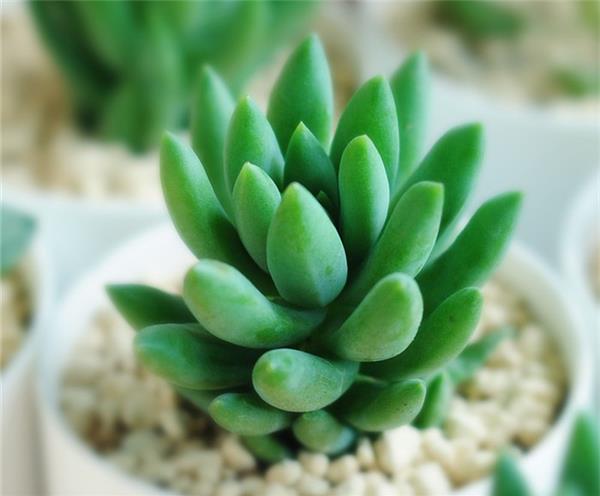
So how is Sedum pachyphyllum propagated? Generally speaking, there are three propagation methods. The first is the most common, sowing. The second propagation method is cuttings; Sedum pachyphyllum can be propagated by cuttings all year round, though spring and autumn give better results. Simply cut off a branch about 5 to 7 cm long from its top, let it dry, and then insert it into a sand bed; rooting usually takes about three weeks. There is also a type of cutting called leaf cuttings, which propagates faster and usually roots in about two weeks; just pull off the mature leaves from the lower part of Sedum pachyphyllum during the growing season and place them on moist soil. The last method is division, which requires you to cut off the small plantlets around Sedum pachyphyllum during its growing season, dry them, plant them in moist soil, and water after a week.
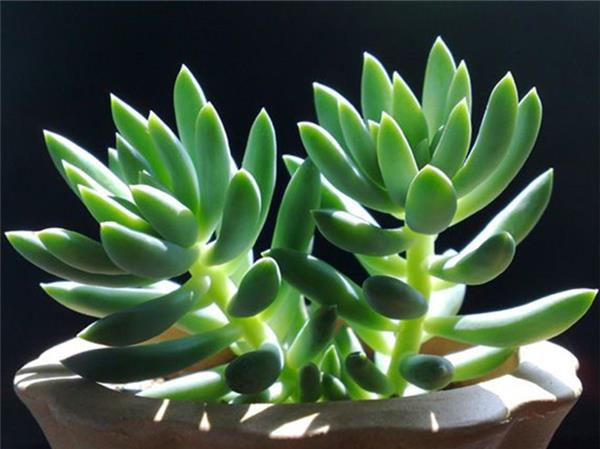
Before planting Sedum pachyphyllum, first select good seedlings, requiring a well-developed, thick root system and evenly planted branches; autumn planting is from September to October, and spring planting is from late February to early April, when the branches are evenly planted. Before potting, first prune the branches and roots, keeping the fibrous roots intact. Sedum pachyphyllum is suitable for loose, fertile, well-drained acidic soil conditions; the potting soil can be prepared with 60% coarse sand, 20% decomposed organic fertilizer, and 20% field soil. Note that after potting Sedum pachyphyllum, it must be watered thoroughly with root-setting water immediately.
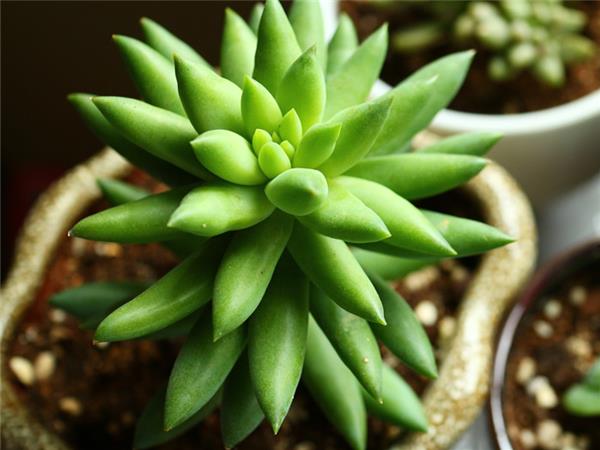
After planting Sedum pachyphyllum, the most important thing is daily care and management. Although Sedum pachyphyllum is easy to keep alive, it commonly fails to bloom or blooms without setting fruit, and after setting fruit it often fails to hold it; these are all due to inadequate daily care and management.
Sedum pachyphyllum is suitable for care on a sunny windowsill or balcony, and should not be placed in strong light or in too shady a spot. Place Sedum pachyphyllum in a warm, ventilated, sunny position. Note that in summer, when the light is strong, it needs shading to prevent sunscald.
During the growing season, water Sedum pachyphyllum once a week; do not water too much, and keep the potting soil slightly moist during the growing season. In summer it is in a semi-dormant state, so keep the potting soil slightly dry. In winter, watering depends on the room temperature.
Sedum pachyphyllum needs repotting once every 2 to 3 years, preferably in spring.
Fertilize Sedum pachyphyllum 2 to 3 times a year; remember that too much fertilizer will cause the leaves to become sparse and soft, with a poor shape.
During growth, thin out Sedum pachyphyllum that has grown too densely, and after 3-4 years of cultivation it needs to be re-propagated by cuttings to renew it.
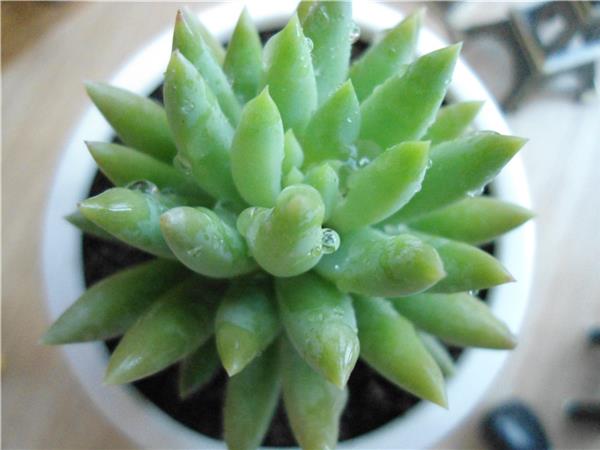
In addition, when growing Sedum pachyphyllum, there are some details worth noting.
After potting Sedum pachyphyllum, pay attention to pinching the main shoot to promote branching and dwarf the crown. Thin out dense, weak branches, and combine staking, pulling, and hanging methods to adjust the tree posture and beautify the tree form. After fruiting, according to growth and fruiting conditions, carry out spring and summer bud removal, pinch the tips of fruiting branches, and thin flowers and fruits, to promote balance between shoots and fruits in each period and prevent alternate bearing.