What are the shaping and pest and disease control methods for Chinese privet (Ligustrum quihoui)?
Because Chinese privet has relatively high ornamental value, it is often used in both garden landscaping and indoor potted cultivation. It can greatly enhance the beauty of the surrounding environment.
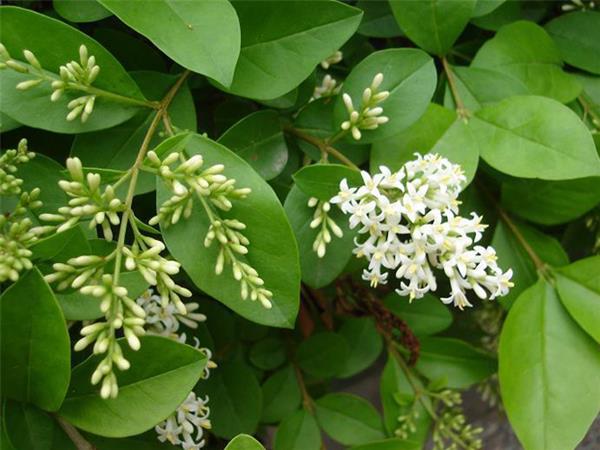
I. Garden shaping of Chinese privet
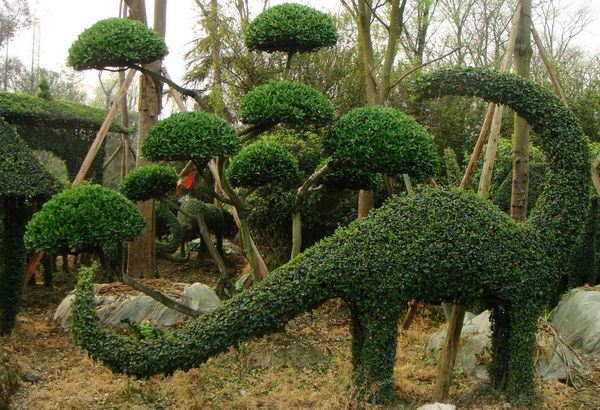
Design principles: In design conception, plant shaping should also follow the basic principles of painting art and garden art: the four major principles of unity, harmony, balance, and rhythm. When shaping plants, the tree form, lines, texture, and proportions should have certain differences and variations, while also maintaining a certain similarity among them, so that they are both lively and harmonious. In plant shaping design, attention should be paid to mutual connection and coordination, reflecting the principle of harmony, so that viewers experience a soft, calm, comfortable, and pleasant aesthetic feeling.
Shaping techniques: When shaping, first, according to the size and shape of the object to be created, plant the trees together in a planned combination. Then, according to the environment and tree vigor, conceive the design idea. Based on the design idea, make some auxiliary frameworks. Finally, carry out binding and pruning for shaping; or use pruning to create lines, use branches as bones, shape according to the tree, and apply artistic processing and beautification to create different forms of scenery.
Pruning management: To ensure the complete appearance of plant shaping, pruning management must be strengthened. Special attention should be paid to the fact that pruning personnel must understand the quality requirements of pruning, the technical operating procedures, and the specific requirements of shaping.
II. Potted care of Chinese privet
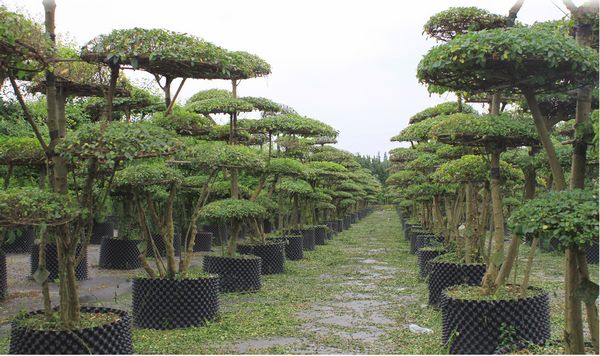
Placement location: Chinese privet bonsai is generally suitable for placement in a sunny, well-ventilated area; in summer, it should be properly shaded and not exposed to strong sunlight; in winter, it can tolerate cold slightly, but in northern regions it should be placed indoors in a sunny spot.
Watering: It is advisable to keep the potting soil moist regularly. Especially in summer, water in the morning and evening, and also spray water on the leaf surface, so as to ensure fresh green leaves and vigorous growth. Fertilizing: Chinese privet does not have strict fertilizer requirements. Applying decomposed cake fertilizer water 1 to 2 times each in spring and autumn every year is sufficient.
Pruning: Chinese privet has particularly strong sprouting ability. To control its growth, promptly remove unwanted buds in spring. After new shoots appear, it is advisable to cut off the first 1 to 2 nodes at the tip to prevent leggy growth. At ordinary times, pay attention to pruning excess branches and leggy branches at any time to maintain the tree shape.
Repotting: It is advisable to repot once every 2 to 3 years. The best time is in spring from February to March before budding; autumn is also acceptable. When repotting, trim the root system, remove 1B2 of the old soil, and replace it with fertile, loose culture soil to promote growth.
III. Control methods for scale insects on Chinese privet
Scale insects are important pests of Chinese privet. Common ones include red round scale, brown round scale, Kang scale, arrowhead scale, and cottony cushion scale. The control methods are introduced below:
1. Strengthen cultivation management. Do a good job in fertilizer and water management to enhance tree vigor; after the full fruit period, pay attention to pruning to prevent the orchard from becoming too shaded, and burn the shaded branches and inner canopy branches heavily infested with parasitic scale insects, so as to reduce the insect population base to the greatest extent.
2. Protect natural enemies. Natural enemies of scale insects include Australian ladybird, red ladybird, and others, which can be released artificially.
3. Winter orchard cleaning. After fruit harvesting each year, when carrying out orchard cleaning work, clear away dead branches and fallen leaves, and spray the entire orchard with 15 to 20 times diluted lime sulfur mixture and resin soap mixture.
4. Chemical control. According to the optimal control instar and peak occurrence period of various scale insects, the key point should be to carry out control during the peak occurrence period of 1st to 2nd instar nymphs. A 700 to 800 times dilution of 40% omethoate emulsifiable concentrate can be selected for spraying. When spraying, be sure to spray the whole tree evenly, with emphasis on spraying the middle and lower layers of the canopy and the inner canopy. Spray the shaded branches of the canopy and the undersides of leaves until wet, and be sure to carefully spray and kill the places where pests are concentrated.
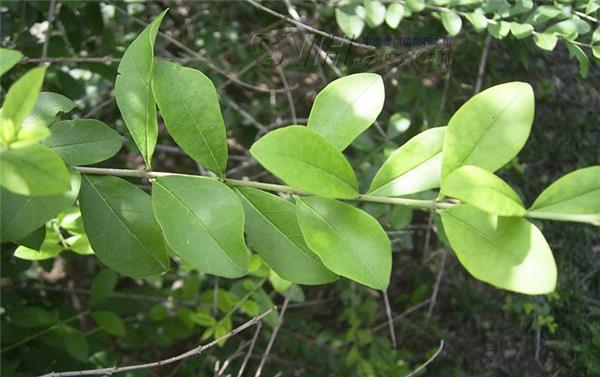
It seems that the most important matters in caring for Chinese privet are indeed pruning it and controlling pests and diseases. I hope the above introduction can help everyone better keep Chinese privet alive, let it grow robustly and healthily, and achieve the effect of beautifying the environment and pleasing the eye.