How to wash strawberries so they are really clean? The correct way to wash strawberries
Spring is the best season to eat strawberries. Looking at one bright, tempting strawberry after another, don't you want to take a bite? But before eating strawberries, you have to wash them clean. So how should strawberries be washed to be cleanest? Below we share with you the method for washing strawberries.

When strawberries are in large supply on the market, their red color looks very tempting. However, the surface of strawberries is rather rough, and how to wash them gives many people a headache. The main nutritional value of strawberries lies in their very high vitamin C content. In recent years, research has found that in addition to preventing scurvy, vitamin C also has a positive preventive effect on diseases such as arteriosclerosis, coronary heart disease, angina pectoris, cerebral hemorrhage, high blood pressure, and high blood lipids. In addition, the carotene in strawberries is an important substance for synthesizing vitamin A, and has the effect of improving eyesight and nourishing the liver. The latest research abroad also points out that strawberries contain an amine substance that has a certain effect on treating leukemia and aplastic anemia.
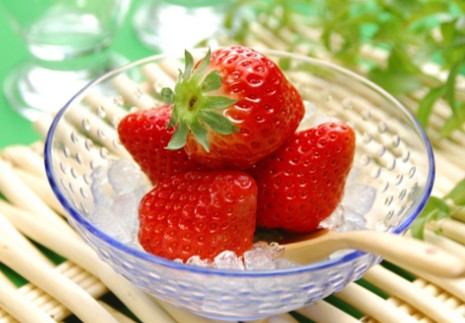
Traditional Chinese medicine believes that strawberries have the effects of reducing internal heat, relieving summer heat, and clearing heat. In spring, people's liver fire tends to be rather strong, and eating some strawberries can suppress it. In addition, strawberries are best eaten after a meal, because they contain a large amount of pectin and cellulose, which can promote gastrointestinal movement, help digestion, improve constipation, and prevent the occurrence of hemorrhoids and intestinal cancer. The reason strawberries are rather difficult to wash is mainly that their outer surface is rough and the skin is very thin, breaking as soon as you wash them. Therefore, many people, to save trouble, simply rinse them with water and eat them. In fact, strawberries belong to herbaceous plants, the plants are rather short, and the fruit is tender and juicy; all of this makes them susceptible to invasion by pests, diseases, and microorganisms. Therefore, in the process of growing strawberries, pesticides must be used frequently. These pesticides, fertilizers, and germs easily adhere to the rough surface of strawberries. If they are not washed clean, they may very likely cause diarrhea, or even pesticide poisoning. To wash strawberries clean, it is best to rinse them continuously with tap water; running water can prevent pesticides from seeping into the fruit.
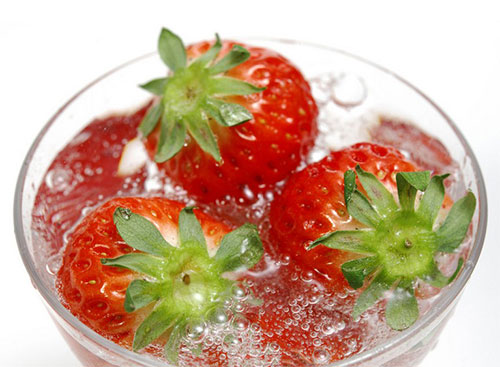
How to wash strawberries
1. When washing strawberries, do not remove the leaf head; even if you must remove it, only pull off the leaf blades and keep the leaf stalk, so that the strawberry flesh is not directly exposed to water.
Note: Do not remove the strawberry calyx before washing the strawberries, to avoid letting pesticides and pollutants seep into the fruit through the "wound" during soaking, which would instead cause contamination.
2. Remove the leaves from the strawberries and rinse them continuously with running tap water for several minutes to remove most of the germs, pesticides, and other pollutants on the surface of the strawberries. This can also make the strawberries sweeter and more red and glossy.
Note: Try not to soak the strawberries in water first, to avoid pesticides dissolving in the water and then being absorbed by the strawberries and seeping into the inside of the fruit.
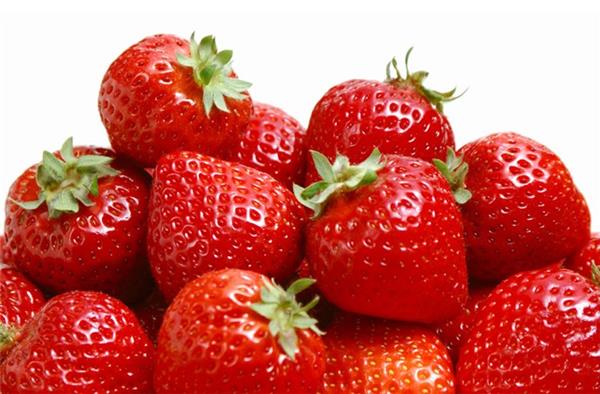
3. Soak the strawberries in rice-washing water for 3 minutes; the alkaline rice-washing water has the effect of breaking down pesticides. The rice flour in the rice-washing water will carry away soil, dust, and other substances. This method can also be used to wash grapes.
4. Take a small basin of water, add an appropriate amount of salt to make light salt water, and soak the strawberries in it for 3 minutes. The light salt water can make insects and insect eggs attached to the surface of the strawberries float up, making them easy to rinse off, and it also has a certain disinfecting effect. Then rinse clean with running tap water. Rinse once more with cooled boiled water, and the strawberries are clean.
Note: Try to avoid rubbing them with your hands, and absolutely do not use cleaning agents. Strawberries have almost no peel, and rubbing will damage the peel, so strawberries washed this way cannot be stored at all. Cleaning agents will seep into the flesh, so remember that you must not use cleaning agents to wash strawberries.
Note
When washing strawberries, absolutely do not remove the strawberry calyx, to avoid letting pesticides and pollutants seep into the fruit through the "wound" during soaking. Just remove it when eating, and that is OK.
Because the strawberry plant is rather short and the fruit is tender and juicy, pesticides must be used frequently to prevent invasion by pests, diseases, and microorganisms, so before eating strawberries you must wash them clean. As for how to wash strawberries, following the strawberry-washing method shared above will get them clean.