Can Pregnant Women Eat Pineapple? Precautions for Eating Pineapple During Pregnancy
Can pregnant women eat pineapple? This is a question many pregnant women have. Although pineapple is very nutritious, pineapple itself is a tropical fruit and should not be eaten in large amounts, as it easily causes internal heat. When pregnant women eat fruit, including pineapple, they should pay attention to the principle of moderation.
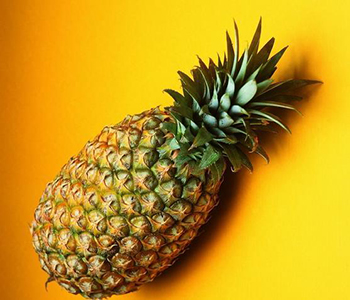
Can Pregnant Women Eat Pineapple?
Pregnant women can eat pineapple in moderation, but they should pay attention to the amount when eating it. Generally, eating one or two slices is enough. During pregnancy, you should pay more attention to nutritional balance and eat more light vegetables and fruits, and your baby will be healthier.
Pineapple contains a substance called "bromelain," which can break down protein, dissolve fibrin and blood clots blocking tissues, improve local blood circulation, and eliminate inflammation and edema. At the same time, the sugar, salts and enzymes contained in pineapple all have a diuretic effect, and proper consumption is beneficial for nephritis and high blood pressure.
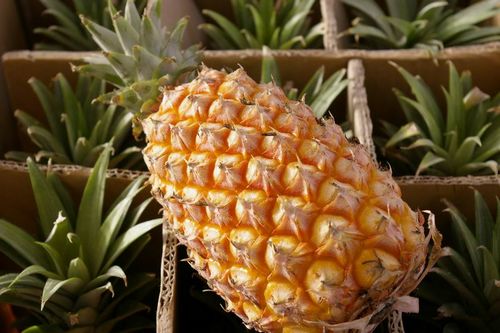
Pregnant women must eat pineapple sparingly. Some people experience adverse reactions after eating pineapple, such as vomiting, abdominal pain, diarrhea, numbness of the mouth and tongue, and in severe cases even difficulty breathing or shock. Therefore, pregnant women should be even more careful when eating pineapple. Bromelain has side effects on human skin and blood vessels, and eating it can cause pineapple poisoning in people with allergic constitutions. If a pregnant woman has ulcer disease, kidney disease, or coagulation disorders, she should avoid eating pineapple.
There are also many things to pay attention to when eating pineapple. If after eating pineapple you find that you have a series of allergic symptoms such as abdominal pain and vomiting, you should seek medical attention promptly. Especially for pregnant women with allergic constitutions, it is best not to eat pineapple. Pineapple can cause even stronger reactions in people with allergic constitutions.
Nutritional Value of Pineapple:
Pineapple, also known as pineapple, is a famous fruit of tropical and subtropical regions. Pineapple has an attractive appearance, is juicy and sweet, and has a special fragrance, making it a fruit deeply loved by people. If you place a pineapple in a room, the whole room will be filled with a fresh fragrance.
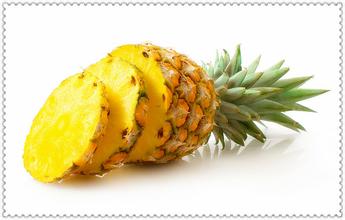
The flesh of pineapple is yellow or light yellow, with tender texture, high water content, and excellent taste.
Every 100 grams of pineapple contains 87.1 grams of water, 0.5 grams of protein, 0.1 grams of fat, 1.2 grams of fiber, 0.1 milligrams of niacin, 126 milligrams of potassium, 1.2 milligrams of sodium, 0.08 milligrams of zinc, 20 milligrams of calcium, 6 milligrams of phosphorus, 0.2 milligrams of iron, 0.08 milligrams of carotene, 0.03 milligrams of thiamine, 0.02 milligrams of riboflavin, 18 milligrams of vitamin C, and 0.3 grams of ash. In addition, it also contains various organic acids and pineapple enzymes.
Traditional Chinese medicine believes that pineapple is sweet and neutral in nature, and has functions such as strengthening the stomach and aiding digestion, reducing fever, relieving summer heat, sobering up after drinking alcohol, lowering blood pressure, fighting cancer, tonifying the spleen and stopping diarrhea, clearing the stomach, and quenching thirst. The sugar, salts and enzymes contained in pineapple have a diuretic effect, and proper consumption is beneficial for patients with nephritis and high blood pressure.
In addition, bromelain also has the effect of dissolving fibrin and blood clots blocking tissues, and can improve local blood circulation and eliminate inflammation and edema.
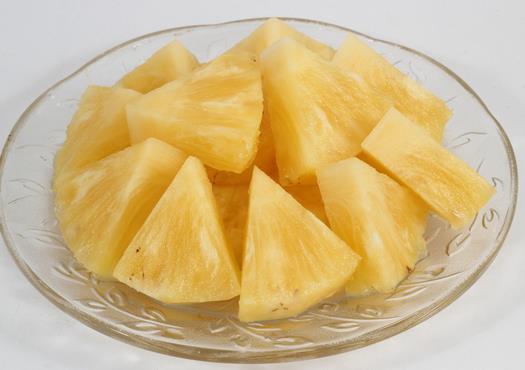
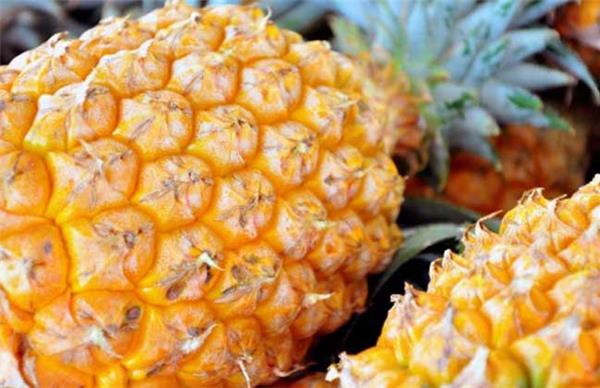
Different varieties of pineapple also differ in color, but most are yellow. Ripe pineapple has a fruity aroma. Among fruits of the same size, the heavier one is better. Those with rot or mold spots should be discarded.
Fresh pineapple can be wrapped in newspaper and stored at room temperature or kept refrigerated in the refrigerator, and can generally be stored for 2 to 3 days.
Fresh pineapple or canned pineapple can be eaten alone, or placed in sweet cakes, ice cream, pudding, baked goods and salads, and can also be eaten with meat.
In the following situations, pregnant women should not eat pineapple:
1. Pregnant women allergic to pineapple
Pineapple contains a substance called protease, which has certain side effects on human skin and blood vessels. Some people may have an allergic reaction after eating pineapple. Within 15-60 minutes of eating, abdominal pain, vomiting, diarrhea, dizziness, skin flushing, generalized itching, numbness of the limbs and mouth and tongue may occur, and in severe cases difficulty breathing or even shock may also occur. This is called pineapple poisoning, known as "pineapple disease." Therefore, for pregnant women with allergic constitutions, it is best not to eat pineapple.
2. Pregnant women with ulcer disease or kidney disease
Pineapple contains a substance called "bromelain," which can break down protein, dissolve fibrin and blood clots blocking tissues, improve local blood circulation, and eliminate inflammation and edema. However, if a pregnant woman has ulcer disease, kidney disease, coagulation disorders, etc., this substance will have the opposite effect, so it should be avoided.
3. Pregnant women with fever or eczema
Pineapple itself is a hot-natured fruit, so it is best not to eat it when you have a fever. Similarly, because pineapple easily causes allergies, it should also not be eaten when you have eczema or scabies.
This is called pineapple poisoning, known as "pineapple disease." Therefore, for pregnant women with allergic constitutions, it is best not to eat pineapple.
2. Pregnant women with ulcer disease or kidney disease
Pineapple contains a substance called "bromelain," which can break down protein, dissolve fibrin and blood clots blocking tissues, improve local blood circulation, and eliminate inflammation and edema. However, if a pregnant woman has ulcer disease, kidney disease, coagulation disorders, etc., this substance will have the opposite effect, so it should be avoided.
3. Pregnant women with fever or eczema
Pineapple itself is a hot-natured fruit, so it is best not to eat it when you have a fever. Similarly, because pineapple easily causes allergies, it should also not be eaten when you have eczema or scabies.