What are the care precautions for the beautiful flowering plant Begonia maculata?
There are quite a few points to pay attention to when growing Begonia maculata as a potted plant indoors, but most of them are small details, mainly to ensure the plant's ornamental effect and value.
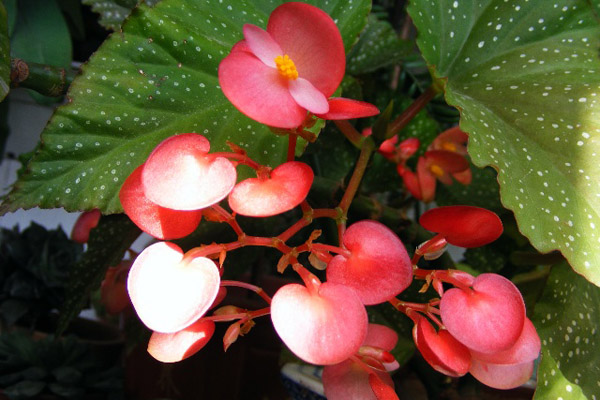
Habits: Begonia maculata has good shade tolerance and likes a warm, humid environment. It requires fertile, well-drained soil and is relatively cold-tolerant; at around 5°C indoors in winter, it still stays fresh and green as usual. It is robust by nature and very suitable for home cultivation.
Cuttings: Carry this out in May-June along with repotting and pruning. Cut a sturdy growing branch 10-15 cm long with 2-3 nodes as a cutting, keeping 2-3 leaves on it; because the leaves are large, you can cut off 1/2-1/3 of the leaf blade. After the wound dries in the shade, insert it into the growing medium. At a temperature of 20-24°C and under semi-shaded conditions, it can root in 25-30 days.
Fertilizing: Fertilizer is an essential element for plant growth. Fertilizing should be done by shallow hoeing when the potting soil is dry, and watering after fertilizing helps the plant absorb it. When the stems and leaves are not vigorous or when the plant has just been repotted, avoid applying heavy fertilizer. During the vigorous growth period in spring, apply a dilute liquid fertilizer once every 10 to 15 days. During the bud stage, increase the application of phosphorus and potassium fertilizer to promote budding and flowering. In the high-temperature summer season, the plant stops growing, so fertilizing should be reduced. Pause fertilizing during the flowering period and in winter.
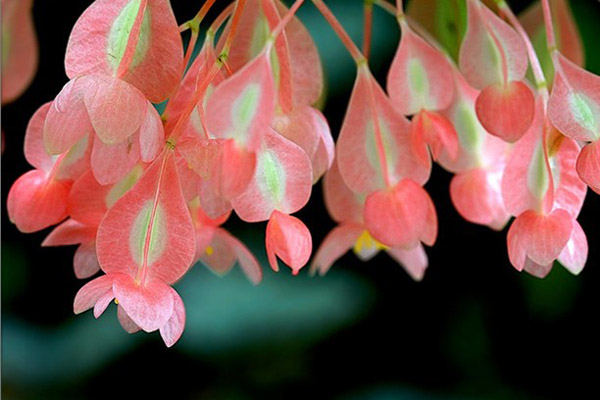
Light: Begonia maculata likes ample scattered light and grows best at a light intensity of 410 lux. In high summer temperatures, if the light is too strong, it easily causes scorched leaf tips and scorched edges, yellowing leaves, and even leaf drop. From May to September, shade should be provided, blocking 50%-60% of the light, or the plant should be placed in a spot with ample scattered light. At other times, it needs sufficient sunlight; when light is sufficient in spring and autumn, flower buds form easily. When light is insufficient, the number of leaves and flowers decreases and the plant grows leggy, and too weak light can also cause leaf drop.
Pruning: Strengthen pruning of the plant, which helps maintain a good plant shape. For plants grown for many years, or plants that have grown too tall, or whose lower stem leaves have fallen off, causing an unattractive shape and affecting the ornamental effect, pruning can be done together with spring repotting to help the plant sprout new branches and produce more bright flowers.
Humidity: Begonias naturally grow in relatively humid understory or ravine areas, and the relative air humidity should be no lower than 50%, preferably maintained at 65%-70%. Moreover, its stems and leaves are tender and juicy, so during the growth period, besides providing a humid ecological environment, it should also be supplied with sufficient water, but avoid over-wetness. Watering should still follow the principle of "do not water if not dry, and water thoroughly when watering." Both excessive drought and excessive wetness can affect the plant's root absorption and cause leaf drop, especially at low temperatures in winter when watering must be even more restrained, otherwise it easily leads to root rot and leaf drop.
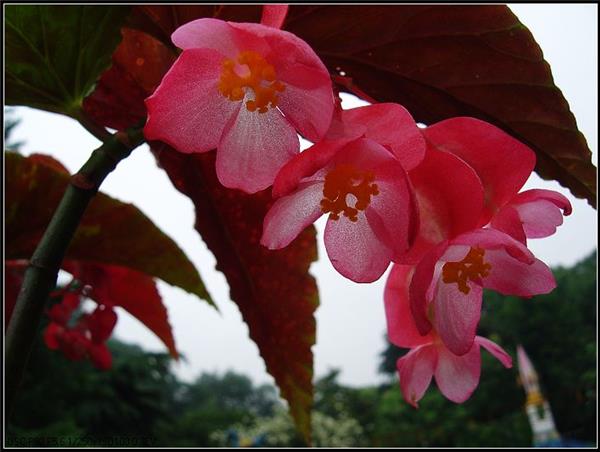
Temperature: Begonia maculata likes warmth, and the most suitable temperature for growth is 15-18°C. Although it is a relatively cold-tolerant species among begonias, below 5°C its leaves are also prone to freezing and falling off. Begonia maculata fears severe heat; when the temperature reaches above 30°C, the plant grows slowly and enters a semi-dormant state, and if care is slightly improper, leaf drop easily occurs.
Repotting: Repot once every year, preferably after the weather warms in spring or in September. It likes slightly acidic sandy loam rich in organic matter, loose, and well-drained. The growing medium can be prepared from materials such as leaf mold, peat soil, garden soil, rice husk ash, or perlite.
Pests and diseases: Common problems include powdery mildew, damping-off, and damage from thrips, red spider mites, and other pests and diseases. The principle of prevention first and comprehensive control should be fully implemented. In hot, humid weather, Begonia maculata is prone to pests and diseases. For the prevention and control of pests and diseases, first, strengthen ventilation and light transmission; the potting soil must not be too wet, and even more so, water must not accumulate in the pot. Second, spray a fungicide once every half month, such as thiophanate-methyl or carbendazim, to prevent diseases. If red spider mite damage is found, spray a 1500-fold solution of dicofol.
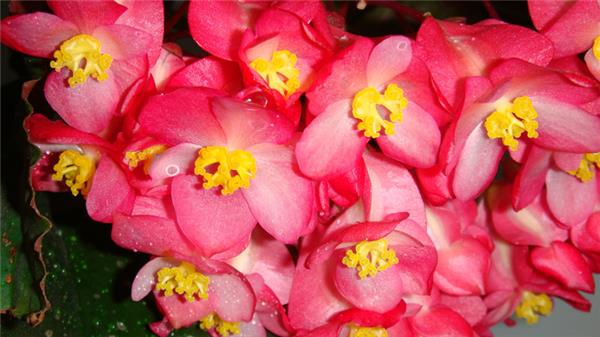
The points introduced above must not be ignored in the process of growing Begonia maculata. Only by caring for them carefully and attentively will they repay everyone with beautiful flowers and healthy plants, enhancing the beauty of the room.