What are the cultivation precautions and medicinal value of the Cornus controversa?
Cornus controversa is a deciduous tree in the Cornaceae family, genus Cornus. During cultivation, the main points to pay attention to are soil, fertilizer and water, pests and diseases, and so on. Let's take a look together.
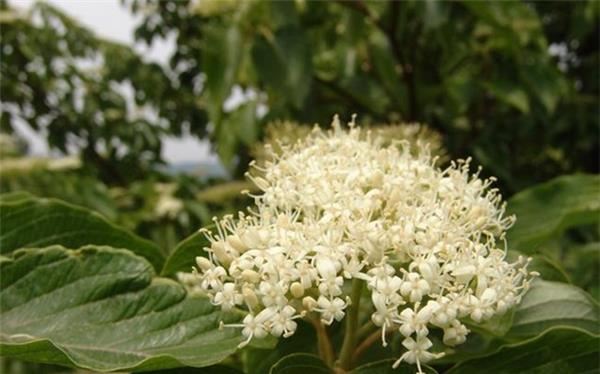
I. Cultivation precautions for Cornus controversa
Habits: Planting or transplanting is best done in early spring before bud break or in autumn after leaf fall. Apply an appropriate amount of base fertilizer in the planting hole, and water thoroughly after planting to settle the roots. During the growing season, keep the soil moist, and fertilize once every 2-3 years. Because its natural growth form is graceful, shaping and pruning are generally not needed. It has few pests and diseases, and management is simple and extensive.
Site selection: For the seedling bed, choose a deep soil layer, convenient water source, and loose, fertile, moist, well-drained acidic or slightly acidic sandy soil for sowing.
Land preparation: Generally, low beds are mainly used, requiring a bed surface 1 m wide and 10 to 15 cm lower than the walkway. Bed preparation is carried out from early February to early March. To facilitate light exposure, a north-south orientation is mostly used. Three days before sowing, spray the bed surface with a 400-fold dilution of 40% formalin.
Temperature: When the temperature reaches above 15°C in early to mid-March and the temperature at 5 cm underground reaches above 18°C, this is the most suitable period for sowing.
Sowing: Harvest the fruit in October, pile it for after-ripening, wash it, dry it in the shade, and sow immediately. Alternatively, stratify it in sand at low temperature and sow in open-field drills in March of the following year. Row spacing 50-60 cm, plant spacing 10 cm-15 cm. Seedlings can emerge in April-May. In the first year, the root system is not well developed and growth is small, with a height of about 30 cm. In the second year, growth can reach 50 cm. After 3 years, it grows at a rate of more than 1 m per year, and displays a beautiful crown shape and tree form, achieving a satisfactory ornamental effect.
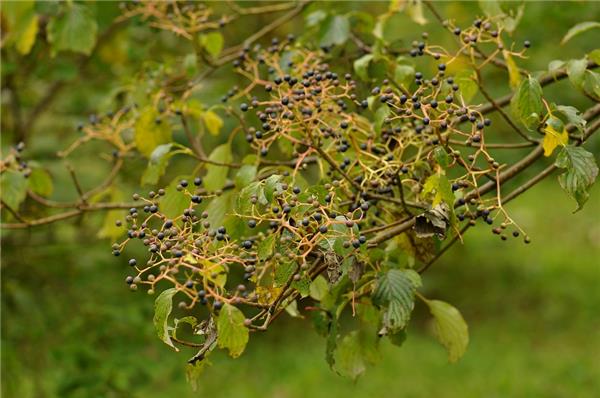
Water: After sowing, Cornus controversa can emerge in 30-40 days. Determine a reasonable irrigation amount and irrigation time according to the different stages of seedling growth. During seed germination, the bed surface should be kept moist frequently, and irrigation should be done in small amounts and often. After the seedlings have all emerged and the cotyledons have fully expanded, the irrigation amount should be larger and the frequency lower, watering once every 2-3 days, thoroughly soaking and fully watering each time, fixed in the morning and evening. In autumn, there is more rain from July to September, so pay attention to drainage to avoid excessive water.
Pests and diseases: The main disease is damping-off, which mostly occurs in the rainy season from July to September. About 10 to 20 days after all seedlings have emerged, regularly spray 0.1% Dexon or drench with a 2% to 3% ferrous sulfate solution, using 9 L per sq m.
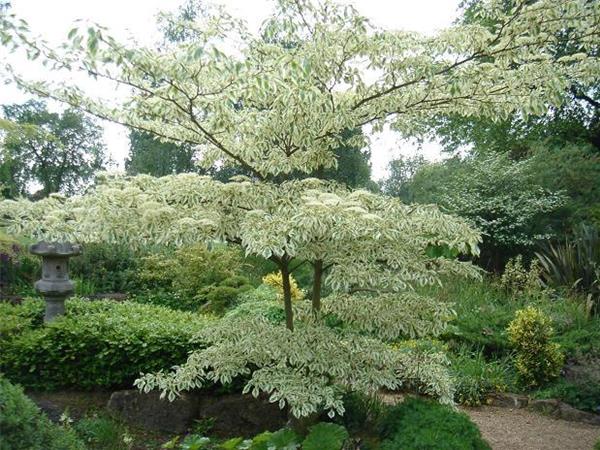
II. Medicinal value of Cornus controversa
Pharmacological effects:
1. Antipyretic effect: Gavage administration of an aqueous solution of Cornus controversa to rabbits with experimental fever has a mild antipyretic effect.
2. It has expectorant and antiasthmatic effects on experimental bronchitis in animals.
3. It has an antispasmodic effect on animal intestinal smooth muscle.
4. The alkaloids contained in Cornus controversa have a curare-like effect on motor nerves.
5. This product has a slight antimalarial effect on experimental avian malaria.
6. Large doses of this product have a hypotensive effect on animals.
Supplementary formulas:
Chronic bronchitis: Cornus controversa, Paris polyphylla, wide-land earthworm, and Trichosanthes peel 3 g each, Aster 1.5 g. According to the above dosage, grind the raw herbs into powder and press into tablets, each tablet containing about 0.5 g of raw herbs, take 3 times a day, 8 tablets each time.
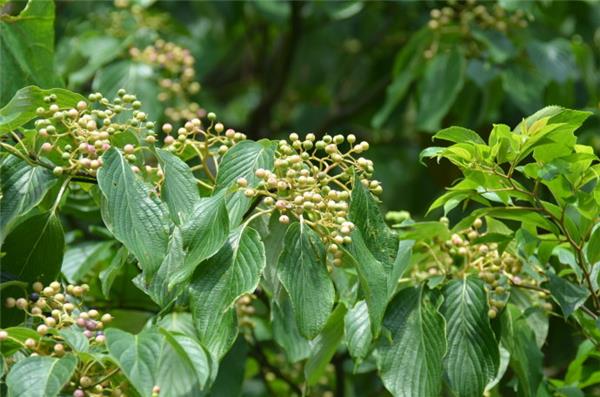
Cornus controversa generally takes 10 years to bloom and bear fruit, so if you want to admire its beauty, you need to plant and care for it early, so that you can enjoy its beauty sooner and use its beauty to decorate your life.