How to Grow Hemerocallis fulva and Pest and Disease Control Tips
Hemerocallis fulva is a typical ornamental flowering plant with an elegant form and captivating colors. Grown at home, it not only beautifies the environment but also brings a sense of physical and mental delight.
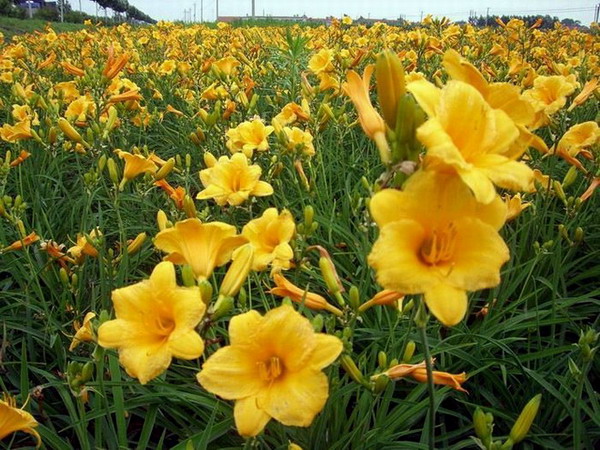
I. Propagation Methods for Hemerocallis fulva
1. Division propagation: Dividing the clumps of daylily is the most commonly used growing method. This method is simple to carry out, the plants survive easily, and growth is relatively uniform. For division, the entire mother clump can be dug up and replanted separately, or part of the plants can be dug out from one side of the mother clump to serve as seedlings while the rest is left to continue growing.
2. Seed propagation: Sowing is a method for rapidly producing seedlings in large quantities, but because the seed germination rate is low, the seeds must first be soaked to germinate, and they can only be planted out one year after sowing. The seed collection period begins around September each year, and requires plants that are robust, with plump fruit and no pests or diseases. Sowing takes place the following spring.
3. Bud and flower division: Bud divisions and flower buds refer to the small plants on the flower stems of Hemerocallis fulva. The flower buds can be cut from the flower stems, and if they are relatively large, they can be divided further before planting. After transplanting, the flower buds can take root within one week. The rooted flower buds can be used to grow plants, increasing the number of plantings and ultimately improving economic returns.
4. Tissue culture propagation: Tissue culture uses young leaves, filaments, flower scapes and other organs to cultivate plants. The method is to first induce the young organs to produce callus tissue, then culture them into small plantlets using an appropriate medium under suitable conditions of temperature, humidity, light and air. The young plantlets are then temporarily planted in nutrient pots, cultivated for a period into seedlings, and afterwards planted out.
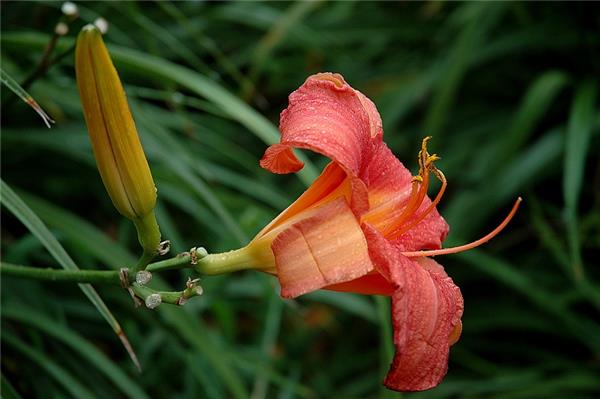
II. Care Measures for Hemerocallis fulva
Fertilizing: Hemerocallis fulva has a long flowering period and a relatively large demand for nitrogen, phosphorus and potassium. In addition to applying sufficient base fertilizer at planting time (well-rotted cow manure or pig manure is preferable), fertilizer should also be applied according to the needs of different developmental stages. When nitrogen is sufficient, it can promote robust plant growth and larger leaves.
Watering: Hemerocallis fulva has fairly strong drought resistance, and its water requirement during the vegetative growth period is not great. Therefore, irrigation should be based on the water needs of each growth and development stage of the daylily, combined with local climate, soil and water source conditions. After new seedlings are transplanted, the soil water holding capacity should be maintained at 70% to 80%, and they should be watered promptly in drought. During the seedling stage the plants are small and their water requirement is also small. From the start of reproductive growth, the water requirement gradually increases, and a lack of water at this time will affect growth.
Weeding: Intertillage and weeding should be carried out when soil moisture is moderate, and can stop once the leaf clumps cover the ground. Weeds in the daylily field should be removed promptly; if weeds grow thickly, they can easily trigger pests and diseases, affecting the growth and appearance of the daylily.
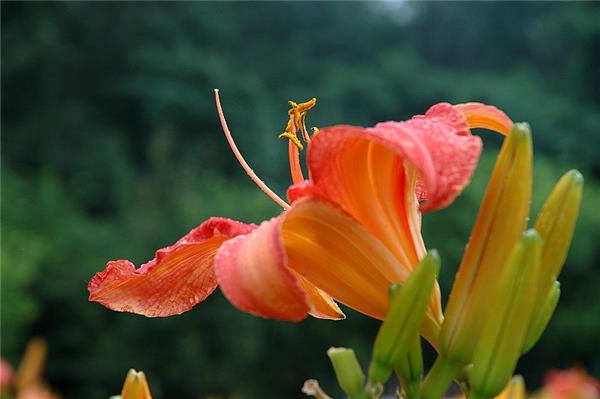
III. Pest and Disease Control for Hemerocallis fulva
The diseases that Hemerocallis fulva is prone to are mainly rust and leaf blight. Rust is a general term for flower diseases caused by infection by rust fungi of the order Pucciniales, and is a fungal disease. It generally occurs in the middle and late stages of Hemerocallis fulva growth, appearing in early May and becoming severe in June-July, mainly harming the leaves and flower scapes of Hemerocallis fulva; after the rust spores disperse, the leaves and flower scapes wither and die. Spray 25% triadimefon wettable powder at 800 times dilution, once every 20 days; after three applications the control effect can reach more than 90%. Leaf blight is caused by pathogenic fungi of the genus Colletotrichum and is a seedling-stage disease that occurs after leaf spot disease. It generally begins in early May and becomes severe in early to mid-June, mainly harming the leaves and flower scapes, and in severe cases the whole plant withers and dies. Use 70% chlorothalonil at 500-600 times dilution or 65% zineb at 500 times dilution, spraying once every 10-12 days.
The insect pests that Hemerocallis fulva is prone to are mainly red spider mites and aphids. For red spider mite control, mainly apply 40% dicofol emulsifiable concentrate at 1000-1500 times dilution or 20% clofentezine wettable powder at 2000 times dilution by spraying, all of which can achieve ideal control effects. For aphid control, mainly choose 10% imidacloprid wettable powder at 1000 times dilution or 2.5% aphid-leafhopper control emulsifiable concentrate at 3000 times dilution for spray control.
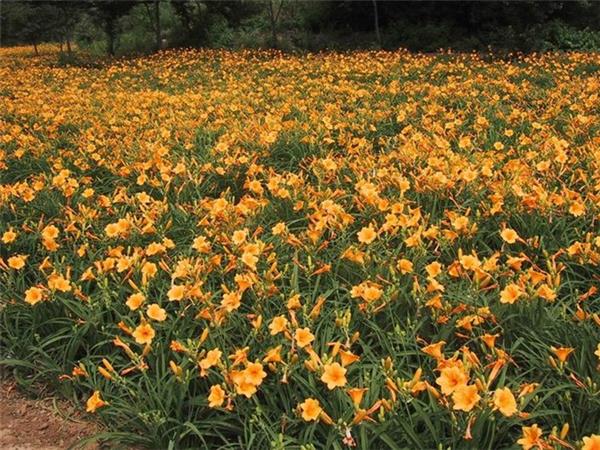
Hemerocallis fulva is a perennial herbaceous plant, and growing it at home can be said to save both time and effort, so friends who are interested in growing it should act quickly.