A Complete Analysis of Stringy Stonecrop Propagation Methods and Cultivation Techniques
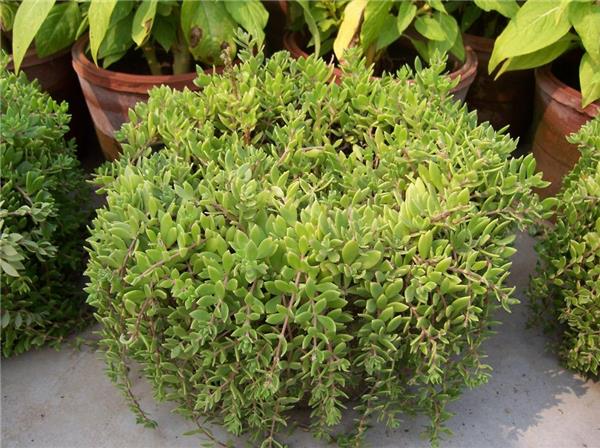
Stringy stonecrop (Sedum sarmentosum) can treat multiple ailments and also has good ornamental value, making it one of the succulent plants. Like most succulents, it can be propagated through cuttings and division, and both methods have very high survival rates.
I. The Functions and Benefits of Stringy Stonecrop
1. Stringy stonecrop for treating liver cancer: 30 grams each of stringy stonecrop, barbed skullcap (Scutellaria barbata), raw corrugated iron, and fossilized swallow stone; 15 grams each of globe thistle (Rhaponticum uniflorum) and coix seed; 9 grams each of angelica sinensis, red sage (Salvia miltiorrhiza), and safflower; 6 grams each of akebia fruit, white peony root, and dried tangerine peel. Decoct in water 3 times and take in divided doses, 1 dose per day. It can eliminate symptoms and shrink liver swelling.
2. Stringy stonecrop for treating burns and scalds, carbuncles, malignant sores, mastitis, mumps, erysipelas, and boils: generally collect fresh herbs, wash them clean, mash them and apply externally, changing twice a day, and they will heal within a few days.
3. Stringy stonecrop for treating leukemia: 30 grams each of stringy stonecrop and cleavers (Galium aparine); 15 grams each of sheep's hoof (Rumex japonicus), dog's tongue herb (Tephroseris kirilowii), purple gromwell root (Lithospermum erythrorhizon), rehmannia root, and polygonatum; 9 grams each of angelica sinensis, red sage (Salvia miltiorrhiza), and red peony root; 6 grams each of chuanxiong and licorice. Decoct in water 2 times and take in divided doses. It can achieve complete or partial remission of clinical symptoms. Suitable for all acute types.
4. Stringy stonecrop for treating lung cancer: 30 grams each of stringy stonecrop and solanum lyratum, decocted in water, 1 dose per day. With continued use, it can improve the condition, with clinical symptoms basically disappearing and lesions gradually shrinking.
II. How to Propagate Stringy Stonecrop
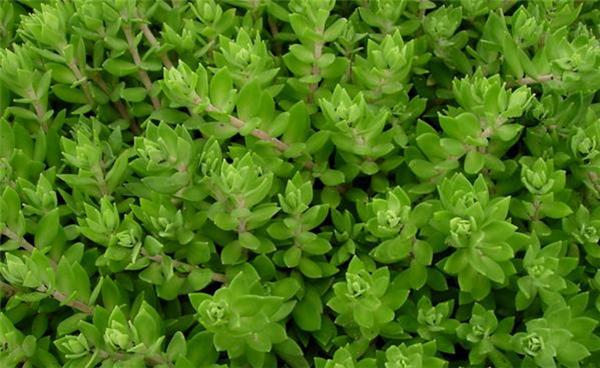
Stringy stonecrop can be propagated by seeds or by asexual propagation, namely the stem cutting method, division method, or layering method, all of which root very easily. Division or cutting propagation is usually used. Division is best done in early spring, while cuttings can be taken at any time.
Cutting method: In spring or autumn, collect creeping stems from mature stringy stonecrop plants, cut the creeping stems into small sections of 3 to 5 cm, and insert them into a pre-prepared cutting bed. After inserting, spray with water, ensuring thorough watering, and keep the soil in the cutting bed moist. At a temperature of 20°C to 25°C, roots will form in 10 to 15 days. When the young roots change from white to yellow-brown, begin transplanting. For ground planting, shade with reed curtains for 3 to 5 days; for pot planting, place under a cool shed to recover for 3 to 5 days, then move to a sunny spot for cultivation.
III. Cultivation Methods for Stringy Stonecrop
Potting soil: For stringy stonecrop, the growing medium can be made by evenly mixing 3 parts of mature garden soil, 5 parts of yellow sand, 2 parts of rice husk ash or fine sawdust, plus a small amount of superphosphate powder. For clay pots, porcelain pots, plastic flower pots, or other containers that can drain water at the bottom, place tile pieces over the drainage holes to facilitate drainage, then fill with the growing medium and plant.
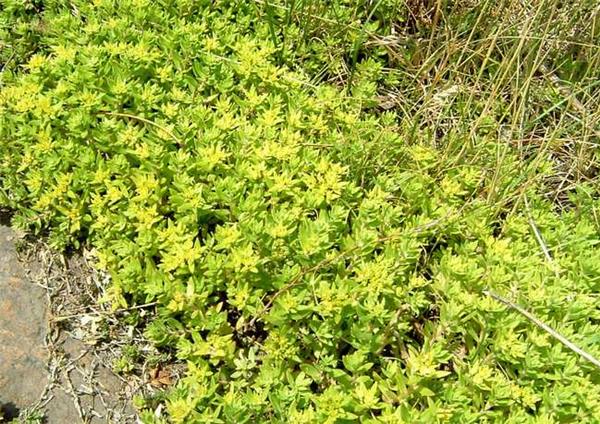
Light and temperature: The suitable growing temperature for stringy stonecrop is 15°C to 28°C. Stringy stonecrop dislikes strong light environments, and when exposed to strong light, its leaves turn yellow.
Fertilizer and water: Stringy stonecrop grows quickly and has relatively high water requirements, growing well under conditions with some shade. During the growing process, apply a small amount of compound fertilizer once every half month, and immediately water with clear water after fertilizing to prevent the fertilizer from burning the stems, leaves, or roots.
Pest and disease control: Pests generally occur easily under warm and rainy conditions. For control methods, refer to the pest and disease control section for sago palms (Cycas revoluta). Common diseases include gray mold, anthracnose, and powdery mildew, which occur easily when ventilation is poor, light is insufficient, plants are placed too crowded, and humidity is too high. They often harm leaves, tender branches, and flowers, with the affected parts developing dark green, brown, or purplish-brown spots. When disease occurs, alternately spray with 50% carbendazim wettable powder at 800 times dilution, 80% zineb at 500 times dilution, and 75% chlorothalonil at 500 times dilution.
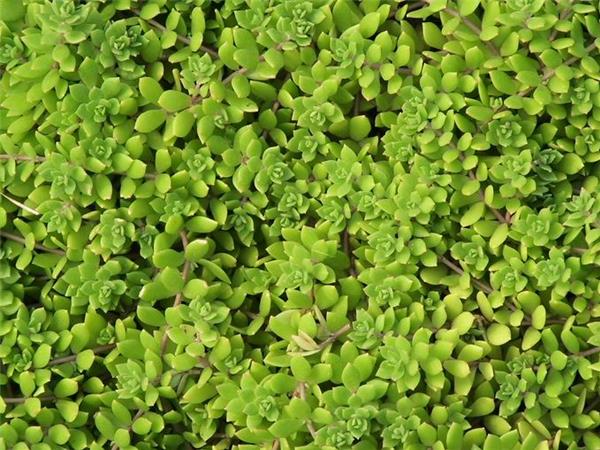
Cultivating stringy stonecrop at home can not only beautify the room and purify the air, but also help everyone experience the joy of growing flowers. Moreover, stringy stonecrop is relatively easy to cultivate, and the probability of killing it is relatively low, making it very suitable for beginners to grow.