A Detailed Guide to Growing and Caring for the Dragon Bone Plant
Before learning how to plant and care for the dragon bone plant, let us first understand its use in the home, so everyone can see why it is worth choosing to grow one.
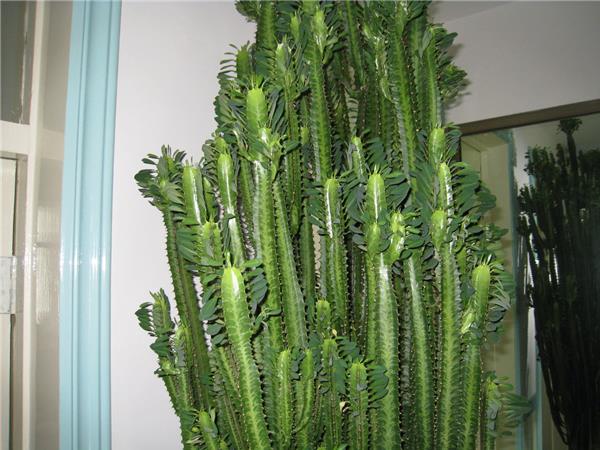
Feng Shui Applications of the Dragon Bone Plant in the Home
Generally speaking, in feng shui, places that have a life-generating effect, such as balconies, are best with plants that are relatively tall and sturdy, and the thicker and larger the leaves and the greener they are, the better. Therefore, placing large-leaved evergreen plants in auspicious positions has a life-generating effect; while in unfavorable positions, for example, if looking out from the balcony the surrounding environment is harsh, with nearby sharp corner clashes, streets rushing straight at the building, streets curving away like a bow, or facing temples, hospitals, graveyards and so on, then plants that can dissolve negative energy must be placed there. Usually, what distinguishes energy-dissolving plants from life-generating plants is that their stems or leaves bear thorns, so placing thorny plants such as cacti has a "negative energy dissolving" effect, making it retreat far away, and can protect the home; as for other positions, placing any plant makes little difference.
A plant as bold and uniquely shaped as the dragon bone, with stems growing upright and tall, resembling the upright spine of a dragon and full of power, is most suitable for placement in unfavorable positions, and has a strong effect in resisting external negative energy.
Growing Methods for the Dragon Bone Plant
Habit: a climbing plant. It has an epiphytic habit, using aerial roots to attach to tree trunks, walls or other objects. The berry is oblong and red. It is robust. It likes warmth and warm air. It is suited to semi-shade; under direct strong sunlight the plant turns yellow. The optimum growing temperature is 25-35°C. It is sensitive to low temperatures; below 5°C, the stem segments easily rot. It likes fertile loam rich in humus; for potted plants, the soil can be prepared from equal parts leaf mold, coarse sand and decomposed manure.
Soil: plant in loose, fertile soil rich in humus. For potted plants, the soil can be a potting mix made from 1 part leaf mold and 1 part coarse sand, with a small amount of decomposed chicken manure or cow manure added.
Light: it grows best under semi-shaded conditions. Although it tolerates sun, to avoid yellowing under strong light, shade measures should be taken in summer; in winter, place it in a spot with light and let it receive some sunlight. Indoor plants are best placed on a balcony, windowsill or similar spot where light is available.
Temperature: the dragon bone plant likes a warm environment, is not cold-tolerant and fears frost. In winter the temperature should be above 10°C so it can overwinter smoothly, and it should be given an appropriate, even amount of light; it must not fall below 7°C, to avoid frost damage.
Watering: in spring, do not water too much; watering once every 10-15 days is enough, but the plant should be misted daily to increase air humidity. In summer, water once a day, preferably in the morning or evening. In winter, the potting soil should be kept moderately dry.
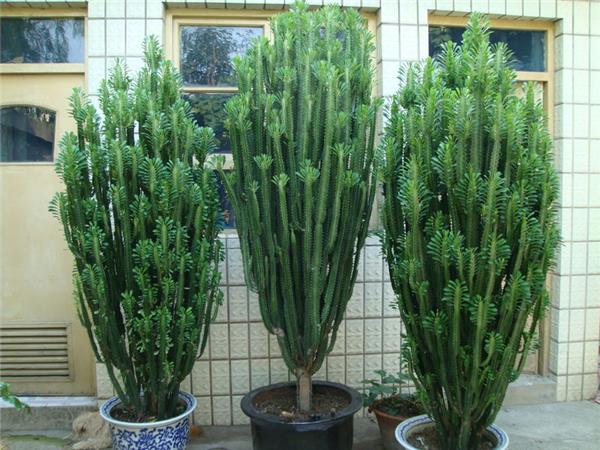
Fertilizing: during the growing period, the dragon bone plant can be given a light fertilizer once every 15-20 days, such as granular compound light fertilizer or homemade alum fertilizer water, which can promote plant growth. The main point is not to apply fertilizer that is too concentrated, as this easily causes fertilizer burn and root rot problems.
Pruning: when a newly cultivated plant grows to 10-15 cm, the tip can be removed, and for the new branches only the 3 better-growing branches at the top of each corner need to be kept. When the plant grows to 20-25 cm, remove the tip again; after that, at each branching, remove the tip at 10 cm more than the length retained the previous time, and note that the direction of the retained branches should be determined according to the viewing angle. A dragon bone plant pruned in this way has a full shape and is highly ornamental.
Overwintering: a plastic film can be used to wrap the pot for protection during winter. The overwintering growing environment must maintain both a relatively high temperature and relatively high air humidity.
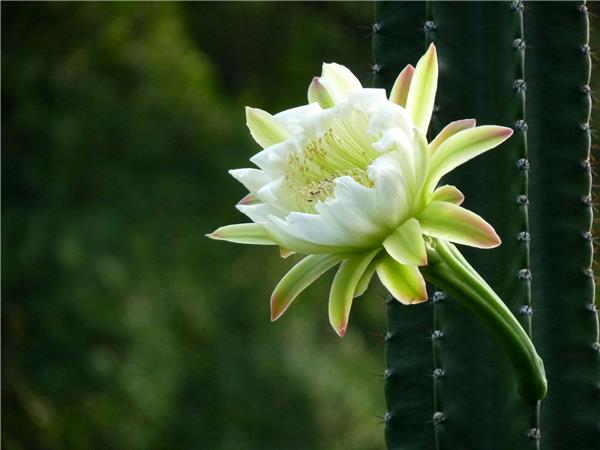
Harvesting: the night-blooming cereus flowers from May to November, in about 7-8 flushes, with each flush about 20 days apart. The size of the flower is reached 25-30 days after budding. This is also the best harvest period. The best harvest time is the morning or afternoon of the day after the flowers open. The flowers for market and export are processed into dried flowers.
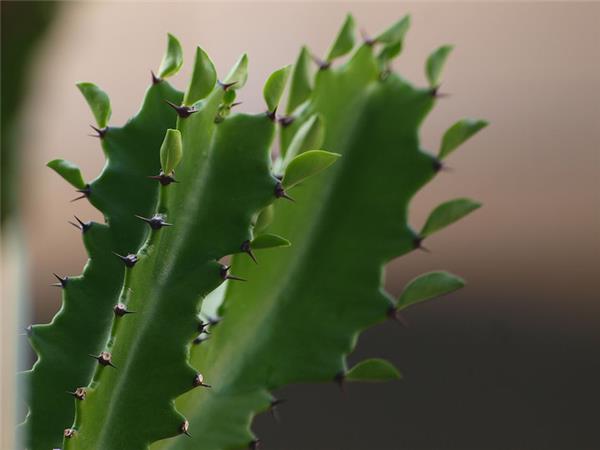
The dragon bone plant is tall, upright, bold and imposing. Growing it at home not only adds a sense of boldness to the household but also adds a great deal of vitality, so it is well worth choosing for friends who want to try growing flowers.