Grown in a flowerpot, Monilaria obconica looks like a little green rabbit
Monilaria obconica is a very popular indoor potted ornamental plant. Placing Monilaria obconica on an office desk not only purifies the air, but its delicate and cute plant shape can also help people relax a little after stressful work.
I. The uses and purposes of Monilaria obconica
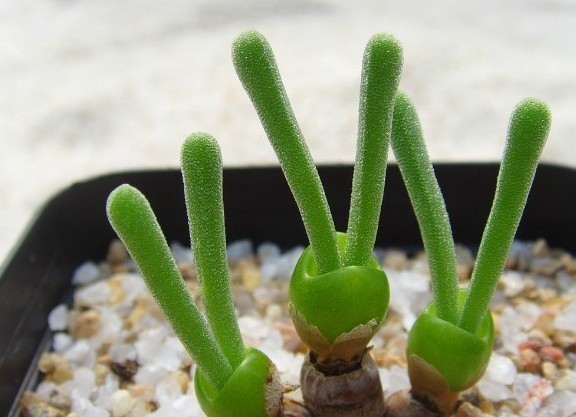
Potted use: The leaves of Monilaria obconica are semi-transparent and richly granular, very cute. It also has stems, grows in clusters, and when a large cluster blooms it is very spectacular, making it very suitable for use as a potted plant.
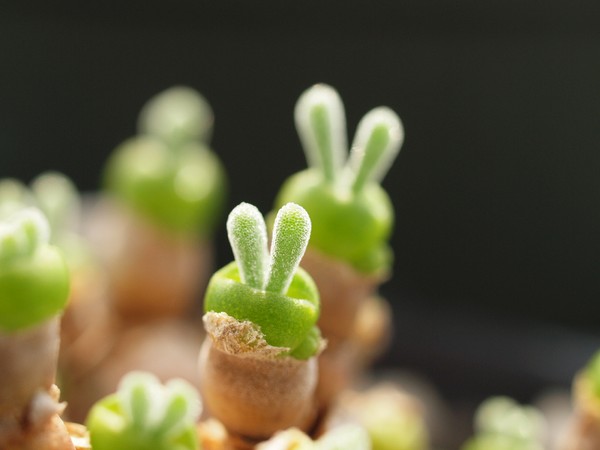
Ornamental value: Monilaria obconica belongs to the Aizoaceae family and grows in clusters. It is semi-transparent and richly granular, very cute. More people like to call it little rabbit. The first time I saw this succulent plant Monilaria obconica I was completely charmed by how adorable it is. Especially when young, with its round head and two long ears growing out, it looks just like a group of rabbit characters.
II. Notes on growing Monilaria obconica
Planting: The main sowing season in China is after September in autumn. Of course, it can also be sown in winter or spring. Generally, the best temperature is controlled at 12 to 15 at night and 24 to 27 during the day. When sowing Monilaria obconica, a relatively deep pot should be chosen, because the roots and stems of Monilaria obconica are fairly well developed, and a pot that is too shallow will affect the growth of Monilaria obconica.
Soil: Use soil that is loose and breathable and also has good water retention. Generally, the main ingredients include nutrient soil, peat soil, akadama soil, kanuma soil, charcoal particles (for breathability), rice husk charcoal (for breathability), and a small amount of plant ash (containing various nutrients and trace elements). The auxiliary ingredients include hard coal cinders, coarse sand, perlite, vermiculite, fine pumice, etc. You can take several of these main and auxiliary ingredients, mix them, and then sift them. Put the larger particles at the bottom (not too large) and the fine particles on top. Spread a very thin layer of fine granular soil of about one millimeter on the surface. For disinfection, use a microwave at medium power and medium temperature for five minutes. You can also soak the pot with boiling water, supplying water from the bottom of the pot to soak it thoroughly. After the soil is completely soaked, you can sow (you can also use potassium permanganate for soaking the pot; in this way, the seeds are also disinfected while sowing, but the concentration should be slightly higher).
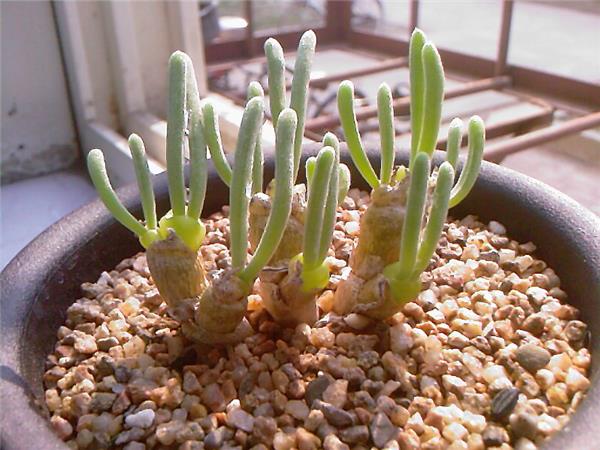
Light: During the cultivation of Monilaria obconica, try to avoid sunlight exposure. Monilaria obconica is a shade-loving plant, and we should place it in a cool place as much as possible. Generally, spring is a good season for growth, and it grows very quickly. During the peak growth season, avoid direct strong sunlight. Monilaria obconica is relatively sensitive to temperature. If the temperature is too high, it will slowly turn yellow and withered, growth will stagnate, and it will look like it is going dormant. In summer, be sure to move Monilaria obconica indoors to prevent it from drying up after exposure to strong light.
Temperature: The best temperature is between 15-25°C, and it should not be too high or too low. Below 5°C or above 35°C, Monilaria obconica will enter a dormant state. When spring comes and the temperature reaches 5 degrees, Monilaria obconica will slowly wake up.
Water and fertilizer: During the growing season, Monilaria obconica needs a lot of water. If it dries out too severely, the two heads will droop, and watering will restore them. During the dormant period, Monilaria obconica does not need water. Generally, watering thoroughly after the soil has dried out is enough. When you are not confident during the seedling stage, please do not rush to fertilize. The nutrients in the soil are enough for it to grow for a period of time.
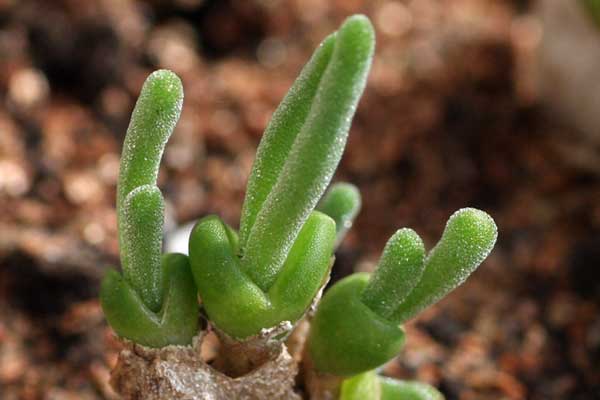
Because of its unique ornamental effect and distinctive plant shape, it is more popular among female friends, and it is also a succulent variety that succulent lovers must collect.