How to grow a jade plant? A detailed guide to care methods
The jade plant represents pure love, which also fits its own image: tender green leaves and pure white flowers give a feeling of freshness and purity, letting people feel a touch of coolness in the hot summer.
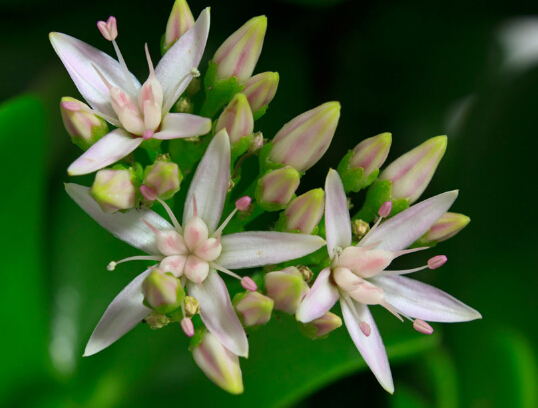
I. Introduction to the jade plant
Morphological features: The jade plant is an evergreen small shrub. The plant is 1-3 m tall, with fleshy stems and many branches. The leaves are fleshy, ovate, 3-5 cm long and 2.5-3 cm wide, grayish green with red edges. The flowers are 2 mm in diameter and white or pale pink.
Ornamental uses: The branches and leaves are thick and fleshy, green all year round, with unusual leaf shapes and a dignified plant form; it is easy to cultivate and simple to manage. It is suitable for pot culture and can be placed on a balcony or as an accent on indoor tables, looking very delicate and elegant. The crown is upright and graceful, the stems and leaves are green, and the white flowers borne at the tips are very refined and distinctive. If combined with a pot stand and gravel to make a small bonsai, the jade plant is suitable for pot culture and can also be trained into the appearance of an old tree stump; decorating a coffee table or desk with it is even more attractive.
Jade plant flower meaning: admiration, pure love.
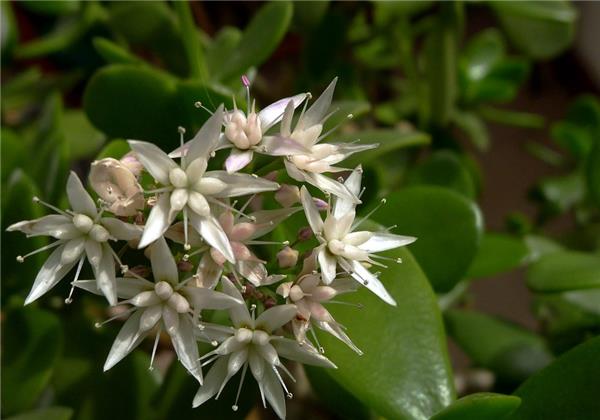
II. Jade plant care methods
Growth habits: The jade plant, Crassula ovata, refers to the plant itself, not just the flowers it produces. Its growth habit is to prefer a warm, dry natural environment with plenty of sunlight. The jade plant fears strong light, is slightly shade-tolerant, and is not cold-tolerant; the winter temperature must not be lower than 7°C. The growing soil is best a fertile, well-drained sandy loam.
Potting soil mix: For the jade plant, choose 2/3 leaf mold and 1/3 garden soil mixed with a small amount of river sand as the growing medium; a little hoof parings and other slow-release fertilizer can be placed at the bottom of the pot as a base fertilizer. To help drainage, some crushed stone or tile pieces should also be placed at the bottom of the pot. From spring to autumn, water once every 1-2 days, and avoid water accumulating in the pot.
Propagation method: The usual propagation method for the jade plant is cuttings. During the growing season, cut 8-10 cm long thick top shoots, let them dry slightly, then insert them into the potting soil; they root in about 3 weeks.
Light and temperature control: Spring and autumn are the suitable growing seasons for the jade plant, and the optimum growing temperature is 20-30°C. In summer, shade it during high temperatures and avoid direct sunlight. When the temperature exceeds 38°C, growth slows. In winter, place it in a sunny spot indoors and keep the room temperature at 7-10°C. If the temperature drops below 0°C, it will freeze and die.
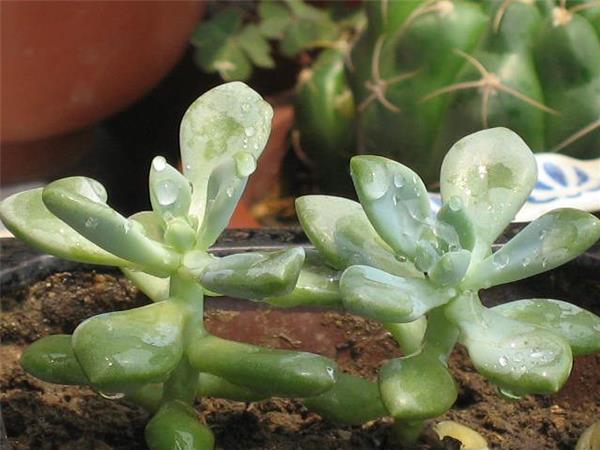
Water and fertilizer management: During the growing season, water the jade plant once every 2-3 days, but do not let water accumulate. In the hot summer, watering must be strictly controlled and ventilation increased, otherwise leaf drop is likely. After autumn begins, gradually reduce watering. When grown outdoors, avoid being washed by heavy rain, otherwise too much water accumulates at the roots and can easily cause root rot and death. In winter, reduce watering; the potting soil is best kept slightly dry. During the growing season, apply topdressing, generally 2-3 times a month with well-rotted dilute cake liquid fertilizer. To keep the jade plant's form full, fertilizer and water should not be excessive, so as to avoid leggy growth.
Repotting and pruning: Repot every spring and add fertile soil. Each year when repotting or when moving it indoors in autumn, pay attention to shaping and pruning so that the plant form becomes more simple and elegant.
Pest and disease control: The main pests and diseases of the jade plant include leaf spot, anthracnose, scale insects, brown soft scale, and similar problems. It can be sprayed with a 1000-fold dilution of 70% thiophanate-methyl wettable powder. When indoor ventilation is poor, the stems and leaves are easily harmed by scale insects; spray with a 1000-fold dilution of 40% omethoate emulsion to kill them.
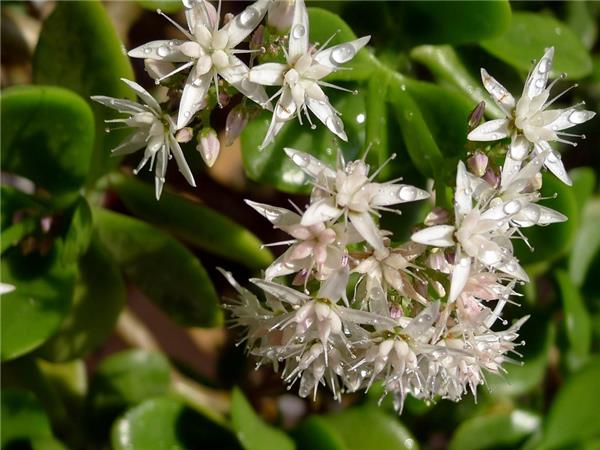
The jade plant can be used for bonsai making and pot culture, and can also be used to decorate courtyards, accent terraces, and more; all of these can play a role in beautifying the home and enriching indoor life.