How to Grow Golden Tulips? A Detailed Guide to Cultivation Methods
The tulip is the national flower of the Netherlands, Turkey, Hungary and Iran. It symbolizes victory and beauty, and carries the meaning of wealth and good fortune. Tulip flowers are bright and rich in color; whether grown in pots or planted in masses, they can add a cheerful and lively festive atmosphere. So, do you know how to grow tulips? Below is an introduction to tulip cultivation methods.
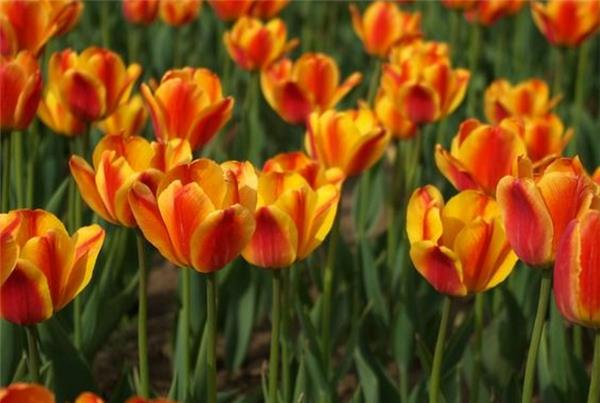
I. Tulip Cultivation Methods
Soil: Tulips require soil that both retains water and drains well, with salinity that is not too high and soil that is not too acidic; the pH value should be no less than 6. For potted tulips, the potting soil can be prepared by mixing 6 parts leaf mold, 3 parts river sand, and 1 part river mud or pond mud.
Temperature: Tulips prefer a climate that is warm in winter and cool in summer. The optimal growing temperature for potted tulips is 17-20°C. Tulips are highly cold-tolerant and can grow normally above 8°C, generally tolerating low temperatures of -14°C. In severely cold regions, if covered by thick snow, tulip bulbs can overwinter outdoors.
Sunlight: Tulips are light-loving plants. From the emergence of new shoots to flowering, they need sufficient sunlight. In winter, if supplementary lighting facilities are available, this increases the flowering rate of tulips and makes the flower colors more vivid.
Watering: In spring, during the growth period of tulip stems and leaves, plenty of water is needed. Because the potting medium is loose and drains well, the water in the potting soil evaporates quickly, so water must be replenished in time. After tulips finish flowering, the main focus is on bulb growth, so watering should be appropriately controlled, and standing water should be drained promptly after heavy rain. In winter, tulips mainly grow roots and grow slowly, requiring very little water, so they may not be watered or watered sparingly. Tulips should be watered in the morning.
II. Precautions for Tulip Cultivation
In northern regions, tulips are suitable for planting in a sheltered, sunny spot, in well-drained, loose sandy loam enriched with plenty of leaf mold and decomposed stable manure. It is best to plant before early October, with a plant spacing and row spacing of 15-25 cm, and a soil covering depth of about 15 cm. After planting, water thoroughly. Five or six days later, loosen the surface soil once.
If the soil is moist, there is no need to water after planting; before winter sets in, water once with a freezing-water irrigation. In early spring, when stems, leaves and flower buds appear, large amounts of water and nutrients are needed, so apply two rounds of dilute liquid fertilizer in combination with irrigation. After flowering, cut off the flower stems, which can promote the enlargement of the renewal bulbs, and reduce or stop watering, keeping the soil only neither dry nor wet. In June, after the leaves turn yellow, the bulbs can be dug up, cleaned of soil, dried in the shade, and the small offsets attached to the lower part of the large bulbs separated and stored separately for replanting in autumn.
The timing of digging up the bulbs must be strictly controlled. If too early, the stems, leaves and root system are still providing nutrients to the renewal bulbs; if too late, the bulb skin is prone to moisture damage, losing its protective function for the bulb and making it susceptible to disease during storage. A cool and well-ventilated environment is suitable for storage; it is best to first store them at 15-25°C for one month, then lower the temperature to 5-10°C and keep them there until autumn planting. During the entire summer storage period, checks should be made twice; if diseased bulbs are found, they should be removed promptly to prevent further spread.
III. Growth Habits of Golden Tulips
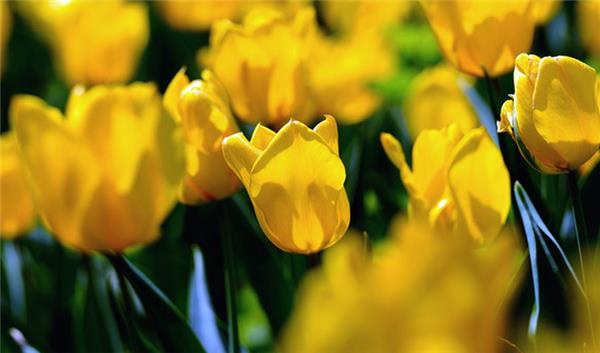
Golden tulips originate from the high mountain regions of Iran and Turkey. Because of the Mediterranean climate there, tulips have adapted to the characteristics of dry, hot summers and wet, cold winters. The characteristics of golden tulips are summer dormancy and root growth in autumn and winter; around early the following year, they begin to extend and grow to form stems and leaves, and flower each year from March to April. The suitable temperature for differentiation of golden tulips is 20-25°C, and it must not exceed 28°C. Golden tulips like sunny, wind-sheltered conditions.
Golden tulips can be planted in the ground or in pots. The suitable planting time is in October, with row spacing maintained at 14-16 cm, sufficient base fertilizer applied, and coverage to a depth of about 4 cm. After planting, watering is needed; after golden tulips sprout and bloom, fertilizer should also be applied 2-3 times. If growing them in pots, it is best to choose plump, well-filled bulbs.
How to grow tulips, and the cultivation methods for tulips, have been introduced here. The tulip is a flower with excellent ornamental value and is deeply loved by everyone. Potted tulips can be used to decorate the home, allowing you to enjoy your favorite flowers right in your own home, so why not do it.