How to grow and care for succulents in July? Detailed precautions
For all plants, July is a rather hard month to get through. If care is not done properly, even succulents, which excel at resilience, will wither or die.
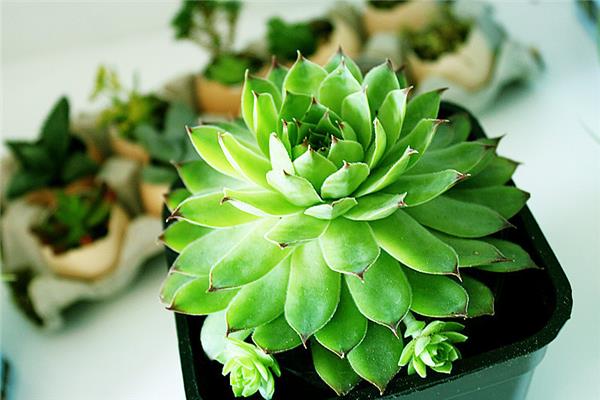
Growth states of different succulents during the high-temperature season in July
Agave family plants such as Agave deserti, Agave isthmensis, Agave potatorum 'Tricolor', and Agave parryi; most species of cactus such as golden barrel cactus, Ferocactus, Mammillaria, and Echinopsis, as well as columnar cacti such as Cleistocactus strausii and Echinopsis; Euphorbiaceae plants such as Euphorbia obesa, Euphorbia milii, Euphorbia caput-medusae, Euphorbia tirucalli, and Euphorbia neriifolia variegata; Apocynaceae plants such as desert rose and Pachypodium, and Asclepiadaceae plants such as Ceropegia and Huernia - these "summer-growing type" succulents are still in their peak growing season this month.
"Intermediate type" succulents that grow in spring and autumn, such as Gasteria armstrongii and Gasteria 'Dinosaur' of the Aloe family (Asphodelaceae), and Sedum rubrotinctum and Crassula 'Gollum' of the Crassulaceae family, grow slowly or nearly stop growing.
Meanwhile, most varieties of Aizoaceae succulents such as Lithops and Conophytum, as well as caudiciform plants such as South African Dioscorea elephantipes, Oxalis versicolor, and Oxalis latifolia; Crassulaceae plants such as Echeveria derenbergii, Aeonium, and Echeveria 'Little Red Riding Hood'; and "winter-growing type" succulents of the Aloe family such as Haworthia maughanii and Haworthia truncata stop growing completely.
Succulent cultivation management in July can be carried out according to the different types and differences in the cultivation environment, but no matter which type of succulent, they must avoid heavy rain and intense sun exposure, and have a well-ventilated environment.
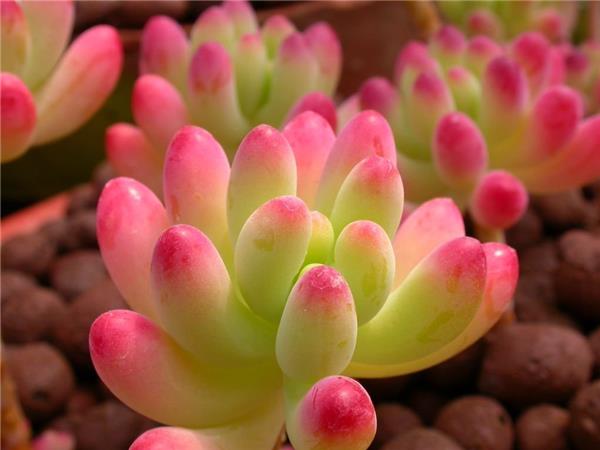
Succulent care during the high-temperature season in July
Pests and diseases: Succulents are most prone to root mealybugs. These insects are tiny and very hard to spot. Root mealybugs live their entire lives in the potting soil, and can break out three seasons a year; in a greenhouse they can appear in all four seasons. Root mealybugs feed on plant sap, and black rot is mostly the result of root mealybugs reproducing and absorbing too much sap. Summer is the season when root mealybugs run rampant, and succulents are in a dormant state with reduced resistance. The combination of multiple factors can easily cause a mould outbreak.
Water: In summer, due to high temperatures and drought, succulents should be in a semi-dormant state, and because of their metabolic habits, their stomata close during the day. If they are given too much water at this time, the high temperature will cause them to expand and burst their cell walls. When this happens, the leaves become transparent from the bottom up, which is called "turning to water." Also, if succulents are exposed to sunlight for too long and there is not enough ventilation, and a sealed growing method is used, the leaves will also turn to water.
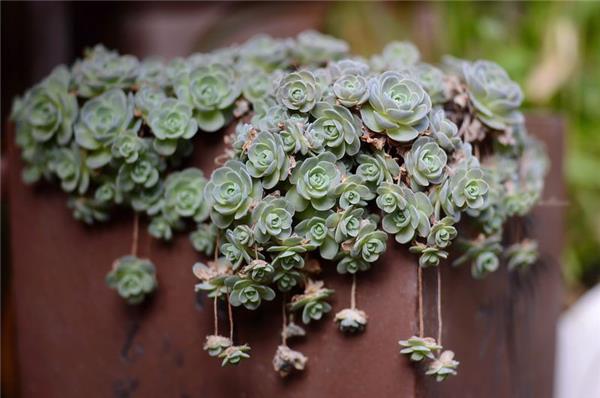
Fertilising: For plants that are in their growing season, simply apply a dilute liquid fertiliser once every half month. Other plants do not need such frequent fertilising.
Light: Succulents can only grow normally with sufficient light. Otherwise they tend to become leggy, or even die. In July the light is too abundant, and some plants such as Dioscorea elephantipes and Oxalis versicolor need shading.
Temperature: The vast majority of succulents like warm environments, with lush leaves and abundant flowers in the temperature range between 20°C and 30°C. However, if it gets too hot in summer, attention must also be paid to ventilating and cooling indoor spaces. They are not tolerant of severe cold, and the overwintering temperature should preferably not be lower than 10°C.
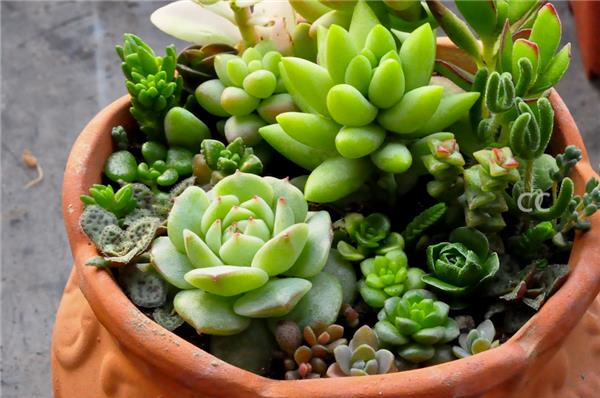
It seems that in this high-temperature season, not only do people need to take measures to prevent heatstroke and cool down, but plants need it too. I hope everyone will pay extra attention and let their succulents get through this high-temperature season safely.