Cultivation Tips and Variety Introduction for Aloe nobilis
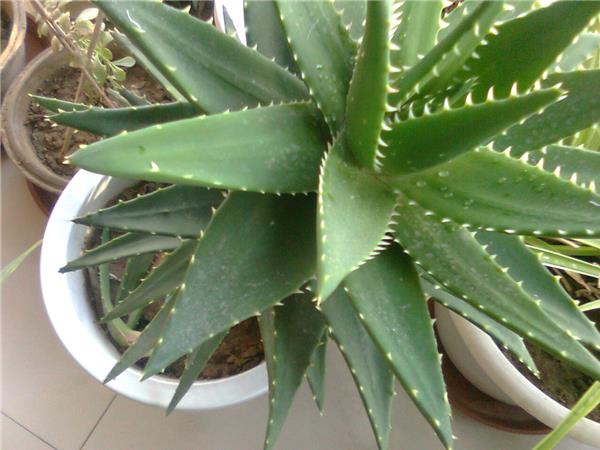
Aloe nobilis has an elegant, well-proportioned plant form and full, emerald-green leaves. It has very high ornamental value and is an excellent choice among indoor potted ornamental plants.
Introduction to Aloe nobilis
Aloe nobilis (A. loenobilis), also known as Bushy Aloe, Large Green Rosette, and Noble Aloe, is a perennial succulent herbaceous plant in the family Liliaceae, genus Aloe, blooming from late winter to early spring. Aloe nobilis also has a variegated mutation variant called "Aloe nobilis Variegata," whose leaf surfaces and undersides both bear yellow or yellowish-white longitudinal stripes; the width of these stripes varies from plant to plant, and sometimes the entire leaf turns yellow. Its other characteristics are the same as those of Aloe nobilis, and it is often kept as a household ornamental plant.
Aloe nobilis is a perennial succulent herbaceous plant native to the Greater Karoo Plateau and the Lesser Karoo Plateau of South Africa. Its leaf color is mottled and beautiful, rich in variation; displayed indoors, it is stylish and elegant with a unique effect. It also has some medicinal value and can be used to treat burns or abrasions, so it can serve as both an ornamental plant and a convenient household remedy.
Cultivation Methods for Aloe nobilis
Soil: The soil is best if sandy. If it is sticky yellow clay, add half sand to promote looseness and aeration and to facilitate drainage.
Pot selection: For potted aloe, clay pots are best; porcelain and plastic pots are not suitable because of poor aeration, which easily causes root rot.
Temperature: The suitable growing temperature for Aloe nobilis is around 20°C. Below zero it will suffer frost damage, and at around 10°C growth nearly stops. Therefore, when grown in pots in winter, it should be placed in a south-facing, wind-sheltered, sunny spot or indoors to reduce frost damage.
Sunlight: Aloe nobilis likes sunlight, and the planting site should be able to receive sun. If kept in a place without daylight for a long time, growth will be small and weak.
Watering: Aloe nobilis is drought-tolerant and dislikes waterlogged pot soil. Follow the principle of "do not water when the pot soil is not dry; when watering, water thoroughly" to avoid root rot caused by water accumulation in the pot soil. During cultivation, loosen the soil frequently so that the soil has good aeration, which benefits root growth and development.
Repotting: Repot once every 2-3 years. Repotting should be done in April in spring, though other seasons are also possible; however, improper management can easily cause the plant to wither and die. When repotting, use a pot one size larger, remove the soil from outside and above and below the roots, and remove rotten roots at the same time. Place a tile shard over the drainage hole, then add 2-3 cm of furnace ash, gravel, brick pieces, etc. as a drainage layer, add a layer of potting soil on top, then set the plant upright, fill the surrounding area with new soil, press gently and firmly, and water thoroughly once, until water just drips slightly from the drainage hole.
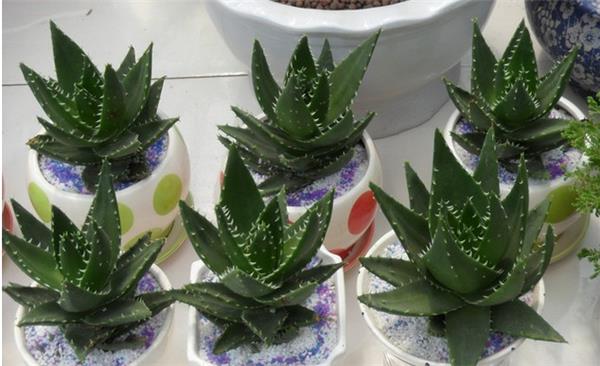
Fertilizing: It can grow with little fertilizer, but with proper fertilizing it grows vigorously. Usually no fertilizing is necessary; during the growing season, 2-3 applications of well-rotted dilute liquid fertilizer are also fine, or rice-washing water gives even better growth. Do not apply overly concentrated fertilizer. Do not fertilize during the dog days, to avoid root rot.
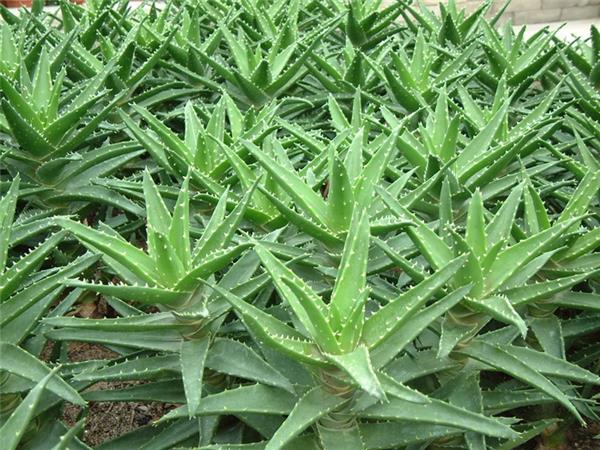
Propagation: Division can be carried out together with repotting. The method is to remove the young shoots sprouting from the base of the plant and plant them separately. After planting, keep the pot soil slightly moist; they will survive with or without roots. Alternatively, during the growing season, cut off the upper part of the plant, let it dry for about 10 days until the wound is dry, then insert it as a cutting in sandy soil or vermiculite; the lower part of the plant left in the original soil will soon send out clusters of new shoots, and after these shoots grow a little larger, they can also be removed and used as cuttings.
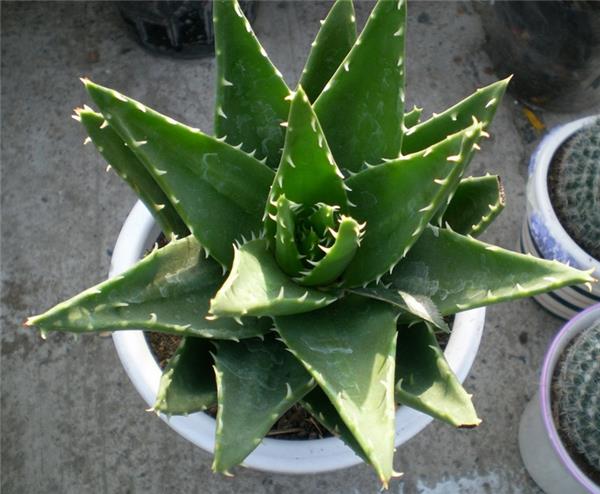
Aloe nobilis is very suitable for placement in study rooms, offices, beside computers and televisions, and other such places. It can beautify the room, help protect eyesight, and also absorb harmful gases from the air, so growing Aloe nobilis is a good thing that benefits physical and mental health.