The succulent Echeveria purpusorum looks like a lotus but is not a lotus
Succulents are a type of indoor potted ornamental plant that has gradually become popular in recent years. Most of them have a chubby, cute, and endearing dwarf growth habit, and are suitable for placement on desks, office desks, next to televisions and computers, and other such places. They can both protect against radiation and help care for eyesight. Echeveria purpusorum is also a member of this large family and likewise has these effects and functions.
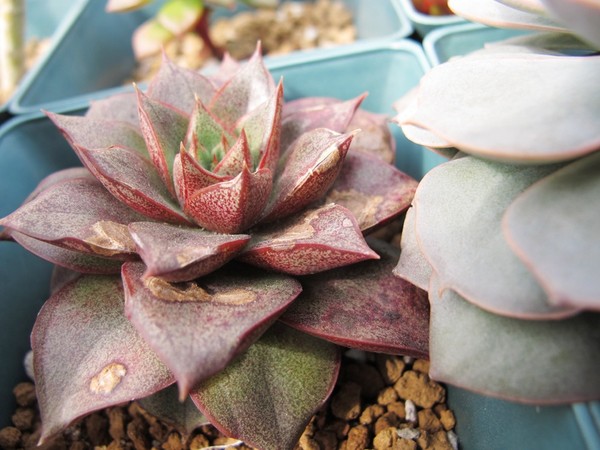
The morphological characteristics of Echeveria purpusorum
Echeveria purpusorum is a succulent of the genus Echeveria in the family Crassulaceae, with fleshy leaves arranged in a tight rosette. The leaves are broadly ovate to scattered triangular-ovate, 3 to 4 cm long and about 3 cm wide, with an acute tip. The leaf color is grayish green. By using leaf cuttings, you can see a single leaf sprout and grow into a whole plant, which is very interesting. Echeveria purpusorum has triangular leaves like a keel, marked with beautiful reddish-brown patterns. Under conditions of sufficient sunlight, the leaves are compact and thick. The red patterns also become more obvious. The thick triangular leaves overlap layer upon layer like petals, and the dark green leaves have purplish-brown spots. There is also a variegated cultivar called "Dahe Ji," which is even more beautiful.
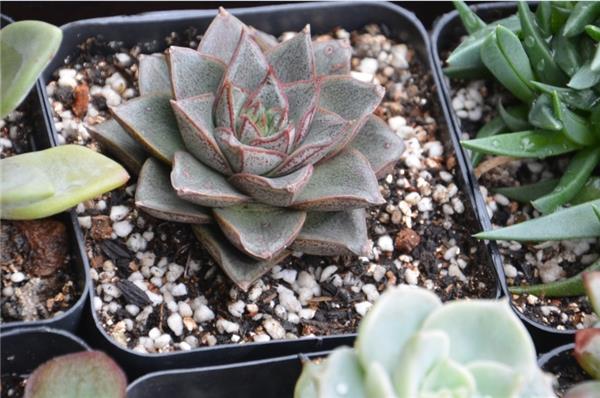
Cultivation and care methods for Echeveria purpusorum
Habits: Echeveria purpusorum likes a warm, well-ventilated environment. Fertile, well-drained sandy soil is suitable for cultivation. During the growing season it requires a certain amount of air humidity. In winter, watering should be controlled. It can tolerate low temperatures of 5°C.
Pot selection: The flower pot for cultivation does not need to be too large; one equal to or slightly smaller than the size of the plant's crown is sufficient.
Planting: Twist off the leaves of Echeveria purpusorum, let them dry for 1-2 days, then place them flat or insert them at an angle into coarse sand or vermiculite, and let the wounds come into contact with the soil; then place them in a semi-shaded area and keep the soil slightly moist. After 15-20 days, small buds will grow from the wounds: as time goes on, the small buds grow larger and larger, gradually forming a small rosette of leaves: when the plant grows to a certain size, take it out and plant it in a small pot, and it becomes a new plant.
Light: Generally speaking, the more light there is, the better its color and shape can be shown. Apart from appropriate shading in summer, it must have full sun at other times and cannot be shaded. In summer, it is best to place it in a well-ventilated place without direct sunlight for care. In winter, care for it indoors in a sunny spot.
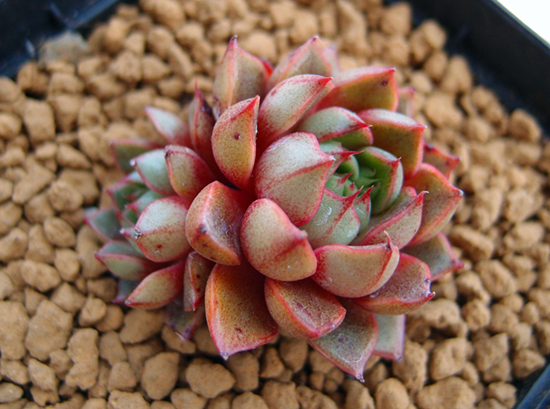
Water: Echeveria purpusorum can withstand prolonged dry seasons and drought, but if it can receive sufficient moisture during its growing season, it can also grow stronger. In winter, watering should also be well controlled for it.
Temperature: Echeveria purpusorum can tolerate frost, but it is best to overwinter it at a temperature of 5-10°C.
Fertilizing: Fertilizing should also avoid concentrated fertilizer and raw fertilizer; it is best to apply thin fertilizer frequently. It is best to apply a decomposed, dilute liquid fertilizer once a month. During the high temperatures of summer, fertilizing should be stopped.
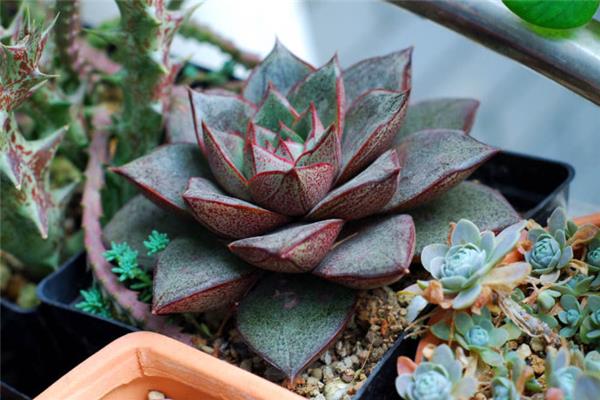
Growing a chubby succulent on your office desk can not only help care for your eyesight and resist radiation, but also regulate the tense mood at work, helping to relieve fatigue and relax your mood. If you happen to be an office worker, then growing succulents will definitely be a good choice, so go ahead and give it a try.