What diseases occur during the cultivation period of green bamboo? Analysis of mosaic disease symptoms and ecological impact
During the cultivation and management period of green bamboo, bamboo bugs, long-horned stink bugs, bamboo leaf roller caterpillars, bamboo leaf aphids, bamboo stem aphids, wireworms and Taiwan giant weevils are the main insect pests, while the diseases include mosaic disease, bacterial wilt, rust disease and sooty mold, among which bamboo mosaic disease is the most common and severe, with some bamboo shoot farmers even regarding plants infected with bamboo mosaic virus disease as being in normal growth condition, completely unaware that the quality and yield of bamboo shoots have already been affected.
Symptoms and ecology of green bamboo mosaic disease
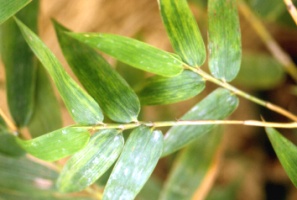
The main symptom of bamboo mosaic disease is the appearance of yellow-green alternating striped mosaic on the leaves, most obvious on the heart leaves; newly grown young bamboo culms show obvious yellow-green alternating mosaic, and some older bamboo culms also show very obvious yellow-green alternating mosaic interspersed with brown streaks, which is why it is also called brown stripe disease; diseased shoots become lignified, the shoot quality deteriorates, becoming coarse, hard and unpalatable, commonly known as "shoot nails"; the cross-section of diseased shoots or bamboo culms sometimes shows small black or brown dots, also known as "stinking fragrant shoots". In the early stages of infection or with mild infection, diseased bamboo plants may be difficult to detect, and although they do not die immediately, their development is affected; in later stages or after several years, bamboo shoot yield decreases significantly, and how much the yield is reduced depends on the degree of disease incidence and the level of fertilizer management.
Mosaic disease is a systemic disease caused by infection with Bamboo mosaic virus (BaMV), and every part of an infected plant contains the virus, including newly grown bamboo shoots. Among the 60 (varieties) of bamboo species in Taiwan, China, 2 genera and 14 (varieties) are harmed by bamboo mosaic virus, with the 13 (varieties) of the genus Bambusa (bamboo) accounting for the majority. This virus is a member of the potato virus X (Potexvirus group) group; generally, viruses of the potato virus X group are mostly not transmitted by vector insects but mainly by mechanical transmission, and they are quite stable outside the host body. Bamboo shoot harvesting knives that have cut diseased shoots, farming tools used in fertilizer management, or friction between the leaves of diseased and healthy plants can all transmit the virus from diseased plants to healthy plants; bamboo seedlings come from mother culms, and if the mother culm has already been infected by the virus, it will inevitably be transmitted to the bamboo seedlings as well. Whether newly planted or replanted, farmers' bamboo seedlings generally come mainly from self-retained stock or from nearby old bamboo groves, and bamboo mosaic virus will continue to spread and proliferate along with asexually propagated bamboo seedlings.