What Is the Azalea? A Detailed Guide to Growing It
Growing the azalea mainly comes down to the flower pot, soil, fertilizer and water, and light. As long as you pay extra attention to these aspects and are careful in day-to-day care, it is very easy to keep alive.
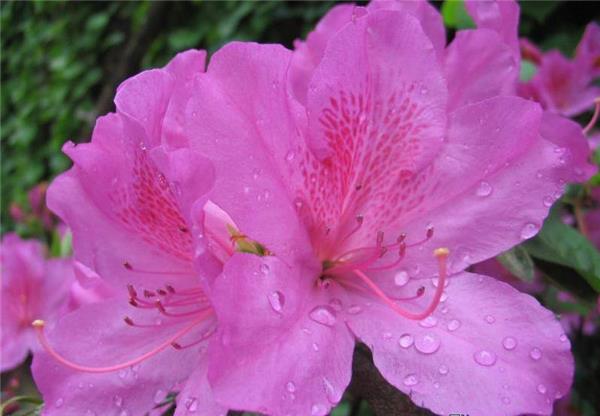
How to Grow the Azalea
Choosing a pot: A clay pot with good breathability is best, a purple-clay pot comes second, and glazed and porcelain pots are the worst. When potting, pay attention to choosing the right pot size, and never use a large pot for a small seedling. If the pot is too large, the potting soil will not dry out for a long time, aeration will be poor, and the roots will not easily reach the pot wall, which affects the development of the seedling. Generally, a cutting seedling can be given a clay pot about 10 cm in diameter, and after a year it can be moved into a flower pot of about 15 cm.
Soil: It likes loose, highly permeable, well-drained, humus-rich acidic soil with a pH of 5.0-6.0. If clay or alkaline soil is used, hardly one in a hundred survives.
Fertilizer and water: Generally, the potting soil should be allowed to dry and then be watered thoroughly. In spring and autumn, water thoroughly once every 2-3 days; in summer, when evaporation is high, water once each in the early morning and in the evening, and at the same time spray the leaf surface with clean water and sprinkle water on the ground around the flower pot to increase air humidity. After moving indoors in winter, watering should be controlled, and it is best to keep the potting soil slightly moist at all times, otherwise it will very easily rot. In winter, also pay attention to regularly rinsing the branches and leaves with clean water at a temperature close to room temperature. Apply light fertilizer frequently, and the fertilizer must be fully rotted. Fertilizing is best done on a clear evening when the potting soil is dry; at this time fertilizing is safe and effective. After flowering, supplement nitrogen fertilizer so the plant can recover and be encouraged to send out branches and leaves. In the high-temperature season of July-August, growth stalls, so fertilizing is not advisable.
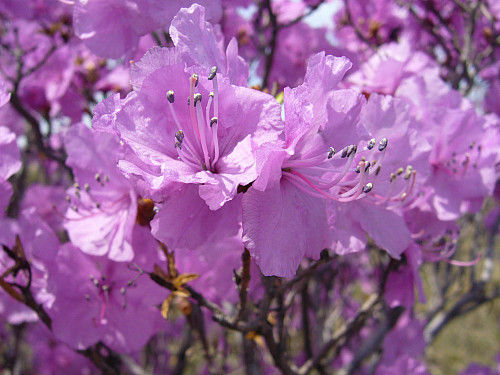
Light: Generally, move it outdoors after Grain Rain and place it on a balcony or in a courtyard; at this time the sunlight is fairly soft, and only light shading around midday is needed. After summer begins, it must be moved under a shade shed or onto a shaded windowsill indoors, keeping good ventilation. By late autumn, shading can be stopped to help the plant grow and thicken. Before winter begins, move it indoors and place it in a spot with ample sunlight.
Repotting: Generally, repot once every 3-4 years, with the best time being before the azalea blooms in March or in September; plants that have entered full bloom are best repotted after flowering. When repotting, be careful not to remove too much old soil or damage the roots, otherwise growth and flowering will be affected. When repotting, you can add some newly prepared acidic soil and water thoroughly, then first place it in a cool place for about 1 week before gradually exposing it to sunlight.
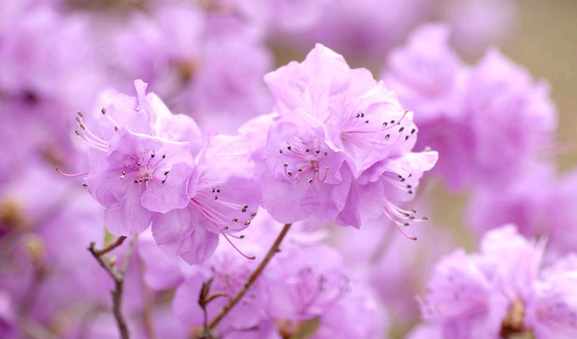
How to Make Azalea Flower Dish
Ingredients: 200 g azalea, 100 g Schisandra chinensis berries, 30 g pine nuts (roasted), 30 g white sugar, 10 g honey, 20 g starch (broad bean)
Steps:
1. Choose Schisandra chinensis berries that have ripened after the first frost, pick them and remove any blemishes, and wash until free of dust;
2. Take 3 cups of warm boiled water, add the Schisandra chinensis berries and soak for 1 day and night;
3. Take a transparent glass bowl or cup and pour in the water in which the Schisandra chinensis berries were soaked;
4. Add honey, add boiled and cooled sugar water, adjust the color and adjust the flavor;
5. Pick 20 azalea flowers in full bloom, add a small amount of dishwashing liquid to clean water, and wash the flowers clean;
6. Then rinse again with pure clean water, drain off the water, and be careful not to damage the petals;
7. Remove the twin stems of the azalea flowers, keeping only the red petals, and dip them in mung bean starch;
8. Then blanch briefly in boiling water, immediately scoop out and rinse with cold water;
9. Then put the azalea petals into the glass bowl containing the Schisandra chinensis water and sweet seasonings, sprinkle with pine nuts, and it is ready to eat.
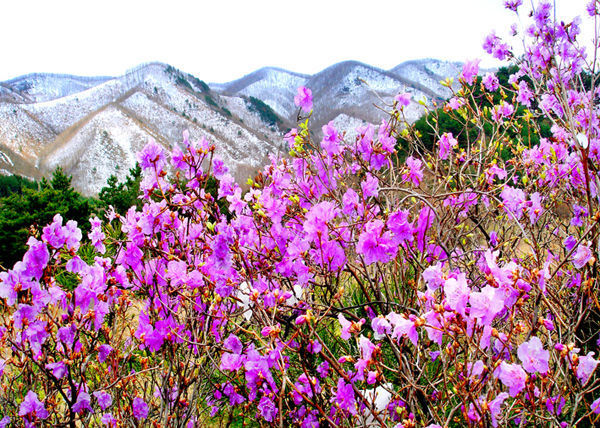
The azalea has both ornamental value and culinary value, and it is also a traditional Chinese medicinal material that can be used as medicine, so it has very high practical value and is very suitable for growing at home.